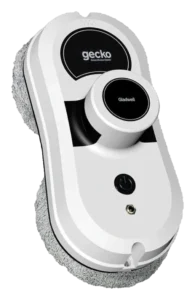
Gladwell Gecko · Kärcher RCW 2
All robot window cleaners. Every measure below is plotted against the full class, so a difference can be read against how much the class itself varies.
- Gladwell Gecko
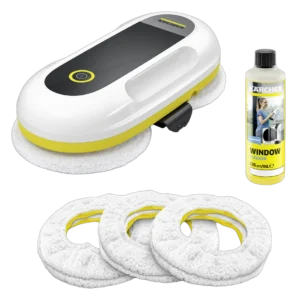
- Kärcher RCW 2


Kärcher RCW 2
- Autonomy
- IIAssisted Autonomy
- Score
- Not scored
- Readiness
- New to Market
- Price
- Not tracked
Up to three
What each one does on its own.
The Autonomy Ladder is the same five rungs for every robot on the site. A rung describes the conditions a robot handles without you, not how good it is.
Where they actually differ.
The Robovations Score is nine inputs across three pillars, each weighted as shown and each scored so that more is better. A robot can lead on one and trail on another, which is the point of showing them apart. Cost of ownership and data handling are reported on each robot's own page and are never averaged into the score.
Capability
- Gladwell Gecko55
Not scored: Kärcher RCW 2
- Gladwell Gecko55
Not scored: Kärcher RCW 2
- Gladwell Gecko50
Not scored: Kärcher RCW 2
- Gladwell Gecko60
Not scored: Kärcher RCW 2
Dependability
- Gladwell Gecko73
Not scored: Kärcher RCW 2
- Gladwell Gecko33
Not scored: Kärcher RCW 2
- Gladwell Gecko18
Not scored: Kärcher RCW 2
Ownership burden
- Gladwell Gecko22
Not scored: Kärcher RCW 2
- Gladwell Gecko32
Not scored: Kärcher RCW 2
How far apart is a long way?
A number only means something next to the spread it sits in. Each track below is the real range across every classified robot in the class, with the median marked.
These robots share no measured specification with enough published figures to plot. That is a gap in the record, not a finding about the robots.
What the numbers leave out.
The trade-off
What each design gives up to be good at what it is good at.
Suction adhesion eliminates ladder risk but requires constant rope-tether monitoring and manual repositioning, offsetting time savings on large facades.
Edge-detection autonomy reduces operator attention between panes but introduces frequent microfiber-pad degradation, shifting labor to consumable replacement.
The tether and power cord are a safety feature and a constraint in the same breath: the 4-meter tether decides which windows this unit can reach before it ever touches the glass.
The emergency battery buys 40 minutes of suction during a power cut, not indefinite operation, because it exists to prevent a fall, not to keep the cleaning cycle running.
Mains dependency: no cordless mode, so every session starts by finding an outlet within reach of the 5-meter cord.
Who each one is wrong for
Stated by the record itself. A robot being wrong for a household is a fact about fit, not a fault.
- Commercial facades with 20+ distinct window zones
- The machine is mains-fed on a 13 foot lead and must be lifted and re-rigged at every pane, so distinct window zones scale linearly in labor. Manual repositioning becomes time-prohibitive relative to traditional service contracts.
- Textured, frosted, or patterned glass surfaces
- Suction adhesion relies on smooth, flat, continuous glass. Texture and pattern break the seal, and there is no automatic shutdown or self-rescue behavior to catch that; the safety rope is the only backstop.
- Owners seeking true set-and-forget autonomy
- Manual positioning at each window panel is non-negotiable. Robot is unsuitable for users unwilling to supervise or reposition hardware between distinct glass areas.
- Low-maintenance-only preference
- Pads need washing between sessions and replacing every three to six months, and the safety rope needs inspecting before every run. Owners unwilling to keep that up should consider traditional service contracts instead.
- Windows with no nearby power outlet
- The RCW 2 has no cordless or battery-only mode; a window more than the 5-meter power cord's reach from an outlet cannot run a cleaning cycle.
- High-rise panes beyond the tether's documented reach
- The 4-meter safety tether is built for reachable interior anchors on lower floors, not the height and anchor distance a true high-rise installation needs.
- Leaded, heavily textured, or decorative glass
- Continuous suction contact from the twin cleaning discs assumes smooth flat glass; Kärcher's documented mechanism is not built for leaded or heavily textured panes.
- Grille-divided or heavily mullioned windows
- Dividers crossing the pane interrupt the twin-disc wiping path the cleaning mechanism depends on, so heavily divided-light windows are a poor match.
- Buyers wanting proven reliability before purchasing
- No independent reviews, owner reports, or field failure record exist yet for a product that only debuted at IFA 2026; that evidence gap is real.
What stays your job
The upkeep ownership hands back to you, whatever the autonomy level says.
- Before every use: Inspect the safety rope along its full length for fraying, glazing or UV damage, check that the carabiner gate closes, and confirm the knot through the robot’s loop is sound. Two to three minutes, no cost.
- Weekly: Wash the microfiber pads in gentle soap and water and air-dry them. Under five minutes.
- Monthly: Listen to the suction motor through a run for grinding or a change in pitch. No parts required; catches early degradation.
- Every 3-6 months: Replace the microfiber pads (cost USD 24-32). Worn pads seal less well and load the suction motor.
- As needed: Replace the safety rope at any sign of damage. Gladwell operates no inspection or certification program and publishes no service interval for it, so replacement is on the owner’s judgment.
- After every use: Wipe down the twin microfiber cleaning discs and check for trapped debris before storage.
- After every use: Refill the 70 mL detergent tank ahead of the next cleaning session.
- Monthly: Inspect the 4-meter safety tether and its anchor point for fraying or wear.
- Monthly: Check the two ultrasonic misting nozzles for mineral buildup or clogging.
- Every 3-6 months: Replace microfiber cleaning discs once wiping leaves streaks or residue.
- As needed: Wipe down the 5-meter power cord and check the plug and outlet for damage.
How much each of these is standing on.
Classifications rest on different depths of evidence. A pre-release assessment and a verified one are not the same kind of claim.
| Robot | Evidence status | Sources reviewed | Last assessed |
|---|---|---|---|
| Gladwell Gecko | Provisional | 2 | Aug 2026 |
| Kärcher RCW 2 | Pending | 1 | Sep 2026 |
Add a robot
Comparing across classes is allowed — the page will switch to per-class positioning and tell you it has.