
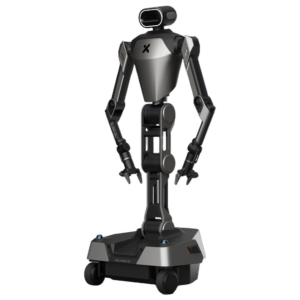
Galaxea AI
Galaxea R1
- Autonomy
- II Assisted Autonomy
- Score
- 50/100 Plausible
- Readiness
- Early Stage
- Price
- Not tracked
All humanoid robots. Every measure below is plotted against the full class, so a difference can be read against how much the class itself varies.
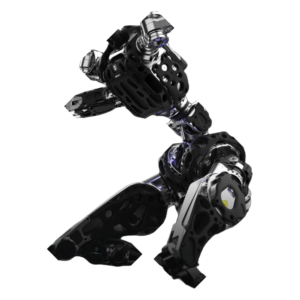
Up to three
The Autonomy Ladder is the same five rungs for every robot on the site. A rung describes the conditions a robot handles without you, not how good it is.
The Robovations Score is nine inputs across three pillars, each weighted as shown and each scored so that more is better. A robot can lead on one and trail on another, which is the point of showing them apart. Cost of ownership and data handling are reported on each robot's own page and are never averaged into the score.
None of these robots carries a scored assessment yet, so there is nothing to plot here. The classification and evidence below still apply.
A number only means something next to the spread it sits in. Each track below is the real range across every classified robot in the class, with the median marked.
These robots share no measured specification with enough published figures to plot. That is a gap in the record, not a finding about the robots.
What each design gives up to be good at what it is good at.
R1 ships with genuinely open tooling, datasets, ROS2, and an SDK, that lowers the barrier for outside researchers to build on it, but the same teleoperation-centric training approach that enables this openness means no specific task is independently confirmed as autonomous.
A concrete, Forbes-reported price range ($44,500-$64,000) is unusually specific for an early-stage humanoid platform, but it applies to an enterprise or research sale, not a consumer purchase, and could not be cross-checked against the manufacturer’s own site.
A genuinely detailed, independently corroborated actuator and compute specification set signals real engineering depth, but the platform’s most widely covered public demonstration is confirmed scripted and human-monitored, not an autonomy showcase.
The archery demonstration’s training pipeline, reinforcement learning plus motion-capture imitation, is a more autonomy-consistent account than the keytar performance’s, but no source confirms whether a live operator was involved in the specific performance shown publicly.
Stated by the record itself. A robot being wrong for a household is a fact about fit, not a fault.
Classifications rest on different depths of evidence. A pre-release assessment and a verified one are not the same kind of claim.
| Robot | Evidence status | Sources reviewed | Last assessed |
|---|---|---|---|
| Galaxea R1 | Verified | 7 | Aug 2026 |
| PNDbotics Adam | Verified | 7 | Aug 2026 |
Comparing across classes is allowed — the page will switch to per-class positioning and tell you it has.