Skip to content
Saved
Comparison · 2 robots

Flymo EasiLife Go 200 · Stihl iMow 7

All robot lawn mowers. Every measure below is plotted against the full class, so a difference can be read against how much the class itself varies.
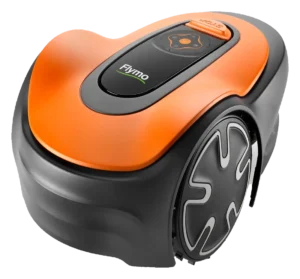
  1. Flymo EasiLife Go 200
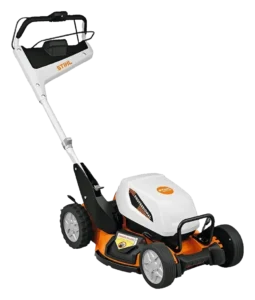
  2. Stihl iMow 7
Flymo (Husqvarna Group)

Flymo EasiLife Go 200

Autonomy
IIAssisted Autonomy
Score
Not scored
Readiness
Not assessed
Price
Not tracked

Up to three

01 Classification

What each one does on its own.

The Autonomy Ladder is the same five rungs for every robot on the site. A rung describes the conditions a robot handles without you, not how good it is.

V
Generalized
Any task, any setting
IV
Environmental
Handles new obstacles without help
III
Conditional
Finishes familiar jobs on its own
II
Assisted
Runs preset routines, needs rescue
Flymo EasiLife Go 200Stihl iMow 7
I
Manual
One action, on command
02 Assessment

Where they actually differ.

The Robovations Score is nine inputs across three pillars, each weighted as shown and each scored so that more is better. A robot can lead on one and trail on another, which is the point of showing them apart. Cost of ownership and data handling are reported on each robot's own page and are never averaged into the score.

Capability

Task completion16% of score
Does it finish the job it is sold to do, unattended
  • Stihl iMow 785
18median 72 across 381 scored robots100

Not scored: Flymo EasiLife Go 200

Coverage and navigation10% of score
Does it work the whole area, and hold that between runs
  • Stihl iMow 763
15median 70 across 371 scored robots100

Not scored: Flymo EasiLife Go 200

Edge-case recovery10% of score
Does it recover from the failures its category presents
  • Stihl iMow 784
18median 50 across 287 scored robots100

Not scored: Flymo EasiLife Go 200

Operating envelope4% of score
How far conditions can vary before performance drops
  • Stihl iMow 772
25median 68 across 345 scored robots100

Not scored: Flymo EasiLife Go 200

Dependability

Field failure rate16% of score
Documented hardware failures per owner-year
  • Stihl iMow 780
6median 70 across 371 scored robots100

Not scored: Flymo EasiLife Go 200

Software stability14% of score
Whether updates fix more than they break
  • Stihl iMow 781
15median 65 across 300 scored robots100

Not scored: Flymo EasiLife Go 200

Support longevity10% of score
Committed parts, service and updates, with dates
  • Stihl iMow 785
0median 63 across 377 scored robots100

Not scored: Flymo EasiLife Go 200

Ownership burden

Routine maintenance12% of score
Hands-on time it asks for in normal operation
  • Stihl iMow 749
22median 65 across 382 scored robots100

Not scored: Flymo EasiLife Go 200

Consumables8% of score
Parts that must be bought to keep it working
  • Stihl iMow 7100
8median 69 across 381 scored robots100

Not scored: Flymo EasiLife Go 200

03 Measured against the class

How far apart is a long way?

A number only means something next to the spread it sits in. Each track below is the real range across every classified robot in the class, with the median marked.

Runtime88 with a published figure
  • Flymo EasiLife Go 20070 min
  • Stihl iMow 7230 min
30 minmedian 110 min240 min
Charge time88 with a published figure
  • Flymo EasiLife Go 20075 min
  • Stihl iMow 7200 min
30 minmedian 90 min300 min
Noise88 with a published figure
  • Flymo EasiLife Go 20057 dB
  • Stihl iMow 761 dB
50 dBmedian 60 dB82 dB
Weight96 with a published figure
  • Flymo EasiLife Go 20013.4 lbs
  • Stihl iMow 733.1 lbs
13 lbsmedian 29.8 lbs134 lbs
Height97 with a published figure
  • Flymo EasiLife Go 2008.7 in
  • Stihl iMow 78.3 in
7.5 inmedian 11 in16.5 in

Not compared, because fewer than two of these robots carry a published figure: Price, Suction.

04 Ownership

What the numbers leave out.

The trade-off

What each design gives up to be good at what it is good at.

Flymo EasiLife Go 200

The Go adds app scheduling and weather-based adjustment over the EasiLife 200, but the boundary is still a buried wire with the install labor that implies.

At 6.1 kg and 57 dB(A) it is light and quiet enough for a small garden, though its 2,153 sq ft ceiling rules out anything beyond a compact lawn.

Bluetooth-only app control keeps the connection local with no cloud account required, but that also means no off-site scheduling or status checks once you leave the house.

Stihl iMow 7

Wire installation is a permanent setup: any lawn reconfiguration requires physical wire relocation, unlike virtual-boundary or GPS-based alternatives.

Systematic mowing pattern reduces pass overlap compared to random-path alternatives, but the iMow 7 slows for what its ultrasonic sensors register and bumps the rest; it does not plan a route around a newly placed obstacle.

Who each one is wrong for

Stated by the record itself. A robot being wrong for a household is a fact about fit, not a fault.

Flymo EasiLife Go 200
Anyone avoiding a buried perimeter wire
Flymo supplies 150 m of wire and 150 stakes because the boundary is buried-wire only; there is no wire-free version of this model in the EasiLife line.
Lawns larger than 2,150 sq ft
The rated coverage tops out at 2,153 sq ft, a fraction of a quarter-acre lawn; larger properties need a bigger model or a different mower entirely.
Owners who want off-site or cloud app access
App control runs over Bluetooth range only, with no cloud connection; there is no way to check on or schedule the mower once away from the house.
Stihl iMow 7
Owners who frequently reconfigure lawn areas or garden beds
Any structural landscaping change requires physical wire relocation. Changing zones means reconfiguring the boundary wire system.
Buyers seeking GPS, RTK, or virtual-boundary wire-free operation
The iMow 7 uses a physical perimeter wire only. Wire-free robotic mower alternatives are necessary for owners wanting GPS or virtual boundaries.
Lawns with complex island beds, narrow corridors, or multi-zone layouts
Each zone or corridor requires a dedicated guide wire segment. Complex layouts increase installation complexity and risk unmowed strips.
Households where children or animals routinely occupy the mowing zone
Ultrasonic sensors slow the mower for larger objects, but nothing on it identifies a person or a pet, and low objects are detected by contact. Scheduling sessions when the lawn is clear remains the reliable mitigation.
Lots significantly above 5,000 square meters
Rated coverage is 5,000 square meters and the iMOW 7 is the top of the range, so there is no larger model to move up to. Properties beyond it need more than one machine in adjacent zones.

What stays your job

The upkeep ownership hands back to you, whatever the autonomy level says.

Flymo EasiLife Go 200
  • Weekly: Examine the blade disc and blades, then clean the disc and chassis with a brush and running water; the manual forbids pressure washers and solvents.
  • Weekly: Brush grass off the wheels; clogged wheels spoil performance on slopes.
  • Monthly: Replace the three pivoting blades and their screws as a set; Flymo documents a usual blade life of 4 to 7 weeks and requires original crowned H-mark blades.
  • As needed: Clean the charging plates and contact plates with a fine emery cloth and a little oil or grease, and clear grass and twigs from the charging station; the manual sets no interval.
  • Annually: Take the mower for the Flymo winter service the manual recommends: deep clean, function test, wear-part and blade replacement, battery check, firmware update.
  • Seasonally: Fully charge, switch off, clean, and store dry and frost free; an outdoor charging station keeps its power supply connected, an indoor one gets its connectors boxed.
Stihl iMow 7
  • After every use: Clear grass clippings and debris from blade disc and chassis to prevent buildup.
  • Monthly: Inspect perimeter wire at surface crossings and obstacles for wear or animal damage.
  • Every 3–6 months: Replace blade disc when cut quality declines; replacement blades cost $10–$25 per set.
  • Annually: Full perimeter wire inspection including connectors and guide wire segments; clean charging station contacts.
  • Annually: Test rain sensor auto-return function before season; clean sensor lens if blocked by residue.
  • As needed: Splice or reposition wire sections after landscaping or tool-induced damage.
05 Evidence

How much each of these is standing on.

Classifications rest on different depths of evidence. A pre-release assessment and a verified one are not the same kind of claim.

Evidence behind each classification
Robot Evidence status Sources reviewed Last assessed
Flymo EasiLife Go 200 Pending 1 Jul 2026
Stihl iMow 7 Verified 5 Aug 2026

Robovations classifies robots; it does not rank them. Nothing on this page is a recommendation, and no manufacturer influences a classification or its placement here.