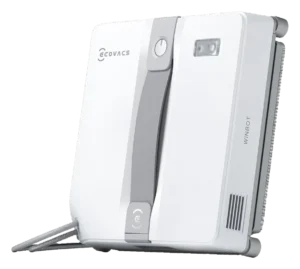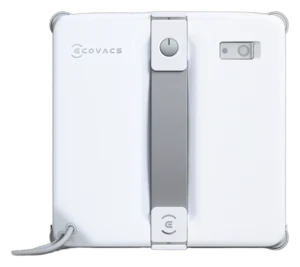
Ecovacs Winbot Mini 2 · Ecovacs Winbot W1 Pro
All robot window cleaners. Every measure below is plotted against the full class, so a difference can be read against how much the class itself varies.
- Ecovacs Winbot Mini 2
- Ecovacs Winbot W1 Pro
What each one does on its own.
The Autonomy Ladder is the same five rungs for every robot on the site. A rung describes the conditions a robot handles without you, not how good it is.
Where they actually differ.
The Robovations Score is nine inputs across three pillars, each weighted as shown and each scored so that more is better. A robot can lead on one and trail on another, which is the point of showing them apart. Cost of ownership and data handling are reported on each robot's own page and are never averaged into the score.
Capability
- Ecovacs Winbot Mini 272
- Ecovacs Winbot W1 Pro65
- Ecovacs Winbot Mini 275
- Ecovacs Winbot W1 Pro97
- Ecovacs Winbot Mini 270
- Ecovacs Winbot W1 Pro50
- Ecovacs Winbot Mini 258
- Ecovacs Winbot W1 Pro50
Dependability
- Ecovacs Winbot Mini 265
- Ecovacs Winbot W1 Pro88
- Ecovacs Winbot Mini 255
- Ecovacs Winbot W1 Pro65
- Ecovacs Winbot Mini 260
- Ecovacs Winbot W1 Pro52
Ownership burden
- Ecovacs Winbot Mini 266
- Ecovacs Winbot W1 Pro35
- Ecovacs Winbot Mini 280
- Ecovacs Winbot W1 Pro61
How far apart is a long way?
A number only means something next to the spread it sits in. Each track below is the real range across every classified robot in the class, with the median marked.
- Ecovacs Winbot Mini 22.9 lbs
- Ecovacs Winbot W1 Pro3.5 lbs
- Ecovacs Winbot Mini 22.2 in
- Ecovacs Winbot W1 Pro3.1 in
Not compared, because fewer than two of these robots carry a published figure: Price, Suction, Runtime, Charge time, Noise.
What the numbers leave out.
The trade-off
What each design gives up to be good at what it is good at.
The small body that reaches tight panes also carries a 50 ml tank that needs refilling every few windows.
Corded power means unlimited runtime; the cable is also what tangles mid-clean, per one owner’s log.
Mains power removes the runtime ceiling but adds a leash: the 4.7 m cord has to reach an outlet at every pane and be kept clear of the robot’s path and the open window.
Cross-pattern coverage is efficient on flat glass but brittle on slight curves or frameless assemblies, forcing manual intervention and negating autonomy gains.
Who each one is wrong for
Stated by the record itself. A robot being wrong for a household is a fact about fit, not a fault.
- Homes with large picture windows
- Ecovacs lists about 2.5 minutes per square meter in Fast Mode, and the owner review found large windows take far too long.
- Owners who want to clean many windows per water fill
- The tank holds 50 ml, which the owner review found covers only three to four small windows in Deep mode.
- Places without a nearby power outlet
- It runs on a 4.7 m mains cable; the built-in battery only holds it on the glass for 30 minutes after power loss.
- Owners who need a steady app connection
- The 90-day owner review reports the app connection dropping about every 15 to 20 cycles.
- Exterior glass above the ground floor
- Ecovacs supplies a 1.5 m safety tether and specifies anchoring it to a stable fixed object inside the room, naming a table leg, chair leg, curtain rod or stair handrail. That arrangement suits glass you can stand at. Ecovacs describes no longer rope and no external anchor for this machine.
- Heavily framed or specialty window types
- Complex frames and curved tempered glass challenge edge detection. Panes smaller than 8 sq ft may require manual repositioning to prevent repeated path overlap.
- Owners unable to commit to weekly pad inspection and cleaning
- Pads left wet after a run pick up mineral deposits in hard-water areas and stiffen, which shows up as uneven water distribution. Seasonal use without a rinse between sessions leads to clogged nozzles.
What stays your job
The upkeep ownership hands back to you, whatever the autonomy level says.
- After every use: Remove, wash and dry the microfiber wiping pad.
- As needed: Refill the 50 ml water tank, roughly every three to four small windows in Deep mode per one owner.
- After every use: Check the 3.3 m safety rope and power cable for wear or kinks.
- Monthly: Clean the suction channel and the four spray nozzles.
- As needed: Replace worn pads and restock cleaning solution.
- Before every exterior run: Confirm the tether is anchored to a fixed object in the room and the carabiner is locked; check that the power cord runs clear of the robot’s path.
- Weekly: Rinse cleaning pads and nozzles under tap water; inspect for mineral deposits or debris.
- Monthly: Clean motor intake ports with compressed air; inspect the safety rope and carabiner for fraying, cuts or a sticking gate.
- Every 3-4 months: Replace cleaning pads (~$30-40 per pair) if frayed or uneven water distribution appears.
- Annually: Deep-clean the spray system by soaking the nozzles in distilled vinegar.
How much each of these is standing on.
Classifications rest on different depths of evidence. A pre-release assessment and a verified one are not the same kind of claim.
| Robot | Evidence status | Sources reviewed | Last assessed |
|---|---|---|---|
| Ecovacs Winbot Mini 2 | Provisional | 3 | Sep 2026 |
| Ecovacs Winbot W1 Pro | Provisional | 5 | Aug 2026 |
Add a robot
Comparing across classes is allowed — the page will switch to per-class positioning and tell you it has.