Skip to content
Saved
Comparison · 2 robots

Ecovacs Ultramarine P1 · Wybot C1

All robot pool cleaners. Every measure below is plotted against the full class, so a difference can be read against how much the class itself varies.
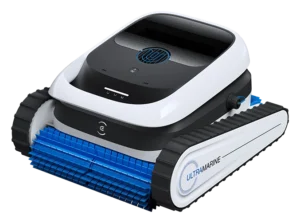
  1. Ecovacs Ultramarine P1
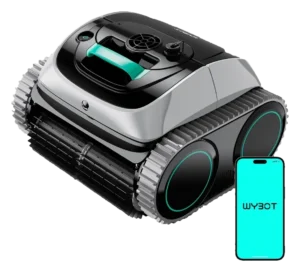
  2. Wybot C1

Wybot

Wybot C1

Autonomy
IIAssisted Autonomy
Score
64/100 Capable
Readiness
Known Issues
Price
$569.99list

Up to three

01 Classification

What each one does on its own.

The Autonomy Ladder is the same five rungs for every robot on the site. A rung describes the conditions a robot handles without you, not how good it is.

V
Generalized
Any task, any setting
IV
Environmental
Handles new obstacles without help
III
Conditional
Finishes familiar jobs on its own
II
Assisted
Runs preset routines, needs rescue
Ecovacs Ultramarine P1Wybot C1
I
Manual
One action, on command
02 Assessment

Where they actually differ.

The Robovations Score is nine inputs across three pillars, each weighted as shown and each scored so that more is better. A robot can lead on one and trail on another, which is the point of showing them apart. Cost of ownership and data handling are reported on each robot's own page and are never averaged into the score.

Capability

Task completion16% of score
Does it finish the job it is sold to do, unattended
  • Ecovacs Ultramarine P178
  • Wybot C170
18median 72 across 433 scored robots100
Coverage and navigation10% of score
Does it work the whole area, and hold that between runs
  • Ecovacs Ultramarine P168
  • Wybot C145
0median 70 across 421 scored robots100
Edge-case recovery10% of score
Does it recover from the failures its category presents
  • Ecovacs Ultramarine P158
  • Wybot C143
18median 52 across 320 scored robots100
Operating envelope4% of score
How far conditions can vary before performance drops
  • Ecovacs Ultramarine P164
  • Wybot C1100
28median 68 across 397 scored robots100

Dependability

Field failure rate16% of score
Documented hardware failures per owner-year
  • Ecovacs Ultramarine P170
  • Wybot C180
6median 70 across 359 scored robots100
Software stability14% of score
Whether updates fix more than they break
  • Ecovacs Ultramarine P165
  • Wybot C165
15median 65 across 342 scored robots100
Support longevity10% of score
Committed parts, service and updates, with dates
  • Ecovacs Ultramarine P162
  • Wybot C148
0median 62 across 429 scored robots100

Ownership burden

Routine maintenance12% of score
Hands-on time it asks for in normal operation
  • Ecovacs Ultramarine P152
  • Wybot C167
22median 67 across 434 scored robots100
Consumables8% of score
Parts that must be bought to keep it working
  • Ecovacs Ultramarine P172
  • Wybot C161
8median 69 across 434 scored robots100
03 Measured against the class

How far apart is a long way?

A number only means something next to the spread it sits in. Each track below is the real range across every classified robot in the class, with the median marked.

Price69 with a published figure
  • Ecovacs Ultramarine P1$499.99
  • Wybot C1$569.99
$299median $1,249$4,250
Runtime37 with a published figure
  • Ecovacs Ultramarine P1180 min
  • Wybot C1150 min
90 minmedian 180 min1,800 min
Charge time29 with a published figure
  • Ecovacs Ultramarine P1240 min
  • Wybot C1180 min
150 minmedian 240 min480 min
Weight66 with a published figure
  • Ecovacs Ultramarine P122.3 lbs
  • Wybot C117.6 lbs
7.9 lbsmedian 20.9 lbs46.3 lbs

Not compared, because fewer than two of these robots carry a published figure: Suction, Noise, Height.

04 Ownership

What the numbers leave out.

The trade-off

What each design gives up to be good at what it is good at.

Ecovacs Ultramarine P1

No cable to manage, and no way back out of the water without a pole and hook.

Floors came up clean for both reviewers; walls were where results split.

Wybot C1

Cordless operation removes the cable and swivel of a tethered cleaner at the cost of a bounded battery cycle: the machine runs up to 150 minutes, parks itself at the wall, and waits to be lifted out and charged rather than drawing power continuously.

Who each one is wrong for

Stated by the record itself. A robot being wrong for a household is a fact about fit, not a fault.

Ecovacs Ultramarine P1
Owners who want the robot out of the pool on its own
It parks near the edge when done, but the manual has the owner lift it out with a hook on a pool pole every run.
Pools where spotless walls matter most
Digital Reviews found some wall sections cleaned to the waterline while on others the robot detached and drifted back down.
Pools with sun shelves or shallow steps
The manual says ledges under 50 cm deep can trap it and that it was not designed to clean steps.
Owners who want live monitoring during a clean
The app connects over Bluetooth only above water, so progress cannot be watched once it submerges, per the manual and Digital Reviews.
Daily back-to-back cleaning cycles
The manual lists about 4 hours to charge, and EFTM measured 3 hours 40 minutes from 5 percent.
Wybot C1
Pools larger than 1,615 sq ft
Wybot rates the C1 by surface area, up to 1,615 square feet. Larger pools take more than one cycle per clean, and each cycle ends with the machine coming out of the water to charge.
Owners wanting a cleaner that lives in the pool
The C1 runs a scheduled cycle, parks at the wall and comes out to charge. It is not a permanently installed or continuously powered cleaner that stays in the water between cycles.
Pools under heavy leaf and debris load
Capacity is bounded by the onboard filter, which is rinsed between cycles. Pools with steady leaf fall need skimming or a larger-capacity cleaner rather than a repeat cycle.

What stays your job

The upkeep ownership hands back to you, whatever the autonomy level says.

Ecovacs Ultramarine P1
  • After every use: Lift it out with the pole hook, then rinse the 180-micron basket and 3-micron filter separately.
  • After every use: Dry the charging port and recharge for about 4 hours indoors.
  • Every 3-6 months: Open the impeller cover and clear debris from the impeller, track and cogs (manual: every 3 to 4 months).
  • As needed: Replace the 3-micron filter every 150 hours of use ($24.99 inner basket on Ecovacs’ US store).
  • Annually: Check tracks and roller brushes for wear and replace them if worn.
  • Seasonally: Store dry and charged, topping up to 40 to 60 percent every three months.
Wybot C1
  • After every cycle: Remove and rinse the filter with fresh water and clear the intake before the next run. Rinse the machine itself with fresh water after use in a saltwater pool.
  • Every charge: Charge the machine out of the water on a hard surface clear of combustibles, using the supplied charger and never an extension cord. The receptacle must be GFCI protected, which is a code requirement for outlets near a pool rather than an option.
  • Weekly: Clean the brush and the waterline contact surfaces to remove algae film and chemical residue.
  • Every 3-6 months: Inspect the drive brushes for wear and replace them when they stop making consistent contact.
  • Annually: Replace the filter media if flow has dropped or the material has degraded.
  • Storage: Charge the pack before storing the machine for the season and keep it out of direct sun. Store it charged, not flat.
05 Evidence

How much each of these is standing on.

Classifications rest on different depths of evidence. A pre-release assessment and a verified one are not the same kind of claim.

Evidence behind each classification
Robot Evidence status Sources reviewed Last assessed
Ecovacs Ultramarine P1 Provisional 8 Sep 2026
Wybot C1 Provisional 3 Aug 2026

Robovations classifies robots; it does not rank them. Nothing on this page is a recommendation, and no manufacturer influences a classification or its placement here.