Skip to content
Saved
Comparison · 2 robots

Apptronik Apollo · PNDbotics Adam

All humanoid robots. Every measure below is plotted against the full class, so a difference can be read against how much the class itself varies.
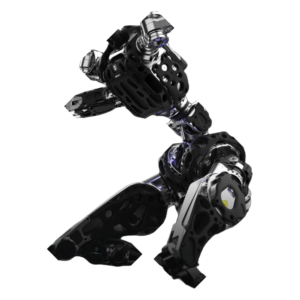
  1. Apptronik Apollo
  2. PNDbotics Adam
Apptronik

Apptronik Apollo

Autonomy
II Assisted Autonomy
Score
59/100 Plausible
Readiness
Promising Progress
Price
Not tracked
PNDbotics (HK) Co., Limited

PNDbotics Adam

Autonomy
II Assisted Autonomy
Score
48/100 Plausible
Readiness
Early Stage
Price
Not tracked

Up to three

01 Classification

What each one does on its own.

The Autonomy Ladder is the same five rungs for every robot on the site. A rung describes the conditions a robot handles without you, not how good it is.

V
Generalized
Any task, any setting
IV
Environmental
Handles new obstacles without help
III
Conditional
Finishes familiar jobs on its own
II
Assisted
Runs preset routines, needs rescue
Apptronik ApolloPNDbotics Adam
I
Manual
One action, on command
02 Assessment

Where they actually differ.

The Robovations Score is nine inputs across three pillars, each weighted as shown and each scored so that more is better. A robot can lead on one and trail on another, which is the point of showing them apart. Cost of ownership and data handling are reported on each robot's own page and are never averaged into the score.

None of these robots carries a scored assessment yet, so there is nothing to plot here. The classification and evidence below still apply.

03 Measured against the class

How far apart is a long way?

A number only means something next to the spread it sits in. Each track below is the real range across every classified robot in the class, with the median marked.

Weight43 with a published figure
  • Apptronik Apollo160 lbs
  • PNDbotics Adam132 lbs
26.5 lbsmedian 143 lbs661.4 lbs
Height46 with a published figure
  • Apptronik Apollo68 in
  • PNDbotics Adam63 in
37 inmedian 67 in86.6 in

Not compared, because fewer than two of these robots carry a published figure: Price, Suction, Runtime, Charge time, Noise.

04 Ownership

What the numbers leave out.

The trade-off

What each design gives up to be good at what it is good at.

Apptronik Apollo

Not recorded for this robot.

PNDbotics Adam

A genuinely detailed, independently corroborated actuator and compute specification set signals real engineering depth, but the platform’s most widely covered public demonstration is confirmed scripted and human-monitored, not an autonomy showcase.

The archery demonstration’s training pipeline, reinforcement learning plus motion-capture imitation, is a more autonomy-consistent account than the keytar performance’s, but no source confirms whether a live operator was involved in the specific performance shown publicly.

Who each one is wrong for

Stated by the record itself. A robot being wrong for a household is a fact about fit, not a fault.

Apptronik Apollo
Consumers and home buyers
Apollo is a commercial platform for logistics and manufacturing, and Apptronik has not positioned it as a household machine. There is no consumer sales, pricing, or support pathway.
Operations needing a known cost per task
Apptronik has published no price and no program terms. The only public figure is a target bill of materials under $50,000, which is a build cost rather than a purchase price, so cost per task cannot be derived from published information.
Environments requiring proven reliability track records
Apollo has run in customer programs since March 2024, but neither Apptronik nor its customers have published uptime, intervention rates, or component wear data. Reliability outside those programs is undocumented.
PNDbotics Adam
Any consumer or household use
Enterprise inquiry-only; not available for consumer purchase in any source reviewed.
Buyers seeking confirmed autonomous performance
The most widely covered public demonstration is confirmed pre-programmed and human-monitored, not autonomous.
Buyers who need a single confirmed price for 'Adam'
Only adjacent-tier prices were found (Adam SP prototype, Adam Lite retail); PNDbotics' multi-tier family naming makes it unclear whether either applies to plain Adam.

What stays your job

The upkeep ownership hands back to you, whatever the autonomy level says.

Apptronik Apollo
  • Weekly: Software update check and teleoperation system calibration if deployed; log review for error patterns.
  • Monthly: Joint bearing and actuator inspection for wear patterns; charging system verification.
  • Every 3-6 months: Sensor calibration (vision, proprioception); firmware backups if in field test.
  • Annually: Arm joint lubrication or bearing replacement if documented wear observed; battery health assessment.
  • As needed: Gripper pad replacement after high-use cycles; damage inspection following falls or collisions.
PNDbotics Adam

Not recorded for this robot.

05 Evidence

How much each of these is standing on.

Classifications rest on different depths of evidence. A pre-release assessment and a verified one are not the same kind of claim.

Evidence behind each classification
Robot Evidence status Sources reviewed Last assessed
Apptronik Apollo Pre-Release 3 Aug 2026
PNDbotics Adam Verified 7 Aug 2026

Robovations classifies robots; it does not rank them. Nothing on this page is a recommendation, and no manufacturer influences a classification or its placement here.