Skip to content
Saved
Comparison · 2 robots

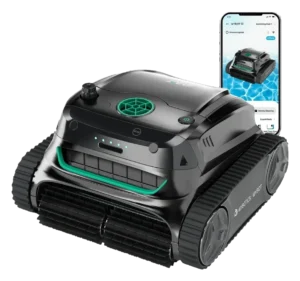
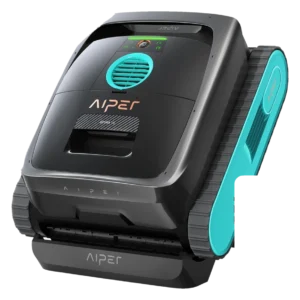
Aiper Scuba V3 · Wybot S2

All robot pool cleaners. Every measure below is plotted against the full class, so a difference can be read against how much the class itself varies.

  1. Aiper Scuba V3
  2. Wybot S2

Wybot

Wybot S2

Autonomy
IIIConditional Autonomy
Score
65/100 Capable
Readiness
Ready Now
Price
$999.99list

Up to three

01 Classification

What each one does on its own.

The Autonomy Ladder is the same five rungs for every robot on the site. A rung describes the conditions a robot handles without you, not how good it is.

V
Generalized
Any task, any setting
IV
Environmental
Handles new obstacles without help
III
Conditional
Finishes familiar jobs on its own
Aiper Scuba V3Wybot S2
II
Assisted
Runs preset routines, needs rescue
I
Manual
One action, on command
02 Assessment

Where they actually differ.

The Robovations Score is nine inputs across three pillars, each weighted as shown and each scored so that more is better. A robot can lead on one and trail on another, which is the point of showing them apart. Cost of ownership and data handling are reported on each robot's own page and are never averaged into the score.

Capability

Task completion16% of score
Does it finish the job it is sold to do, unattended
  • Aiper Scuba V391
  • Wybot S275
18median 72 across 433 scored robots100
Coverage and navigation10% of score
Does it work the whole area, and hold that between runs
  • Aiper Scuba V370
  • Wybot S250
0median 70 across 421 scored robots100
Edge-case recovery10% of score
Does it recover from the failures its category presents
  • Aiper Scuba V350
  • Wybot S230
18median 52 across 320 scored robots100
Operating envelope4% of score
How far conditions can vary before performance drops
  • Aiper Scuba V368
  • Wybot S270
28median 68 across 397 scored robots100

Dependability

Field failure rate16% of score
Documented hardware failures per owner-year
  • Aiper Scuba V348
  • Wybot S270
6median 70 across 359 scored robots100
Software stability14% of score
Whether updates fix more than they break
  • Aiper Scuba V374
  • Wybot S265
15median 65 across 342 scored robots100
Support longevity10% of score
Committed parts, service and updates, with dates
  • Aiper Scuba V332
  • Wybot S252
0median 62 across 429 scored robots100

Ownership burden

Routine maintenance12% of score
Hands-on time it asks for in normal operation
  • Aiper Scuba V368
  • Wybot S268
22median 67 across 434 scored robots100
Consumables8% of score
Parts that must be bought to keep it working
  • Aiper Scuba V366
  • Wybot S280
8median 69 across 434 scored robots100
03 Measured against the class

How far apart is a long way?

A number only means something next to the spread it sits in. Each track below is the real range across every classified robot in the class, with the median marked.

Price69 with a published figure
  • Aiper Scuba V3$1,099.99
  • Wybot S2$999.99
$299median $1,249$4,250
Runtime37 with a published figure
  • Aiper Scuba V3180 min
  • Wybot S2210 min
90 minmedian 180 min1,800 min
Charge time29 with a published figure
  • Aiper Scuba V3480 min
  • Wybot S2180 min
150 minmedian 240 min480 min
Weight65 with a published figure
  • Aiper Scuba V318.1 lbs
  • Wybot S219.9 lbs
7.9 lbsmedian 20.8 lbs46.3 lbs
Height60 with a published figure
  • Aiper Scuba V38.7 in
  • Wybot S210.6 in
3.8 inmedian 10.6 in29.9 in

Not compared, because fewer than two of these robots carry a published figure: Suction, Noise.

04 Ownership

What the numbers leave out.

The trade-off

What each design gives up to be good at what it is good at.

Aiper Scuba V3

You are paying flagship cordless pricing for full-surface coverage. At $1,199 list the V3 sits well above Aiper’s entry cordless models, and what the money buys is the wall and waterline work those machines leave to you.

Vision routing means the robot picks the path, not you. There is no perimeter to define and no dimensions to enter, and equally no way to hand it a plan when it misses a corner.

Wybot S2

No dock and no cable keeps the deck clear and nothing trailing into the water, and it also means every cycle starts and ends by hand: the owner lowers the machine in, lifts it out, and rinses the filter. A recharge takes about 3 hours.

Who each one is wrong for

Stated by the record itself. A robot being wrong for a household is a fact about fit, not a fault.

Aiper Scuba V3
Buyers looking for entry cordless pricing
List price is $1,199 and street price has run near $950 to $1,000. Aiper's $499 to $599 cordless models are a different class of machine; the V3 is not one of them.
Pools needing more than one full cycle in a session
Aiper publishes up to 180 minutes in full floor, wall, and waterline mode and up to 240 minutes in eco, and independent testing measured 140 to 150 minutes of continuous running. A pool that takes longer than that needs a recharge between runs.
Continuous heavy debris loads
The MicroMesh assembly is a rinsable two-layer filter rather than a large basket. Under sustained leaf fall it needs clearing after every cycle.
Wybot S2
Pools larger than 3,230 sq ft
Wybot rates the S2 by area, up to 3,230 sq ft of floor and wall. Larger pools sit outside that rating, and 210 minutes on a charge is the ceiling on a single cycle.
Owners who want the machine to empty its own filter
The base S2 ships without a dock and has no self-emptying arrangement. The filter is pulled and rinsed with fresh water after every cycle, and more often through heavy leaf fall.
Owners who want the machine to launch itself
The S2 is lifted into the pool and lifted out by hand. The WYBOT app schedules up to four runs a week on a cycle timer, but the machine has to be in the water when a scheduled run begins.

What stays your job

The upkeep ownership hands back to you, whatever the autonomy level says.

Aiper Scuba V3
  • After every use: Lift out the filter assembly, empty the debris, and rinse both mesh layers with a hose.
  • Weekly: Clean the brushes and check the drive tracks for lodged debris.
  • Monthly: Inspect the seals around the filter housing and the wheel treads for wear.
  • Seasonally: Store the robot indoors with the battery charged rather than empty. A lithium pack left discharged over a closed season degrades.
  • As needed: Replace the MicroMesh assembly or the brushes through Aiper. There is no scheduled consumable; the filter layers are rinsable rather than a recurring purchase.
Wybot S2
  • After every use: Rinse the filter cartridge with fresh water; tap the bristles to dislodge debris.
  • Weekly: Inspect the drive tracks and gripper contact pads for algae buildup; wipe with a soft cloth.
  • Every 3-6 months: Replace the filter media or brushes if the bristles are compressed or flow has dropped.
  • Annually: Deep-clean the housing and check the seals before storage; store the machine indoors, charged, and out of freezing temperatures.
05 Evidence

How much each of these is standing on.

Classifications rest on different depths of evidence. A pre-release assessment and a verified one are not the same kind of claim.

Evidence behind each classification
Robot Evidence status Sources reviewed Last assessed
Aiper Scuba V3 Provisional 5 Aug 2026
Wybot S2 Pending 2 Aug 2026

Robovations classifies robots; it does not rank them. Nothing on this page is a recommendation, and no manufacturer influences a classification or its placement here.