Skip to content
Saved
Comparison · 2 robots

Roborock RockNeo Q2 LiDAR · TerraMow V1000

All robot lawn mowers. Every measure below is plotted against the full class, so a difference can be read against how much the class itself varies.
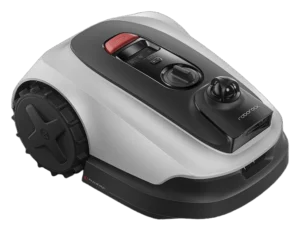
  1. Roborock RockNeo Q2 LiDAR
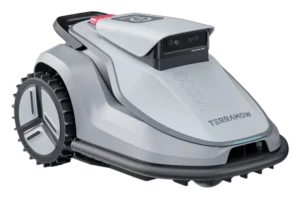
  2. TerraMow V1000

TerraMow

TerraMow V1000

Autonomy
IIIConditional Autonomy
Score
58/100 Capable
Readiness
Wait
Price
$1,399list

Up to three

01 Classification

What each one does on its own.

The Autonomy Ladder is the same five rungs for every robot on the site. A rung describes the conditions a robot handles without you, not how good it is.

V
Generalized
Any task, any setting
IV
Environmental
Handles new obstacles without help
III
Conditional
Finishes familiar jobs on its own
Roborock RockNeo Q2 LiDARTerraMow V1000
II
Assisted
Runs preset routines, needs rescue
I
Manual
One action, on command
02 Assessment

Where they actually differ.

The Robovations Score is nine inputs across three pillars, each weighted as shown and each scored so that more is better. A robot can lead on one and trail on another, which is the point of showing them apart. Cost of ownership and data handling are reported on each robot's own page and are never averaged into the score.

Capability

Task completion16% of score
Does it finish the job it is sold to do, unattended
  • TerraMow V100058
18median 72 across 418 scored robots100

Not scored: Roborock RockNeo Q2 LiDAR

Coverage and navigation10% of score
Does it work the whole area, and hold that between runs
  • TerraMow V100055
0median 70 across 406 scored robots100

Not scored: Roborock RockNeo Q2 LiDAR

Edge-case recovery10% of score
Does it recover from the failures its category presents
  • TerraMow V100025
18median 52 across 307 scored robots100

Not scored: Roborock RockNeo Q2 LiDAR

Operating envelope4% of score
How far conditions can vary before performance drops
  • TerraMow V100025
28median 68 across 382 scored robots100

Not scored: Roborock RockNeo Q2 LiDAR

Dependability

Field failure rate16% of score
Documented hardware failures per owner-year
  • TerraMow V100060
6median 73 across 346 scored robots100

Not scored: Roborock RockNeo Q2 LiDAR

Software stability14% of score
Whether updates fix more than they break
  • TerraMow V100025
15median 65 across 334 scored robots100

Not scored: Roborock RockNeo Q2 LiDAR

Support longevity10% of score
Committed parts, service and updates, with dates
  • TerraMow V100045
0median 63 across 414 scored robots100

Not scored: Roborock RockNeo Q2 LiDAR

Ownership burden

Routine maintenance12% of score
Hands-on time it asks for in normal operation
  • TerraMow V100072
22median 66 across 420 scored robots100

Not scored: Roborock RockNeo Q2 LiDAR

Consumables8% of score
Parts that must be bought to keep it working
  • TerraMow V100065
8median 69 across 419 scored robots100

Not scored: Roborock RockNeo Q2 LiDAR

03 Measured against the class

How far apart is a long way?

A number only means something next to the spread it sits in. Each track below is the real range across every classified robot in the class, with the median marked.

These robots share no measured specification with enough published figures to plot. That is a gap in the record, not a finding about the robots.

04 Ownership

What the numbers leave out.

The trade-off

What each design gives up to be good at what it is good at.

Roborock RockNeo Q2 LiDAR

Dropping the RTK antenna removes a setup step, but positioning now rests entirely on LiDAR and cameras that no independent test has yet run on a real lawn.

Roborock footnotes its own edge claim: 3 cm is the hardware distance, and actual results depend on software it says will be refined by firmware updates.

TerraMow V1000

Skipping the trench buys back a weekend of setup labor and hands boundary accuracy to a camera reading a fence line in changing light.

Wired’s review documents inconsistent boundary recognition near obstacles, because a single-camera vision system has no wire signal to fall back on when lighting or contrast is poor.

Single-review evidence base: TerraMow’s field record outside one publication’s short testing window is effectively unestablished.

Who each one is wrong for

Stated by the record itself. A robot being wrong for a household is a fact about fit, not a fault.

Roborock RockNeo Q2 LiDAR
Lawns larger than roughly a fifth of an acre
IFA coverage reports an 800 square meter rating. A quarter-acre lot is about 1,012 square meters, so larger properties sit outside the stated working area.
Buyers who need a mower before next mowing season
Roborock has announced no ship date, price or retail partner for the Q2 LiDAR, and says availability details come at market launch.
Owners who want a boundary-wire installation
The design has no wire mode. Boundaries come from AI mapping in the app, so a wire-guided setup is not an option on this machine.
Households wanting a camera-free outdoor robot
Navigation depends on an RGB camera and a second camera alongside LiDAR, and Roborock has not yet published what imagery or map data leaves the yard.
TerraMow V1000
Buyers who require a buried-wire boundary option
The V1000 is built around camera-based, wire-free boundary mapping; no documented buried-wire fallback mode exists for owners who prefer or require trenched cable, per manufacturer description.
Yards over about 0.3 acre
Manufacturer-rated coverage tops out at roughly 1,200 sq m (about 0.3 acre); larger or more complex lots exceed the documented capacity.
Slopes beyond 18 degrees, or heavily shaded terrain
Manufacturer specifications cap the rated operating slope at 18 degrees (about 32.5% grade); low-light navigation behavior is undocumented, per class-level behavior of similar camera-guided systems.
Buyers needing a multi-year reliability track record
TerraMow is a newer entrant to consumer robot mowers; no long-term owner-reported failure history or independent longevity testing exists for the V1000 yet, beyond one published review's short testing window.
Night or low-light mowing schedules
Camera-based navigation systems as a class depend on adequate lighting; no specific low-light or dusk performance claim for the V1000 was located in available sources.

What stays your job

The upkeep ownership hands back to you, whatever the autonomy level says.

Roborock RockNeo Q2 LiDAR
  • Weekly: Clear clippings from the three-blade deck and the side edge blade.
  • Weekly: Wipe the LiDAR window and both camera lenses so mapping and obstacle detection stay accurate.
  • Monthly: Clean the charging station contacts and check the station’s Wi-Fi amplifier placement.
  • As needed: Replace blades; Roborock has not yet published a replacement interval or part price.
  • As needed: Install over-the-air firmware updates, which Roborock says will refine edge cutting.
  • Seasonally: Clean, charge and store the mower indoors before winter.
TerraMow V1000
  • Seasonally: Blade replacement recommended once per season or when cutting quality declines, per manufacturer guidance.
  • Weekly: Wipe the onboard vision camera lens clear of grass clippings, dew, and debris.
  • Monthly: Inspect wheels and undercarriage for grass buildup and clear as needed.
  • Seasonally: Clean dock charging contacts before storage or winterization.
  • As needed: Re-run the app boundary mapping walk if the yard layout changes.
  • Annually: Check battery health before the start of mowing season, per manufacturer guidance.
05 Evidence

How much each of these is standing on.

Classifications rest on different depths of evidence. A pre-release assessment and a verified one are not the same kind of claim.

Evidence behind each classification
Robot Evidence status Sources reviewed Last assessed
Roborock RockNeo Q2 LiDAR Pre-Release 5 Sep 2026
TerraMow V1000 Provisional 4 Sep 2026

Robovations classifies robots; it does not rank them. Nothing on this page is a recommendation, and no manufacturer influences a classification or its placement here.