Skip to content
Saved
Comparison · 2 robots

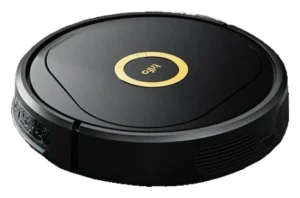
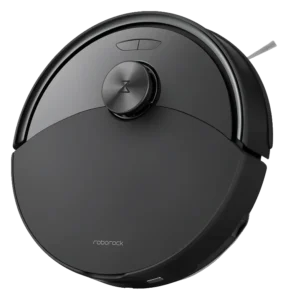
Roborock Q10 S5 · Trifo Lucy Ultra

All robot vacuums. Every measure below is plotted against the full class, so a difference can be read against how much the class itself varies.

  1. Roborock Q10 S5
  2. Trifo Lucy Ultra

Up to three

01 Classification

What each one does on its own.

The Autonomy Ladder is the same five rungs for every robot on the site. A rung describes the conditions a robot handles without you, not how good it is.

V
Generalized
Any task, any setting
IV
Environmental
Handles new obstacles without help
III
Conditional
Finishes familiar jobs on its own
Roborock Q10 S5Trifo Lucy Ultra
II
Assisted
Runs preset routines, needs rescue
I
Manual
One action, on command
02 Assessment

Where they actually differ.

The Robovations Score is nine inputs across three pillars, each weighted as shown and each scored so that more is better. A robot can lead on one and trail on another, which is the point of showing them apart. Cost of ownership and data handling are reported on each robot's own page and are never averaged into the score.

Capability

Task completion16% of score
Does it finish the job it is sold to do, unattended
  • Roborock Q10 S550
  • Trifo Lucy Ultra40
18median 72 across 381 scored robots100
Coverage and navigation10% of score
Does it work the whole area, and hold that between runs
  • Roborock Q10 S550
  • Trifo Lucy Ultra58
15median 70 across 371 scored robots100
Edge-case recovery10% of score
Does it recover from the failures its category presents
  • Roborock Q10 S525
  • Trifo Lucy Ultra50
18median 50 across 287 scored robots100
Operating envelope4% of score
How far conditions can vary before performance drops
  • Roborock Q10 S550
  • Trifo Lucy Ultra60
25median 68 across 345 scored robots100

Dependability

Field failure rate16% of score
Documented hardware failures per owner-year
  • Roborock Q10 S557
  • Trifo Lucy Ultra48
6median 70 across 371 scored robots100
Software stability14% of score
Whether updates fix more than they break
  • Roborock Q10 S565
  • Trifo Lucy Ultra82
15median 65 across 300 scored robots100
Support longevity10% of score
Committed parts, service and updates, with dates
  • Roborock Q10 S50
  • Trifo Lucy Ultra40
0median 63 across 377 scored robots100

Ownership burden

Routine maintenance12% of score
Hands-on time it asks for in normal operation
  • Roborock Q10 S540
  • Trifo Lucy Ultra36
22median 65 across 382 scored robots100
Consumables8% of score
Parts that must be bought to keep it working
  • Roborock Q10 S565
  • Trifo Lucy Ultra61
8median 69 across 381 scored robots100
03 Measured against the class

How far apart is a long way?

A number only means something next to the spread it sits in. Each track below is the real range across every classified robot in the class, with the median marked.

Price195 with a published figure
  • Roborock Q10 S5$399.99
  • Trifo Lucy Ultra$399
$160median $799.99$2,599
Suction (mode not stated)172 with a published figure
  • Roborock Q10 S510,000 Pa
  • Trifo Lucy Ultra4,000 Pa
1,000 Pamedian 8,000 Pa36,000 Pa
Runtime170 with a published figure
  • Roborock Q10 S5180 min
  • Trifo Lucy Ultra120 min
60 minmedian 180 min360 min
Weight170 with a published figure
  • Roborock Q10 S510.5 lbs
  • Trifo Lucy Ultra7.5 lbs
3.3 lbsmedian 8.2 lbs25 lbs
Height191 with a published figure
  • Roborock Q10 S53.9 in
  • Trifo Lucy Ultra3.3 in
2.6 inmedian 3.8 in7.8 in

Not compared, because fewer than two of these robots carry a published figure: Charge time, Noise.

04 Ownership

What the numbers leave out.

The trade-off

What each design gives up to be good at what it is good at.

Roborock Q10 S5

No auto-empty, anywhere: Roborock states this chassis cannot self-empty even docked on a Q10 S5+ base, so the automation gap is permanent, not upgradable.

Skipping the auto-empty dock still delivers the full 180-minute runtime Roborock documents for this model on its 5,200 mAh pack.

Navigation with no measured sense of direction: Tom’s Guide’s 75% coverage figure means real gaps even on straightforward layouts.

Trifo Lucy Ultra

Vision recognition solves false-positive detection but does not shrink the operational scope, mapping and return-to-dock remain bound by dock placement and single-floor assumption.

Who each one is wrong for

Stated by the record itself. A robot being wrong for a household is a fact about fit, not a fault.

Roborock Q10 S5
Owners wanting any form of auto-emptying
Roborock states explicitly the Q10 S5 cannot self-empty even when placed on a Q10 S5+ dock; there is no upgrade path.
Cluttered floors with cords or pet toys
Tom's Guide reports frequent tangles with cords and strandings on furniture legs, describing navigation with no sense of direction.
Owners who cannot supervise early runs
Constant supervision is what Tom's Guide's review found necessary; this isn't a robot to start and walk away from initially.
Heavy pet-shedding households needing frequent emptying
The onboard bin holds 330 ml; heavy shedding can fill that daily with no dock automation to offset manual emptying.
Trifo Lucy Ultra
Homes with high-pile or shag carpet
Owner reports document suction loss and inadequate agitation on plush flooring. Navigation quality does not overcome brush-to-surface contact limits on thick pile, and no automatic mop lift is documented, so the water tray comes off before running on carpet.
Households that will not put a networked camera on a moving robot
The camera is the product's headline feature and is not removable. Review testing found no cloud storage of stills or video, but the robot still carries a 1080p sensor with night vision through every room it maps.
Owners requiring true hands-off operation
There is no auto-empty base. The 252 ml bin is emptied and rinsed by hand, the 366 ml tank is refilled for each mopping pass, and filter and brush upkeep sits with the owner.
Commercial or industrial-scale deployments
Consumer-class hardware and software; not rated for continuous multi-unit operation. Designed for residential 1-2x weekly schedules.

What stays your job

The upkeep ownership hands back to you, whatever the autonomy level says.

Roborock Q10 S5
  • After every use: Remove and wash the VibraRise mop cloth and empty unused water from the tank after mopping; Roborock’s manual calls for air-drying both to prevent odors.
  • Weekly: Empty the onboard dustbin by hand; there is no auto-empty dock, and Roborock states the robot cannot use the Q10 S5+ dock later.
  • Monthly: Clean the main brush and rinse the washable filter; Roborock’s printed schedule is every 2 weeks for both, with 24 hours of drying before the filter goes back in.
  • Monthly: Unscrew and clean the side brush, per the manual’s stated cadence.
  • Every 3-6 months: Replace the side brush and the VibraRise mop cloth; the manual rates both at 3-6 months.
  • Annually: Replace the main brush and washable filter; the manual rates both at 6-12 months.
  • As needed: Wipe the cliff, carpet, and obstacle-avoidance sensors and charging contacts, clean the omnidirectional and main wheels, and tidy cords from the floor before runs.
Trifo Lucy Ultra
  • After most runs: Empty and rinse the 252 ml dustbin; rinse the mop pad and empty any water left in the 366 ml tank.
  • Weekly: Tap the filter clean; wipe the camera lens with a dry cloth.
  • Every 3-6 months: Replace or clean the primary filter (~$12-18); inspect the side brush.
  • Quarterly: Rotate or replace the side brush (~$15-20); verify dock contact cleanliness.
  • Seasonally: Check charging contacts and dock alignment after heavy use periods.
05 Evidence

How much each of these is standing on.

Classifications rest on different depths of evidence. A pre-release assessment and a verified one are not the same kind of claim.

Evidence behind each classification
Robot Evidence status Sources reviewed Last assessed
Roborock Q10 S5 Pending 1 Jul 2026
Trifo Lucy Ultra Provisional 2 Aug 2026

Robovations classifies robots; it does not rank them. Nothing on this page is a recommendation, and no manufacturer influences a classification or its placement here.