
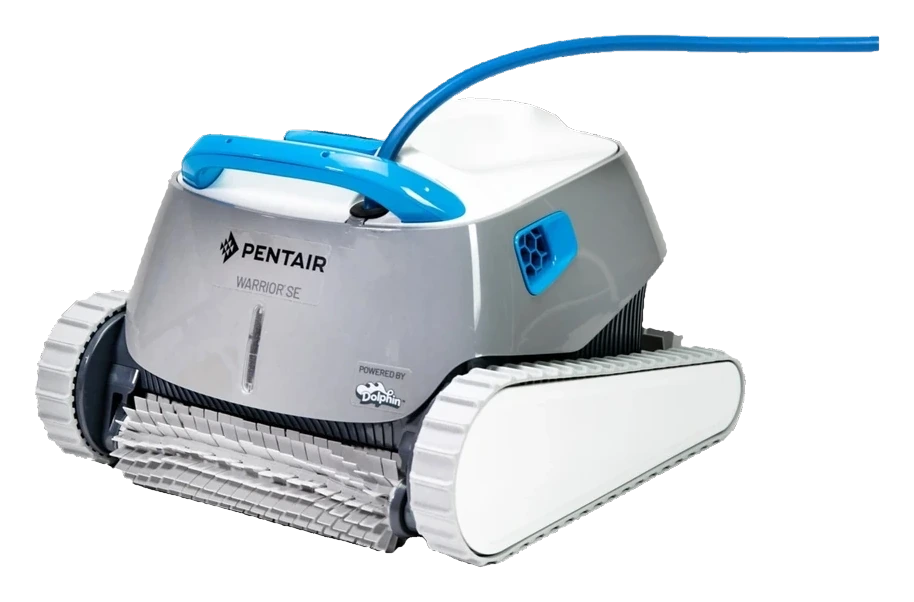
Pentair
Pentair Warrior SE
- Autonomy
- IIAssisted
- Score
- 65/100Capable
- Readiness
- Not assessed
- Price
- Not tracked
Pentair
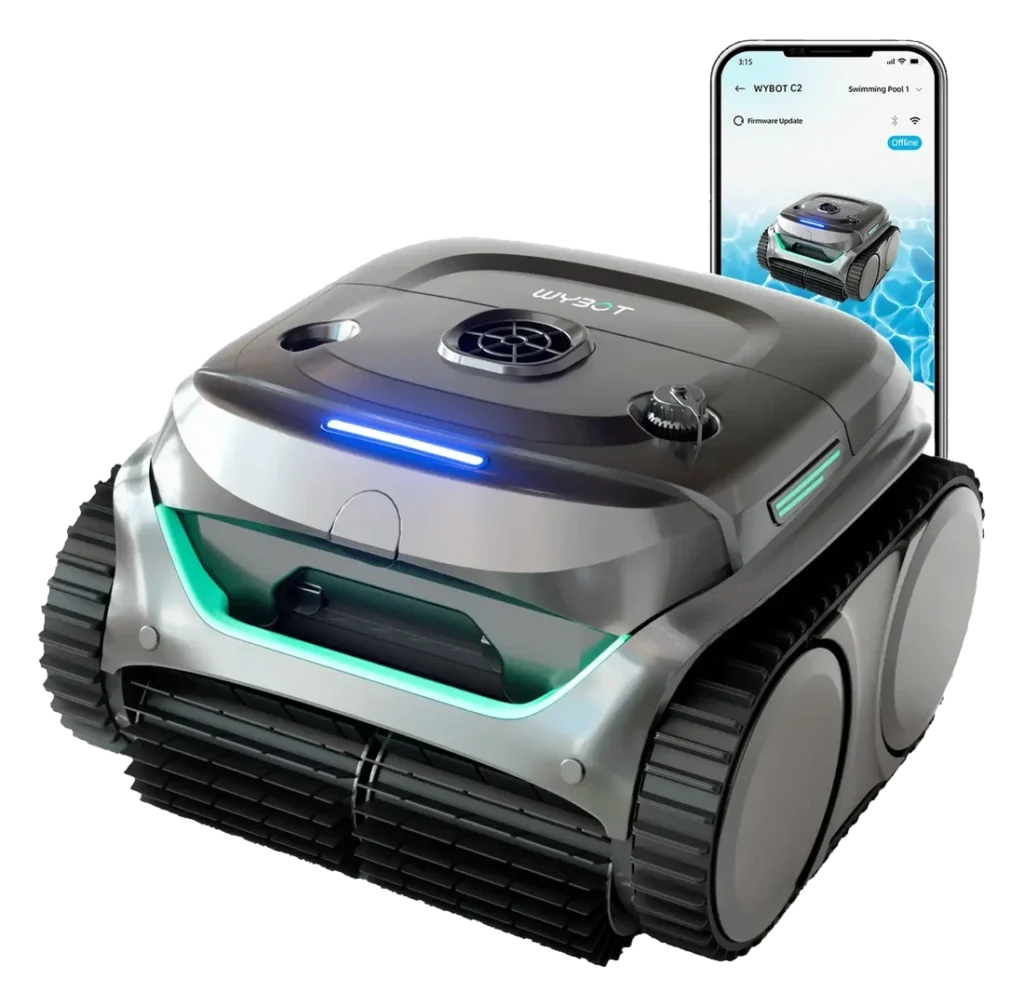
Wybot
Up to three
All robot pool cleaners. Every figure below is placed against the whole class, so a gap can be read against how much the class itself varies.
The conditions each robot was assessed against, side by side. Rows marked in gold are where these machines genuinely differ.
| Condition | Pentair Warrior SE | Wybot C2 |
|---|---|---|
| Pool type | ||
| In-ground | GoodDesigned for in-ground pools; gunite, vinyl, and plaster pools all supported. | GoodWybot designs and rates the C2 specifically for in-ground pools up to 2,152 sq ft; this matches its documented target use. |
| Above-groundthey differ | PoorCord management and size make this model impractical for above-ground pool installations. | DependsWybot documents this model for in-ground pools only; no above-ground rating or compatibility statement was found in the sources reviewed. |
| Mixed setupthey differ | GoodStandard for this category, see specs for confirmation. | DependsWith no above-ground rating documented, a mixed setup only has confirmed coverage for the in-ground portion of the pool. |
| Pool size | ||
| Small (< 400 sqft) | GoodCapable but exceeds what compact pools typically need; corded run time wastes energy on sub-5k gallon pools. | GoodWell inside the 2,152 sq ft rated coverage; a full cycle at up to 180 minutes has ample margin for this size. |
| Medium (400 – 800) | Good15k to 30k gallons is the ideal operating range; floor coverage completes within typical 1.5-2.5 hour cycles. | GoodComfortably within the 2,152 sq ft rated area, with the 180-minute Eco-mode runtime enough for a complete cycle. |
| Large (> 800) | DependsMultiple cycles required per week on pools over 30k gallons; random pattern is inefficient at scale. | DependsWybot's rating tops out at 2,152 sq ft; pools well above that may exceed a single 180-minute cycle's coverage. |
| Debris load | ||
| Fine (sand / silt) | GoodCartridge filter handles fine sediment and silt effectively. | GoodBob Vila's testing found the ultra-fine 10-micron filter stage makes a noticeable difference on fine sediment compared to a single 180-micron basket. |
| Leaves / large debristhey differ | DependsHeavy leaf load requires pre-skimming and frequent basket emptying; random search prolongs debris collection. | GoodNo leaves-specific test was documented for the C2; the 180-micron primary stage should catch larger debris, but this was not verified independently. |
| Algae / heavy foulingthey differ | DependsBrush contact helps prevent algae growth; vacuuming already-formed algae is less effective than proactive brushing. | GoodBob Vila's testing specifically credits the dual-layer filtration with a noticeable difference on light algae, beyond what a single-stage filter catches. |
| Coverage you want | ||
| Floor only | GoodDual brushes provide thorough floor contact; documented owner patterns show effective bottom-sediment removal. | GoodEven without mapping, Bob Vila's full-cycle testing found the C2 covers a pool thoroughly on the basic floor-cleaning modes. |
| Floor + walls | DependsLower walls contacted by brushes; upper walls and waterline require a separate tool or multi-zone strategy. | DependsWall coverage is one of seven preset modes, not an adaptive route, so the owner must choose the right one. |
| Floor + walls + waterlinethey differ | PoorWaterline cleaning is not a design feature; this model cannot reach most pool coping or perimeter tile. | DependsFull floor, wall and waterline coverage means choosing the right preset mode; there is no camera to plan it. |
A robot being poor for a condition is a fact about fit, not a fault. “Depends” means the record names a limit worth reading, not that the answer is unknown.
Nine inputs across three pillars, each weighted as shown and each scored so more is better. A robot can lead on one and trail on another, which is the point of showing them apart.
A number only means something next to the spread it sits in. Each track is the real range across every classified robot in the class, with the median marked.
Not compared, because fewer than two of these robots carry a published figure: Price, Runtime, Charge time, Noise, Height.
Written on each record, and the only thing here every robot on the site carries.
What each design gives up to be good at what it is good at.
Outlet siting is the constraint, not cable length. The 60 ft swivel cable runs from the power supply to the robot, but the supply must sit at least 12 feet from the pool edge on a GFCI-protected receptacle, and Pentair’s safety instructions state that an extension cord must not be used to connect it. A pool with no suitable outlet in reach needs one installed.
No camera, no mapping: seven preset modes replace a perception system, so coverage quality tracks the mode the owner selects, not the robot’s own judgment.
The added 10-micron filter stage catches finer sediment than a single-basket cleaner, but a three-hour charge against a three-hour runtime still caps use at one cycle per half day.
At 17.6 lb wet, the machine that documents step and slope coverage is also the one an owner has to physically lift out every time.
Skipping the AI camera keeps the price roughly $200 below the C2 Vision, and gives up debris-adaptive path planning to do it.
Stated by the record itself. A robot being wrong for a household is a fact about fit, not a fault.
The upkeep ownership hands back to you, whatever the autonomy level says.
Classifications rest on different depths of evidence. A pre-release assessment and a verified one are not the same kind of claim.
| Robot | Evidence status | Sources reviewed | Last assessed |
|---|---|---|---|
| Pentair Warrior SE | Discontinued | 2 | Sep 2026 |
| Wybot C2 | Pending | 1 | Aug 2026 |
Evidence status counts the sources behind a classification, not their kind. A high count can be maker documentation and price coverage, so read it as how much was reviewed rather than as independent testing. How we weigh evidence.
 The full recordPentair Warrior SESpecifications, evidence, the Fit Check in full, and every tracked change.
 The full recordWybot C2Specifications, evidence, the Fit Check in full, and every tracked change.
Robovations classifies robots; it does not rank them. Nothing on this page is a recommendation, and no manufacturer influences a classification or its placement here.
Comparing across classes is allowed — the page will switch to per-class positioning and tell you it has.