
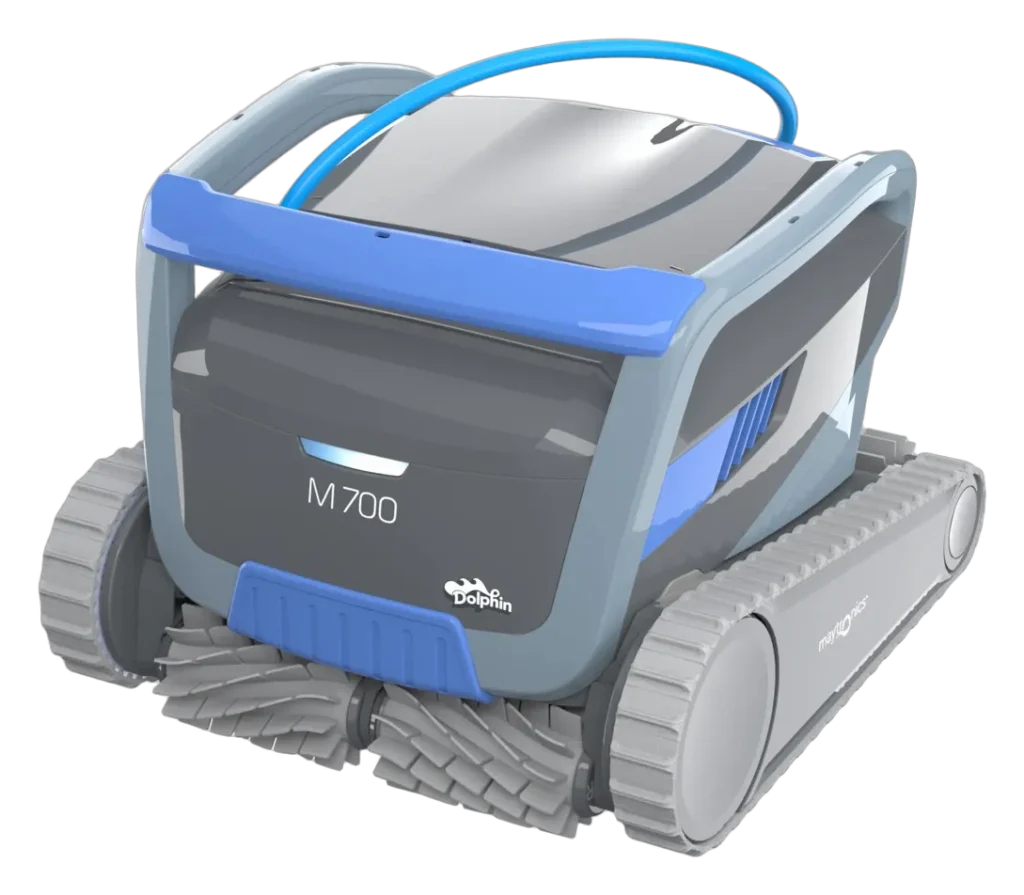
Maytronics
Maytronics Dolphin M700
- Autonomy
- IIIConditional
- Score
- 71/100Strong
- Readiness
- Ready Now
- Price
- $2,499list
Maytronics
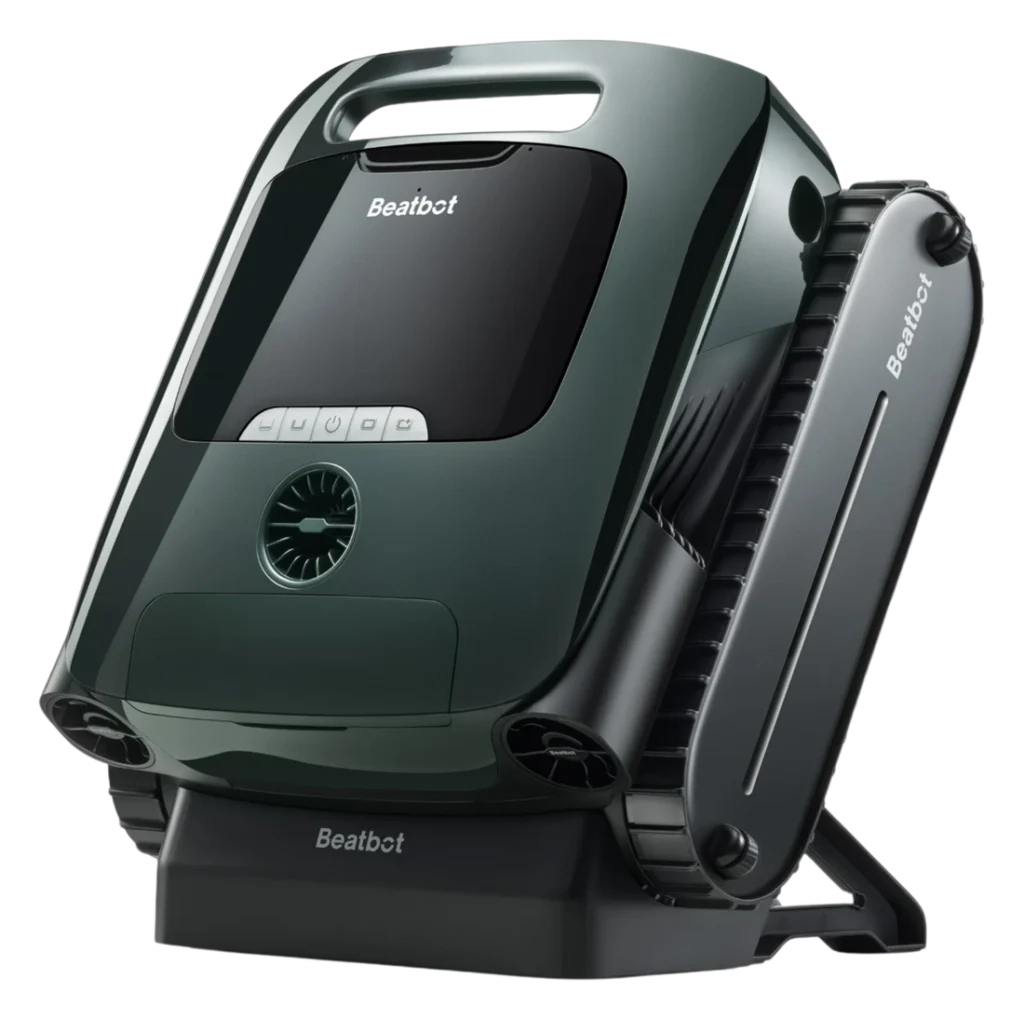
Beatbot
Up to three
All robot pool cleaners. Every figure below is placed against the whole class, so a gap can be read against how much the class itself varies.
The conditions each robot was assessed against, side by side. Rows marked in gold are where these machines genuinely differ.
| Condition | Dolphin M700 | AquaSense 2 Pro |
|---|---|---|
| Pool type | ||
| In-ground | GoodDesigned for in-ground gunite and vinyl liner pools; dock positioning expects fixed structural installation. | GoodDesigned for in-ground pools with standard plumbing and return configurations. |
| Above-groundthey differ | PoorCable routing and dock anchoring assume in-ground pool features; above-ground pool walls and perimeter lack compatible attachment points. | DependsCable length and depth sensor calibration optimized for in-ground; aboveground use possible but less reliable. |
| Mixed setup | GoodFlexible for any in-ground pool type; confirm dock location and cable routing before purchase. | GoodWorks in both in-ground and aboveground pools with appropriate cable management. |
| Pool size | ||
| Small (< 400 sqft) | GoodM700 is rated for 15,000+ gallon pools; smaller pools result in overlapping coverage and excessive filter cycling costs. | GoodUnder 15,000 gallons: single run completes coverage quickly but leaves idle capacity in battery. |
| Medium (400 – 800) | GoodOptimized for 15,000–25,000 gallon in-ground pools; weekly dual-mode schedule covers floor and waterline thoroughly. | Good25,000-40,000 gallons is sweet spot: runtime covers full coverage in single autonomous session. |
| Large (> 800)they differ | GoodPools 25,000–35,000 gallons benefit from M700's extended runtime; single cycle provides adequate floor and wall coverage. | PoorOver 50,000 gallons requires multiple cycles or partial coverage per session. |
| Debris load | ||
| Fine (sand / silt) | GoodFine-debris mode filter (pleated paper) excels at algae spores and silt; recommended for spring and summer use. | GoodSand, fine silt handled well by dual brushes and filter cartridge replacement every 4 weeks. |
| Leaves / large debristhey differ | GoodLeaf-load mode filter (mesh screen) prioritizes rapid cycling over fine filtration; optimized for fall seasonal debris. | DependsDual brushes prevent wrapping better than single designs; however, high leaf load requires weekly rinsing. |
| Algae / heavy fouling | DependsFine-debris mode reaches algae film but not thick blooms; pre-treatment of >2mm algae required. | DependsLiDAR turbidity tolerance: algae blooms above moderate levels degrade navigation accuracy significantly. |
| Coverage you want | ||
| Floor only | GoodEnhanced grid navigation provides 95%+ floor coverage in standard in-ground layouts; consistency improved vs M600. | GoodPrimary focus: floor cleaning via dual brushes and autonomous path planning. |
| Floor + wallsthey differ | GoodNarrower profile reaches walls up to 45° incline; corner access is 20–30% better than comparable models. | DependsClimbs walls with variable brush pressure but does not reach beyond 5-6 feet height reliably. |
| Floor + walls + waterlinethey differ | GoodDual waterline brushes handle both light algae and mineral deposits; tile and plaster reach is consistent across both filter modes. | DependsWaterline follower handles cleaning but may miss tight corner crevices requiring manual attention. |
A robot being poor for a condition is a fact about fit, not a fault. “Depends” means the record names a limit worth reading, not that the answer is unknown.
Nine inputs across three pillars, each weighted as shown and each scored so more is better. A robot can lead on one and trail on another, which is the point of showing them apart.
A number only means something next to the spread it sits in. Each track is the real range across every classified robot in the class, with the median marked.
Not compared, because fewer than two of these robots carry a published figure: Runtime, Charge time, Noise.
Written on each record, and the only thing here every robot on the site carries.
What each design gives up to be good at what it is good at.
One extra-large cartridge takes fine and ultra-fine debris together, but changing which media is fitted is a physical swap: the standard and ultra-fine kits are exchanged by hand at the machine, not selected in the app.
The extra-large cartridge stretches the interval between emptyings, but emptying means lifting the whole robot out: 11.5 kg (25.4 lbs) out of the water, top open, rinsed with a hose.
You gain unattended autonomous cleaning across five functions, but scheduling and remote control depend on smartphone WiFi connectivity; app stability concerns appear in owner forums.
The quad brush system covers floor, wall and waterline in the same run, and those brushes are consumables that need rinsing after runs and replacing as the bristles wear.
Obstacle detection protects pool furniture, not people or animals: the pool must be clear before an unsupervised run.
Stated by the record itself. A robot being wrong for a household is a fact about fit, not a fault.
The upkeep ownership hands back to you, whatever the autonomy level says.
Classifications rest on different depths of evidence. A pre-release assessment and a verified one are not the same kind of claim.
| Robot | Evidence status | Sources reviewed | Last assessed |
|---|---|---|---|
| Maytronics Dolphin M700 | Provisional | 3 | Aug 2026 |
| Beatbot AquaSense 2 Pro | Provisional | 5 | Aug 2026 |
Evidence status counts the sources behind a classification, not their kind. A high count can be maker documentation and price coverage, so read it as how much was reviewed rather than as independent testing. How we weigh evidence.
 The full recordMaytronics Dolphin M700Specifications, evidence, the Fit Check in full, and every tracked change.
 The full recordBeatbot AquaSense 2 ProSpecifications, evidence, the Fit Check in full, and every tracked change.
Robovations classifies robots; it does not rank them. Nothing on this page is a recommendation, and no manufacturer influences a classification or its placement here.
Comparing across classes is allowed — the page will switch to per-class positioning and tell you it has.