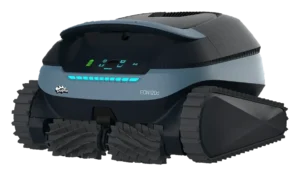
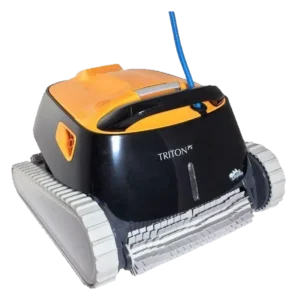
Maytronics Dolphin EON 120d · Maytronics Dolphin Triton PS
All robot pool cleaners. Every measure below is plotted against the full class, so a difference can be read against how much the class itself varies.
- Maytronics Dolphin EON 120d
- Maytronics Dolphin Triton PS


Maytronics Dolphin Triton PS
- Autonomy
- IIIConditional Autonomy
- Score
- 53/100 Limited
- Readiness
- Not assessed
- Price
- $1,049list
Up to three
What each one does on its own.
The Autonomy Ladder is the same five rungs for every robot on the site. A rung describes the conditions a robot handles without you, not how good it is.
Where they actually differ.
The Robovations Score is nine inputs across three pillars, each weighted as shown and each scored so that more is better. A robot can lead on one and trail on another, which is the point of showing them apart. Cost of ownership and data handling are reported on each robot's own page and are never averaged into the score.
Capability
- Maytronics Dolphin EON 120d75
- Maytronics Dolphin Triton PS55
- Maytronics Dolphin EON 120d70
- Maytronics Dolphin Triton PS46
- Maytronics Dolphin EON 120d50
- Maytronics Dolphin Triton PS30
- Maytronics Dolphin EON 120d100
- Maytronics Dolphin Triton PS56
Dependability
- Maytronics Dolphin EON 120d70
- Maytronics Dolphin Triton PS81
- Maytronics Dolphin EON 120d65
- Maytronics Dolphin Triton PS33
- Maytronics Dolphin EON 120d79
- Maytronics Dolphin Triton PS67
Ownership burden
- Maytronics Dolphin EON 120d84
- Maytronics Dolphin Triton PS53
- Maytronics Dolphin EON 120d69
- Maytronics Dolphin Triton PS54
How far apart is a long way?
A number only means something next to the spread it sits in. Each track below is the real range across every classified robot in the class, with the median marked.
- Maytronics Dolphin EON 120d$1,199
- Maytronics Dolphin Triton PS$1,049
- Maytronics Dolphin EON 120d24.3 lbs
- Maytronics Dolphin Triton PS18.7 lbs
Not compared, because fewer than two of these robots carry a published figure: Suction, Runtime, Charge time, Noise, Height.
What the numbers leave out.
The trade-off
What each design gives up to be good at what it is good at.
DebrisLock backwashes in the water the moment the filter starts to clog, but it reduces filter handling rather than removing it: early press testing still found clearing a leaf-packed filter an awkward job.
Cordless operation removes the tether, but the run is bounded by the pack: 1.5, 2 or 2.5 hours per cycle and a lift-out to recharge, against a mains cleaner that keeps going from the outlet.
PowerStream wall focus reduces floor-brush contact. Pressure directed at walls means lower floor-brush load; heavy leaf debris may require a second cycle or manual pre-cleanup.
Who each one is wrong for
Stated by the record itself. A robot being wrong for a household is a fact about fit, not a fault.
- Owners who want no battery routine at all
- Cordless operation means lifting the robot out to its caddy and charging it off-pool, and keeping the pack topped up through the off-season. Mains-powered cleaners run from an outlet and skip both steps.
- Pools under heavy leaf fall where nobody wants to handle the filter
- DebrisLock backwashes in the water and cuts how often the filter needs service, but early press testing still found clearing a leaf-packed filter an awkward job. The work is reduced, not removed.
- Buyers who want a multi-season service record
- The EON line was introduced in January 2026. Battery longevity and long-run reliability data for this generation does not exist yet.
- Pools with heavy waterline staining or mineral deposits
- No dedicated waterline brush motor. Calcium and algae at the pool surface require manual brushing; Triton PS cannot address them autonomously.
- Above-ground pools and shallow installations
- Two-motor and PowerStream pressure design are engineered for in-ground depth and wall angle. Above-ground use may cause pressure imbalance and uneven wall contact.
- Owners expecting hands-off scheduling or WiFi convenience
- Manual deployment and filter-dial tuning require weekly owner attention. No app scheduling means weekly cable uncoiling and dock positioning.
- Pools with significant floor debris load or algae buildup
- PowerStream focus on walls diverts water pressure from floor. Heavy leaf and organic debris loads result in incomplete floor pickup compared to floor-focused designs.
What stays your job
The upkeep ownership hands back to you, whatever the autonomy level says.
- Weekly: Lift the robot out, open the filter compartment, empty it and rinse with a hose. Maytronics states DebrisLock’s in-water backwash moves this from a daily job to a weekly one, though heavy leaf fall shortens the interval.
- Monthly: Brush wear check; replace bristles if splayed.
- Every 3-6 months: Deep rinse the filter assembly.
- Seasonally: Store the battery charged, not drained, and top it up periodically through the off-season; keep the robot and charger in a dry location.
- After every use: Visual cable and swivel inspection for tangles or debris.
- Weekly: Rinse filter cartridge in place during heavy debris season (spring and fall).
- Monthly: Inspect PowerStream pump housing for water drips or pressure leaks. Lubricate cable swivel joint with silicone spray.
- Annually: Replace filter cartridge ($40-60) and inspect pump seal for degradation or mineral accumulation.
- Every 2-3 years: PowerStream pump seal inspection and replacement if leakage observed (~$400 professional service).
- Seasonally: Winterization includes draining residual water from cable and pump lines; store cable indoors to prevent UV and freeze damage.
How much each of these is standing on.
Classifications rest on different depths of evidence. A pre-release assessment and a verified one are not the same kind of claim.
| Robot | Evidence status | Sources reviewed | Last assessed |
|---|---|---|---|
| Maytronics Dolphin EON 120d | Pending | 6 | Aug 2026 |
| Maytronics Dolphin Triton PS | Discontinued | 3 | Aug 2026 |
Add a robot
Comparing across classes is allowed — the page will switch to per-class positioning and tell you it has.