
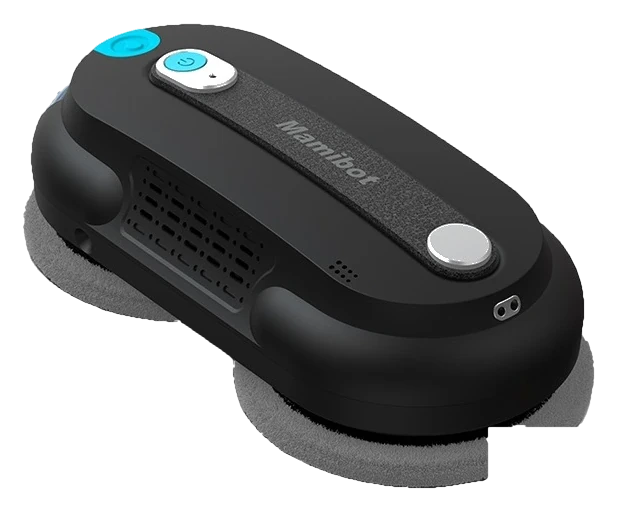
Mamibot
Mamibot iGLASSBOT W168
- Autonomy
- IIAssisted
- Score
- Not scored
- Readiness
- Not assessed
- Price
- Not tracked
Mamibot
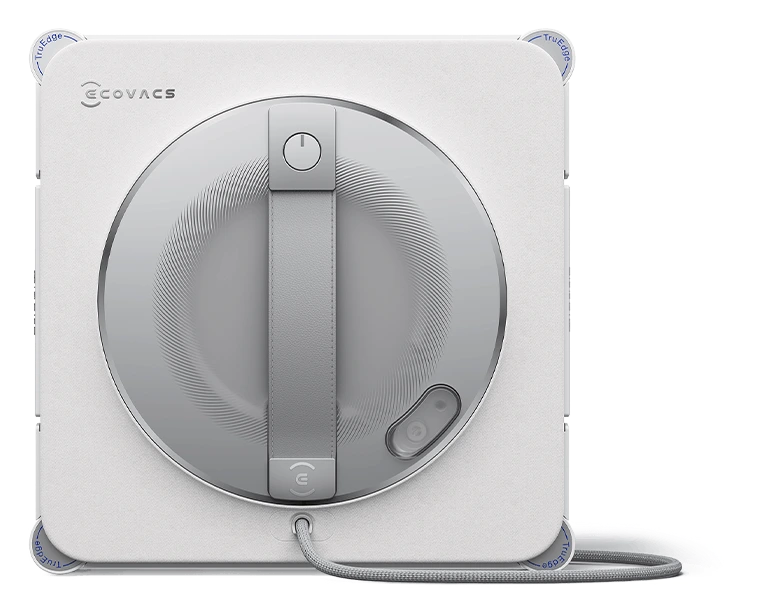
Ecovacs
Up to three
All robot window cleaners. Every figure below is placed against the whole class, so a gap can be read against how much the class itself varies.
The conditions each robot was assessed against, side by side. Rows marked in gold are where these machines genuinely differ.
| Condition | Mamibot iGLASSBOT W168 | Winbot W2S Pro Omni |
|---|---|---|
| Window style | ||
| Standard residential | GoodRoute-planned stripe cleaning across three modes is built for a single mounted pane, the size class most residential windows fall into. | GoodEcovacs rates panes from 30 by 40 cm upward, so ordinary windows sit well inside its range. |
| Large panes (8 ft+)they differ | GoodManufacturer guidance names large fixed panes and smooth tiled walls as this model's strongest documented match. | DependsRated to 8 by 2.5 m, but no independent test yet shows how it covers glass that large. |
| Specialty / texturedthey differ | Poor3,000 Pa is the ceiling and the only adhesion method; Mamibot's own guidance excludes textured or leaded panes outright. | DependsEcovacs names shower doors and tilting windows, but excludes greasy glass, stickered panes and mirrors under 4 mm. |
| Frame style | ||
| Frameless / minimal | GoodEdge detection and suction adhesion work directly on the glass surface, so minimal or absent framing doesn't limit where it mounts. | GoodAn optocoupler sensor detects the frameless edge and stops the robot there, per Ecovacs. |
| Standard mullionsthey differ | GoodStandard mullions sit outside the mounted pane; the robot's edge detection and suction hold to the glass itself, not the frame. | DependsCorner scrubbers target the frame edge, but the manual rules out frames under 5 mm deep. |
| Heavy bezels | DependsThe square-body's route-planned stripe pattern assumes flat glass; clearance against a raised heavy bezel lip isn't documented. | DependsEdge sensors stop it at raised frames; no independent test shows how close it cleans to heavy trim. |
| Building height | ||
| Single-story | GoodGround-level panes carry the lowest stakes; the UPS and rope layers matter here too but the consequence of any lapse is smaller. | GoodGround-floor glass needs only the station nearby and the robot pressed onto the pane. |
| 2 – 3 stories | GoodA rated 30-minute UPS holds suction on a power cut, plus an alarm and rope, covering this height band. | GoodA 5.5 m safety rope and 5 kg station counterweight are supplied for low exterior windows. |
| 4+ stories | DependsThe rated UPS, alarm and rope give real fall protection, but no source validates performance specifically at 4-plus story height. | DependsThe manual requires a secure tether outside and forbids rain and gale winds; the rope is 5.5 m. |
| Power preference | ||
| Corded OK | GoodRuns on mains power through a 5-meter extension cord for every cleaning session; that is the primary and only continuous supply. | GoodA cable to the station is part of the design, so a tethered robot matches this preference. |
| Cordless preferredthey differ | PoorRated at 72W over a 5-meter mains cord; the 500 mAh UPS is a power-cut backup only, not a cordless supply. | GoodThe station battery supplies up to 110 minutes with no wall outlet needed. |
| No preference | GoodWith no preference given, mains operation and a rated 30-minute UPS backup fit this reader either way. | GoodPower arrangement does not limit fit; the station battery covers up to 110 minutes. |
A robot being poor for a condition is a fact about fit, not a fault. “Depends” means the record names a limit worth reading, not that the answer is unknown.
A number only means something next to the spread it sits in. Each track is the real range across every classified robot in the class, with the median marked.
Not compared, because fewer than two of these robots carry a published figure: Price, Runtime.
Written on each record, and the only thing here every robot on the site carries.
What each design gives up to be good at what it is good at.
Dual water spraying ends the earlier generation’s hand pre-wetting step, but pane-to-pane repositioning remains a manual task on every run.
A 500 mAh UPS rated to hold suction for 30 minutes after a power cut: real safety engineering, undercut by an unpublished list price.
No independent source has tested this specific model; its completion and coverage claims rest entirely on Mamibot’s own documentation.
The station battery removes the outlet hunt, but the robot still has to be carried and pressed onto every pane.
Edge scrubbing is the headline change, and no independent test has yet measured whether it reaches the frame.
Stated by the record itself. A robot being wrong for a household is a fact about fit, not a fault.
The upkeep ownership hands back to you, whatever the autonomy level says.
Classifications rest on different depths of evidence. A pre-release assessment and a verified one are not the same kind of claim.
| Robot | Evidence status | Sources reviewed | Last assessed |
|---|---|---|---|
| Mamibot iGLASSBOT W168 | Pending | 3 | Sep 2026 |
| Ecovacs Winbot W2S Pro Omni | Provisional | 9 | Sep 2026 |
Evidence status counts the sources behind a classification, not their kind. A high count can be maker documentation and price coverage, so read it as how much was reviewed rather than as independent testing. How we weigh evidence.
 The full recordMamibot iGLASSBOT W168Specifications, evidence, the Fit Check in full, and every tracked change.
 The full recordEcovacs Winbot W2S Pro OmniSpecifications, evidence, the Fit Check in full, and every tracked change.
Robovations classifies robots; it does not rank them. Nothing on this page is a recommendation, and no manufacturer influences a classification or its placement here.
Comparing across classes is allowed — the page will switch to per-class positioning and tell you it has.