HOOKII
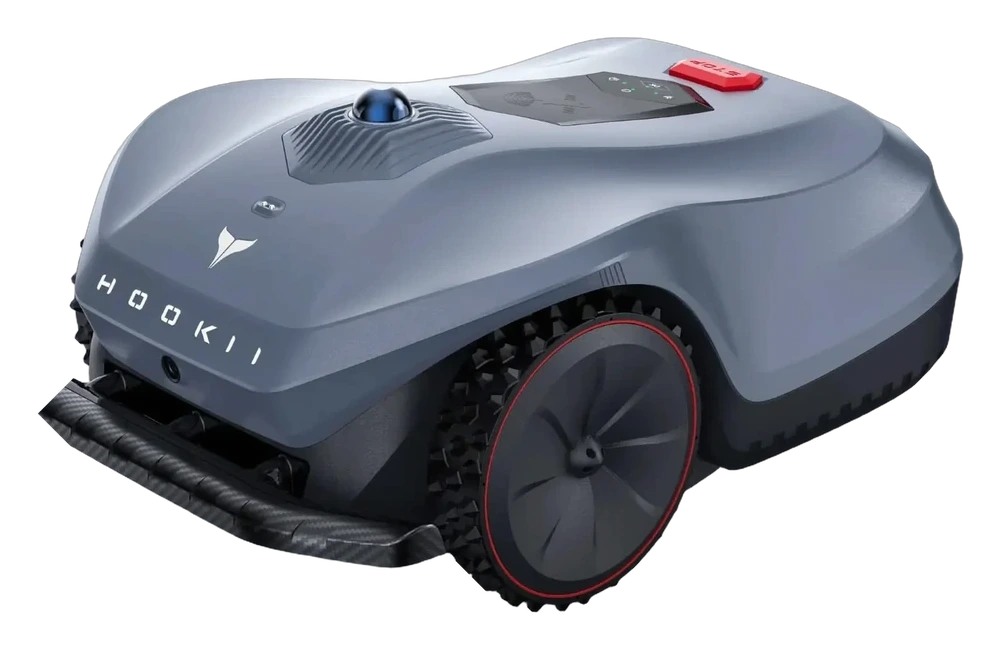
HOOKII Neomow X
- Autonomy
- IVEnvironmental
- Score
- 54/100Limited
- Readiness
- Ready Now
- Price
- $2,599list
HOOKII
Up to three
All robot lawn mowers. Every figure below is placed against the whole class, so a gap can be read against how much the class itself varies.
The conditions each robot was assessed against, side by side. Rows marked in gold are where these machines genuinely differ.
| Condition | HOOKII Neomow X |
|---|---|
| Yard size | |
| Under ¼ acre | GoodRated up to about 1 acre; easily covers compact yards but is sized well past sub-quarter-acre needs. |
| ¼ – ½ acre | GoodThe roughly 1-acre rating comfortably covers this range, well within the standard Neomow X's rated ceiling. |
| Over ½ acre | GoodRated up to about 1 acre covers yards over half an acre; HOOKII's X Pro variant extends further for larger lots still. |
| Terrain | |
| Mostly flat | GoodIndependent reviews from The Gadgeteer and SmartHomeScene both document successful wire-free mowing on level ground during testing. |
| Gentle slopes | DependsNo maximum slope percentage is published; gentle-slope performance is unconfirmed pending an independent test on real inclines. |
| Steep / hilly | DependsNo maximum slope percentage is published; hilly terrain performance is unconfirmed pending an independent test on real inclines. |
| Grass type | |
| Typical lawn grass | GoodThe 1.2 to 3.3 inch cutting range and a 5-blade cutting disc handle typical turfgrass across the standard range. |
| Mixed / tall growth | DependsNo guidance covers overgrown growth; the 3.3 inch maximum cutting height limits how tall a single pass can cut. |
| Thick (Bermuda / Zoysia) | DependsCutting width and drive layout are both unpublished, leaving dense Bermuda or Zoysia performance completely undocumented for this model. |
| Boundary setup | |
| Wireless required | Good3D LiDAR SLAM fused with vision replaces both the boundary wire and an RTK base station entirely. |
| Wire required | PoorNo physical wire input exists; boundaries are set as virtual lines in the app through LiDAR SLAM mapping. |
| No preference | GoodNo preference stated; the Neomow X's wire-free LiDAR SLAM design makes the wire question moot either way. |
A robot being poor for a condition is a fact about fit, not a fault. “Depends” means the record names a limit worth reading, not that the answer is unknown.
Nine inputs across three pillars, each weighted as shown and each scored so more is better. A robot can lead on one and trail on another, which is the point of showing them apart.
A number only means something next to the spread it sits in. Each track is the real range across every classified robot in the class, with the median marked.
These robots share no measured specification with enough published figures to plot. That is a gap in the record, not a finding about the robots.
Written on each record, and the only thing here every robot on the site carries.
What each design gives up to be good at what it is good at.
3D LiDAR SLAM fused with vision removes the wire-burying step entirely, but HOOKII has not published the one number (max slope) that tells a hilly-yard owner whether this mower will hold traction.
Lift/tilt monitoring and an emergency stop are documented; the timing behind them is not, so a buyer gets the feature name without the number that would let it be checked.
Stated by the record itself. A robot being wrong for a household is a fact about fit, not a fault.
The upkeep ownership hands back to you, whatever the autonomy level says.
Classifications rest on different depths of evidence. A pre-release assessment and a verified one are not the same kind of claim.
| Robot | Evidence status | Sources reviewed | Last assessed |
|---|---|---|---|
| HOOKII Neomow X | Verified | 9 | Sep 2026 |
Evidence status counts the sources behind a classification, not their kind. A high count can be maker documentation and price coverage, so read it as how much was reviewed rather than as independent testing. How we weigh evidence.
Robovations classifies robots; it does not rank them. Nothing on this page is a recommendation, and no manufacturer influences a classification or its placement here.
Comparing across classes is allowed — the page will switch to per-class positioning and tell you it has.