Skip to content
Saved
Comparison · 2 robots

Gladwell Gecko · Tosima W5 Window Cleaning Robot

All robot window cleaners. Every measure below is plotted against the full class, so a difference can be read against how much the class itself varies.
  1. Gladwell Gecko
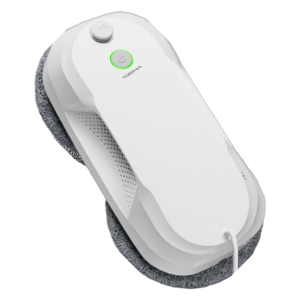
  2. Tosima W5 Window Cleaning Robot
Gladwell

Gladwell Gecko

Autonomy
II Assisted Autonomy
Score
45/100 Limited
Readiness
Ready Now
Price
$150list

Up to three

01 Classification

What each one does on its own.

The Autonomy Ladder is the same five rungs for every robot on the site. A rung describes the conditions a robot handles without you, not how good it is.

V
Generalized
Any task, any setting
IV
Environmental
Handles new obstacles without help
III
Conditional
Finishes familiar jobs on its own
II
Assisted
Runs preset routines, needs rescue
Gladwell GeckoTosima W5 Window Cleaning Robot
I
Manual
One action, on command
02 Assessment

Where they actually differ.

The Robovations Score is nine inputs across three pillars, each weighted as shown and each scored so that more is better. A robot can lead on one and trail on another, which is the point of showing them apart. Cost of ownership and data handling are reported on each robot's own page and are never averaged into the score.

Capability

Task completion16% of score
Does it finish the job it is sold to do, unattended
  • Gladwell Gecko55
18median 72 across 354 scored robots100

Not scored: Tosima W5 Window Cleaning Robot

Coverage and navigation10% of score
Does it work the whole area, and hold that between runs
  • Gladwell Gecko55
15median 70 across 344 scored robots100

Not scored: Tosima W5 Window Cleaning Robot

Edge-case recovery10% of score
Does it recover from the failures its category presents
  • Gladwell Gecko50
18median 50 across 261 scored robots100

Not scored: Tosima W5 Window Cleaning Robot

Operating envelope4% of score
How far conditions can vary before performance drops
  • Gladwell Gecko60
25median 70 across 320 scored robots100

Not scored: Tosima W5 Window Cleaning Robot

Dependability

Field failure rate16% of score
Documented hardware failures per owner-year
  • Gladwell Gecko73
6median 70 across 344 scored robots100

Not scored: Tosima W5 Window Cleaning Robot

Software stability14% of score
Whether updates fix more than they break
  • Gladwell Gecko33
15median 65 across 275 scored robots100

Not scored: Tosima W5 Window Cleaning Robot

Support longevity10% of score
Committed parts, service and updates, with dates
  • Gladwell Gecko18
0median 63 across 354 scored robots100

Not scored: Tosima W5 Window Cleaning Robot

Ownership burden

Routine maintenance12% of score
Hands-on time it asks for in normal operation
  • Gladwell Gecko22
22median 68 across 355 scored robots100

Not scored: Tosima W5 Window Cleaning Robot

Consumables8% of score
Parts that must be bought to keep it working
  • Gladwell Gecko32
30median 69 across 354 scored robots100

Not scored: Tosima W5 Window Cleaning Robot

03 Measured against the class

How far apart is a long way?

A number only means something next to the spread it sits in. Each track below is the real range across every classified robot in the class, with the median marked.

These robots share no measured specification with enough published figures to plot. That is a gap in the record, not a finding about the robots.

04 Ownership

What the numbers leave out.

The trade-off

What each design gives up to be good at what it is good at.

Gladwell Gecko

Suction adhesion eliminates ladder risk but requires constant rope-tether monitoring and manual repositioning, offsetting time savings on large facades.

Edge-detection autonomy reduces operator attention between panes but introduces frequent microfiber-pad degradation, shifting labor to consumable replacement.

Tosima W5 Window Cleaning Robot

A documented Triple Safety System combining suction, edge detection, and a rope exists, but the rope itself carries no published load rating, so the system’s real fall-protection margin cannot be verified from public sources.

The unit runs on mains power with a battery reserved for power loss, trading true cordless freedom for a longer expected runtime per pane.

Who each one is wrong for

Stated by the record itself. A robot being wrong for a household is a fact about fit, not a fault.

Gladwell Gecko
Commercial facades with 20+ distinct window zones
The machine is mains-fed on a 13 foot lead and must be lifted and re-rigged at every pane, so distinct window zones scale linearly in labor. Manual repositioning becomes time-prohibitive relative to traditional service contracts.
Textured, frosted, or patterned glass surfaces
Suction adhesion relies on smooth, flat, continuous glass. Texture and pattern break the seal, and there is no automatic shutdown or self-rescue behavior to catch that; the safety rope is the only backstop.
Owners seeking true set-and-forget autonomy
Manual positioning at each window panel is non-negotiable. Robot is unsuitable for users unwilling to supervise or reposition hardware between distinct glass areas.
Low-maintenance-only preference
Pads need washing between sessions and replacing every three to six months, and the safety rope needs inspecting before every run. Owners unwilling to keep that up should consider traditional service contracts instead.
Tosima W5 Window Cleaning Robot
Buyers needing a documented tether load rating for high-rise or high-stakes panes
No source documents a load or weight rating for the safety rope; Unknown is the honest answer, not an assumption of safety.
Buyers expecting cordless operation
The robot runs on mains power during normal use; its internal battery is a power-failure backup only, not a primary cordless power source.
Buyers who want independently verified coverage or corner-cleaning performance
All capability claims trace to manufacturer or retailer text; no independent test data was found.

What stays your job

The upkeep ownership hands back to you, whatever the autonomy level says.

Gladwell Gecko
  • Before every use: Inspect the safety rope along its full length for fraying, glazing or UV damage, check that the carabiner gate closes, and confirm the knot through the robot’s loop is sound. Two to three minutes, no cost.
  • Weekly: Wash the microfiber pads in gentle soap and water and air-dry them. Under five minutes.
  • Monthly: Listen to the suction motor through a run for grinding or a change in pitch. No parts required; catches early degradation.
  • Every 3-6 months: Replace the microfiber pads (cost USD 24-32). Worn pads seal less well and load the suction motor.
  • As needed: Replace the safety rope at any sign of damage. Gladwell operates no inspection or certification program and publishes no service interval for it, so replacement is on the owner’s judgment.
Tosima W5 Window Cleaning Robot
  • Per-pane setup: Attach the safety rope to a sturdy anchor point before placing the robot on the glass, per the manufacturer’s own safety instructions.
  • Water refill: Refill the onboard water reservoir for the auto-spray system; capacity is not documented.
  • Cloth rotation: Attach and periodically swap the cleaning rags (8 shipped with the unit).
  • Relocation: The robot must be manually moved and re-tethered for each additional pane; it does not persist coverage between panes.
05 Evidence

How much each of these is standing on.

Classifications rest on different depths of evidence. A pre-release assessment and a verified one are not the same kind of claim.

Evidence behind each classification
Robot Evidence status Sources reviewed Last assessed
Gladwell Gecko Provisional 2 Aug 2026
Tosima W5 Window Cleaning Robot Provisional 3 Aug 2026

Robovations classifies robots; it does not rank them. Nothing on this page is a recommendation, and no manufacturer influences a classification or its placement here.