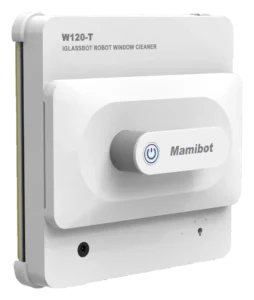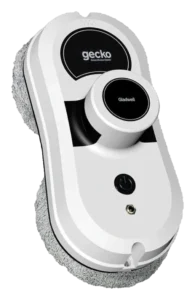
Gladwell Gecko · Mamibot iGLASSBOT W120-T
All robot window cleaners. Every measure below is plotted against the full class, so a difference can be read against how much the class itself varies.
- Gladwell Gecko
- Mamibot iGLASSBOT W120-T
What each one does on its own.
The Autonomy Ladder is the same five rungs for every robot on the site. A rung describes the conditions a robot handles without you, not how good it is.
Where they actually differ.
The Robovations Score is nine inputs across three pillars, each weighted as shown and each scored so that more is better. A robot can lead on one and trail on another, which is the point of showing them apart. Cost of ownership and data handling are reported on each robot's own page and are never averaged into the score.
Capability
- Gladwell Gecko55
- Mamibot iGLASSBOT W120-T75
- Gladwell Gecko55
- Mamibot iGLASSBOT W120-T70
- Gladwell Gecko50
- Mamibot iGLASSBOT W120-T55
- Gladwell Gecko60
- Mamibot iGLASSBOT W120-T38
Dependability
- Gladwell Gecko73
- Mamibot iGLASSBOT W120-T70
- Gladwell Gecko33
- Mamibot iGLASSBOT W120-T33
- Gladwell Gecko18
- Mamibot iGLASSBOT W120-T30
Ownership burden
- Gladwell Gecko22
- Mamibot iGLASSBOT W120-T25
- Gladwell Gecko32
- Mamibot iGLASSBOT W120-T69
How far apart is a long way?
A number only means something next to the spread it sits in. Each track below is the real range across every classified robot in the class, with the median marked.
- Gladwell Gecko$150
- Mamibot iGLASSBOT W120-T$179
- Gladwell Gecko68 dB
- Mamibot iGLASSBOT W120-T65 dB
- Gladwell Gecko4.8 lbs
- Mamibot iGLASSBOT W120-T3 lbs
- Gladwell Gecko3.5 in
- Mamibot iGLASSBOT W120-T3.9 in
Not compared, because fewer than two of these robots carry a published figure: Suction, Runtime, Charge time.
What the numbers leave out.
The trade-off
What each design gives up to be good at what it is good at.
Suction adhesion eliminates ladder risk but requires constant rope-tether monitoring and manual repositioning, offsetting time savings on large facades.
Edge-detection autonomy reduces operator attention between panes but introduces frequent microfiber-pad degradation, shifting labor to consumable replacement.
Auto-path on uniform framed glass is reliable; suction on textured panes and the manual’s outright prohibition on frameless glass are the binding constraints, not cleaning quality.
Sub-$200 dual-pad scrubbing is accessible, but rope anchoring, hand-wetted pads and per-panel remounting keep the owner in the loop every session.
Who each one is wrong for
Stated by the record itself. A robot being wrong for a household is a fact about fit, not a fault.
- Commercial facades with 20+ distinct window zones
- The machine is mains-fed on a 13 foot lead and must be lifted and re-rigged at every pane, so distinct window zones scale linearly in labor. Manual repositioning becomes time-prohibitive relative to traditional service contracts.
- Textured, frosted, or patterned glass surfaces
- Suction adhesion relies on smooth, flat, continuous glass. Texture and pattern break the seal, and there is no automatic shutdown or self-rescue behavior to catch that; the safety rope is the only backstop.
- Owners seeking true set-and-forget autonomy
- Manual positioning at each window panel is non-negotiable. Robot is unsuitable for users unwilling to supervise or reposition hardware between distinct glass areas.
- Low-maintenance-only preference
- Pads need washing between sessions and replacing every three to six months, and the safety rope needs inspecting before every run. Owners unwilling to keep that up should consider traditional service contracts instead.
- Frameless glass, and textured, frosted or curved surfaces
- Mamibot's manual prohibits use on frameless glass outright, which is the flat case owners most often assume is fine. Suction loss on textured and frosted surfaces is separately documented across owner reports.
- Users expecting fully autonomous multi-panel cleaning runs
- The unit is remounted and the rope re-anchored between separate panels. There is no dock, no multi-panel routing and no resume.
- Homes with upper-floor windows far from power outlets
- The unit is mains-powered and ships with an adapter and extension cable. Windows beyond that run are impractical, and the tether sets the working height as much as the glass does.
- Owners needing cordless battery-only operation
- The W120-T runs from mains power. The 600 mAh cell on board is a backup that holds the unit on the glass if power is cut, not a runtime battery, so use is restricted to windows near an outlet.
What stays your job
The upkeep ownership hands back to you, whatever the autonomy level says.
- Before every use: Inspect the safety rope along its full length for fraying, glazing or UV damage, check that the carabiner gate closes, and confirm the knot through the robot’s loop is sound. Two to three minutes, no cost.
- Weekly: Wash the microfiber pads in gentle soap and water and air-dry them. Under five minutes.
- Monthly: Listen to the suction motor through a run for grinding or a change in pitch. No parts required; catches early degradation.
- Every 3-6 months: Replace the microfiber pads (cost USD 24-32). Worn pads seal less well and load the suction motor.
- As needed: Replace the safety rope at any sign of damage. Gladwell operates no inspection or certification program and publishes no service interval for it, so replacement is on the owner’s judgment.
- Before every use: Confirm the backup battery is fully charged, and tie the safety rope to a secure indoor fixture.
- After every use: Rinse and wring the microfiber pads; allow to air-dry before storage.
- Weekly: Inspect the safety rope along its length for fraying, and check the fixture it is tied to.
- Monthly: Wipe the suction cup and intake filter with a damp cloth to maintain seal integrity. Do not spray or pour water onto the device.
- Every 30-50 sessions: Replace the microfiber cleaning pads (sold separately).
- As needed: Inspect the power cable and connector for wear near strain-relief points.
How much each of these is standing on.
Classifications rest on different depths of evidence. A pre-release assessment and a verified one are not the same kind of claim.
| Robot | Evidence status | Sources reviewed | Last assessed |
|---|---|---|---|
| Gladwell Gecko | Provisional | 2 | Aug 2026 |
| Mamibot iGLASSBOT W120-T | Verified | 5 | Aug 2026 |
Add a robot
Comparing across classes is allowed — the page will switch to per-class positioning and tell you it has.