
- Autonomy
- IIIConditional
- Score
- 74/100Strong
- Readiness
- Ready Now
- Price
- $1,799list
Sunseeker
Up to three
All robot lawn mowers. Every figure below is placed against the whole class, so a gap can be read against how much the class itself varies.
The conditions each robot was assessed against, side by side. Rows marked in gold are where these machines genuinely differ.
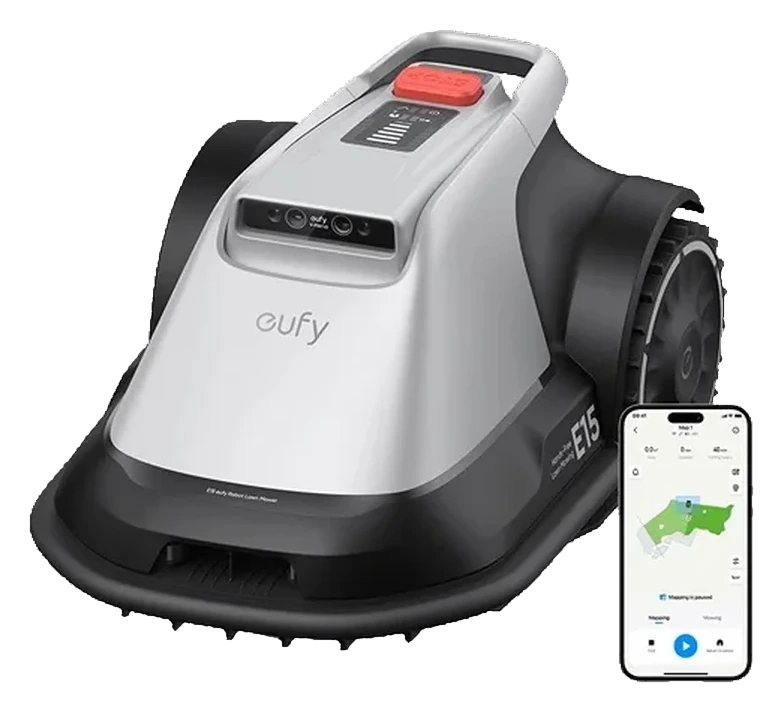
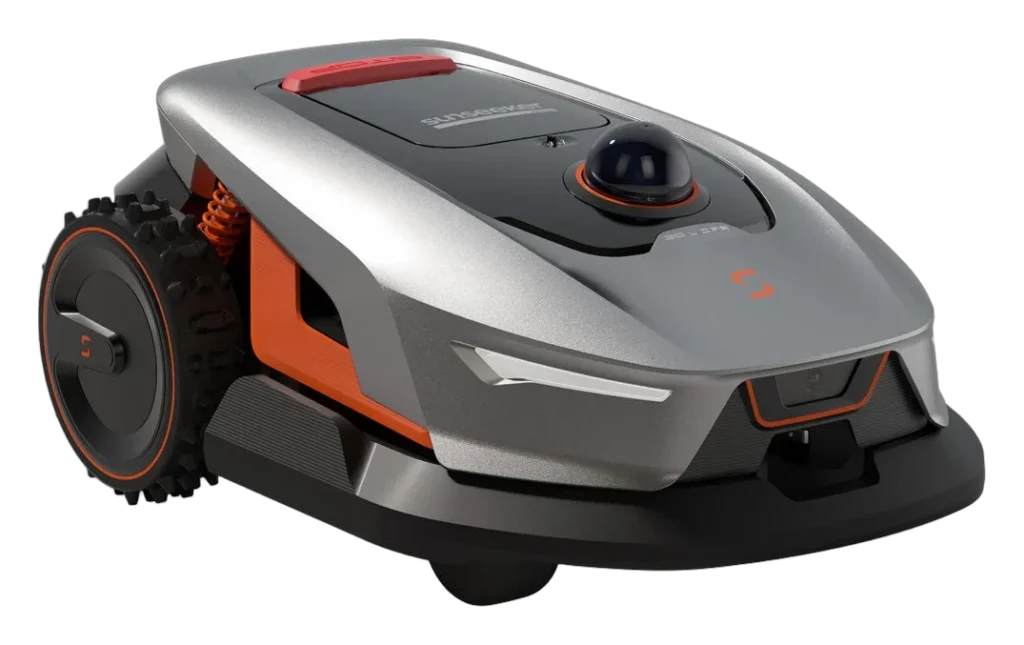
| Condition | Robot Lawn Mower E15 | Sunseeker Elite X4 |
|---|---|---|
| Yard size | ||
| Under ¼ acre | GoodSub-1,000 sqft yards are well-matched to E15 design; single-pass coverage with margin. | GoodRated for 1,200 m², about 0.3 acre, which covers a small lot. |
| ¼ – ½ acrethey differ | Good1,000-1,500 sqft is the documented E15 envelope; 90-minute runtime supports single-pass coverage under optimal conditions. | DependsThe 1,200 m² rating covers only the lower part of this range. |
| Over ½ acre | PoorAbove 1,500 sqft exceeds manufacturer coverage specification; multiple passes or secondary charging stations required. | PoorLawns over half an acre exceed Sunseeker's 1,200 m² rating. |
| Terrain | ||
| Mostly flat | GoodOptimal operating condition; RTK positioning and vision navigation perform best on level ground with clear sightlines. | GoodFlat lawns sit well inside its 45% slope rating. |
| Gentle slopesthey differ | DependsRTK positioning accuracy may degrade on slopes; vision-based obstacle detection performance on inclines is undocumented; test before relying on steep zones. | GoodRated for 45% slopes, per the dealer spec sheet. |
| Steep / hillythey differ | PoorSteep slopes challenge both RTK positioning accuracy and motor traction; edge-case behavior untested; avoid slopes above 20%. | DependsT3 found auto-mapping can struggle with drops, and steep gradients exceed its 45% rating. |
| Grass type | ||
| Typical lawn grass | GoodDesigned for typical residential turf; standard cool-season and warm-season grasses are within spec. | GoodT3's month of use found it gets the basics right on a standard lawn. |
| Mixed / tall growth | DependsCamera obstacle detection may struggle with tall grass obscuring terrain; multiple passes or height reduction recommended. | DependsMaximum cutting height is 60 mm and is set by hand. |
| Thick (Bermuda / Zoysia) | DependsDense turf increases motor load; unproven performance in thick lawns; seasonal testing required to confirm behavior. | DependsA single 20 cm disc and no dense-turf test leave thick grass unconfirmed. |
| Boundary setup | ||
| Wireless required | GoodWire-free RTK and vision positioning are the core advantage; no buried-wire requirement. | GoodLiDAR maps the lawn with no wire or antenna, per T3 and Sunseeker. |
| Wire requiredthey differ | GoodVirtual boundaries adjust via app; physical wire is unnecessary; RTK alternative to traditional confinement. | PoorIt has no perimeter-wire mode; boundaries come from LiDAR mapping. |
| No preference | GoodWire-free positioning satisfies any boundary preference; no physical infrastructure required. | GoodWith no boundary preference, antenna-free LiDAR setup is all it needs. |
A robot being poor for a condition is a fact about fit, not a fault. “Depends” means the record names a limit worth reading, not that the answer is unknown.
Nine inputs across three pillars, each weighted as shown and each scored so more is better. A robot can lead on one and trail on another, which is the point of showing them apart.
A number only means something next to the spread it sits in. Each track is the real range across every classified robot in the class, with the median marked.
Not compared, because fewer than two of these robots carry a published figure: Runtime, Charge time.
Written on each record, and the only thing here every robot on the site carries.
What each design gives up to be good at what it is good at.
Removing the wire moves the boundary into software. Nothing is buried and boundaries are edited in the app, but confinement now depends on the camera resolving the lawn edge, so light, contrast and edge definition matter where a buried wire would not have cared.
Vision-based navigation is unproven at scale. Camera obstacle detection is documented in controlled demos, but 2025 release means seasonal-cycle field data is absent. Edge-case handling (winter dormancy, rain, sudden obstacles) remains unknown.
No antenna and no wire make setup quick, and the edges still need a trimmer.
Navigation stayed consistent for T3; drops and complex layouts are where auto-mapping falters.
Stated by the record itself. A robot being wrong for a household is a fact about fit, not a fault.
The upkeep ownership hands back to you, whatever the autonomy level says.
Classifications rest on different depths of evidence. A pre-release assessment and a verified one are not the same kind of claim.
| Robot | Evidence status | Sources reviewed | Last assessed |
|---|---|---|---|
| eufy Robot Lawn Mower E15 | Pending | 4 | Aug 2026 |
| Sunseeker Elite X4 | Pending | 4 | Sep 2026 |
Evidence status counts the sources behind a classification, not their kind. A high count can be maker documentation and price coverage, so read it as how much was reviewed rather than as independent testing. How we weigh evidence.
 The full recordeufy Robot Lawn Mower E15Specifications, evidence, the Fit Check in full, and every tracked change.
 The full recordSunseeker Elite X4Specifications, evidence, the Fit Check in full, and every tracked change.
Robovations classifies robots; it does not rank them. Nothing on this page is a recommendation, and no manufacturer influences a classification or its placement here.
Comparing across classes is allowed — the page will switch to per-class positioning and tell you it has.