
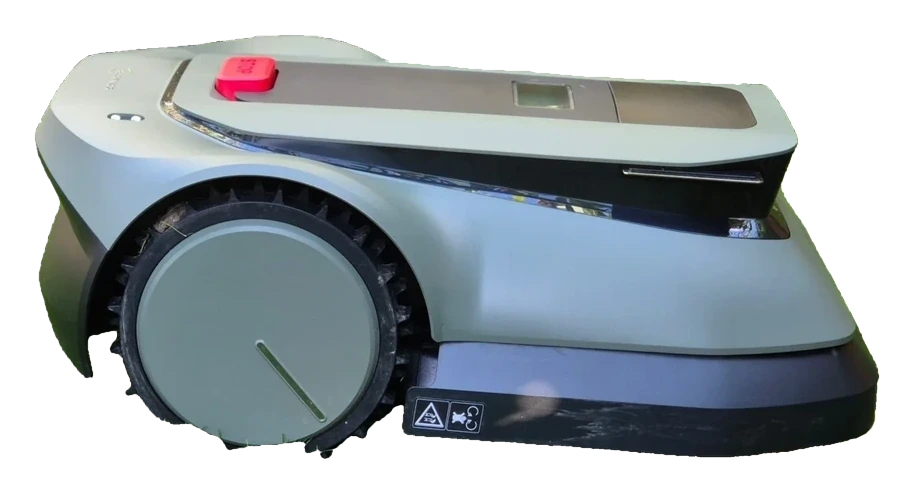
Ecovacs
Ecovacs Goat GX-600
- Autonomy
- IIIConditional
- Score
- 71/100Strong
- Readiness
- Ready Now
- Price
- $1,299list
Ecovacs
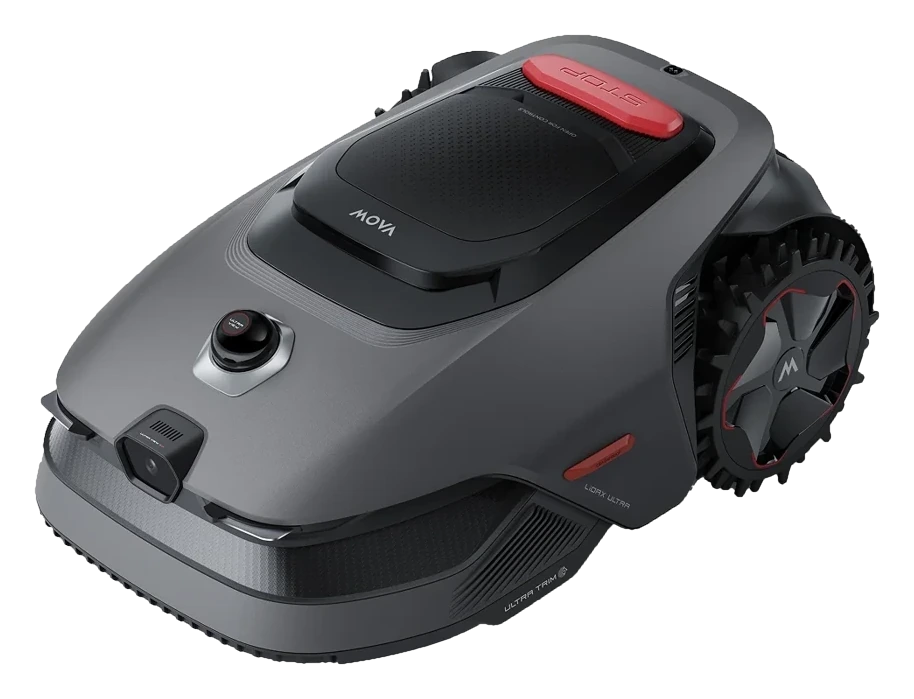
Up to three
All robot lawn mowers. Every figure below is placed against the whole class, so a gap can be read against how much the class itself varies.
The conditions each robot was assessed against, side by side. Rows marked in gold are where these machines genuinely differ.
| Condition | Ecovacs Goat GX-600 | MOVA LiDAX Ultra 1000 |
|---|---|---|
| Yard size | ||
| Under ¼ acre | GoodExceeds needs for sub-quarter-acre yards; wire-free advantage is overkill for this size. | GoodRecommended 0.25-acre coverage aligns well; single-session mowing with minimal boundary management. |
| ¼ – ½ acre | GoodSpec-rated for 250-500 sqm (0.06-0.12 acres). RTK shines in this range with autonomous full coverage. | GoodCan cover this range over 1–2 sessions. Remapping between zones or manual repositioning may be required. |
| Over ½ acrethey differ | PoorMaximum coverage 500 sqm; larger yards exceed design spec and require manual yard sections. | DependsCoverage exceeds the model's single-session capability. Multiple mowing cycles or a larger model may be more practical. |
| Terrain | ||
| Mostly flat | GoodRTK positioning is most reliable on open flat terrain with clear sky exposure. | GoodLiDAR navigation performs optimally on level ground. No slope-limiting factors. |
| Gentle slopesthey differ | DependsRated for 25% gradient; RTK accuracy holds but navigation may slow on slopes above 20%. | GoodSuitable for slopes up to 45% gradient. Traction and mapping remain reliable in most residential terrain. |
| Steep / hilly | PoorManufacturer spec lists maximum 25% gradient. Owner reports document traction loss and navigation uncertainty above 20%. | PoorThis model is rated to a 45% grade, below the flagship 3000 AWD's 80% rating. Steep slopes near or above that risk traction loss and mapping errors. |
| Grass type | ||
| Typical lawn grass | GoodBlade configuration optimized for standard turfgrass. Manufacturer specs confirm reliable cutting on common lawn types. | GoodRegular turfgrass at standard height (2–3 inches) is the design target. Optimal LiDAR mapping and cutting performance. |
| Mixed / tall growth | DependsCutting speed slows on tall or neglected grass. Annual pre-season trim recommended; not ideal for naturally tall-grass meadows. | DependsTall fescue, bluegrass, or uncut grass may obscure LiDAR line-of-sight. Trim before assignment or expect incomplete coverage. |
| Thick (Bermuda / Zoysia) | DependsThick Bermuda or overseed grass causes slower cutting and occasional stalling. Standard fescue preferred. | DependsDense Bermuda, zoysia, or commercial turf reduces sensor precision. May require multiple passes or higher maintenance intervals. |
| Boundary setup | ||
| Wireless required | GoodWire-free operation is the GX-600's defining feature. Virtual boundaries via RTK positioning, no digging required. | GoodWire-free LiDAR mapping eliminates boundary-installation burden entirely. Repositioning between zones is the only boundary management required. |
| Wire requiredthey differ | GoodRTK-based system is wire-free but can coexist with perimeter wire if owner prefers redundancy. | PoorThis model does not support perimeter wiring. No compatibility with wire-based boundary systems; wire-free operation is required. |
| No preference | GoodWire-free positioning removes boundary setup burden entirely; perimeter wire is optional for owners who want it. | GoodFlexible boundary approach: works standalone or can be repositioned for multi-zone coverage based on owner preference. |
A robot being poor for a condition is a fact about fit, not a fault. “Depends” means the record names a limit worth reading, not that the answer is unknown.
Nine inputs across three pillars, each weighted as shown and each scored so more is better. A robot can lead on one and trail on another, which is the point of showing them apart.
A number only means something next to the spread it sits in. Each track is the real range across every classified robot in the class, with the median marked.
Written on each record, and the only thing here every robot on the site carries.
What each design gives up to be good at what it is good at.
Wire elimination buys nothing to install. No perimeter wire, no beacon, no base station and no correction subscription. What you take on instead is a boundary the mower has to see, which depends on the lawn edge staying legible to a camera.
Excellent on known terrain; the mower builds its map over the first runs and then operates with minimal variability. The floor is high, but the 600 m2 ceiling is the same as compact wire-guided alternatives.
Entry-level positioning means sufficient autonomy, limited adaptive capability: Level III ensures routine cutting but cannot recover from obstacles or novel conditions without human intervention.
Wire-free convenience requires heavier reliance on sensor precision: LiDAR mapping performance degrades in rain, snow, and dense vegetation where perimeter-wire systems operate unaffected.
Stated by the record itself. A robot being wrong for a household is a fact about fit, not a fault.
The upkeep ownership hands back to you, whatever the autonomy level says.
Classifications rest on different depths of evidence. A pre-release assessment and a verified one are not the same kind of claim.
| Robot | Evidence status | Sources reviewed | Last assessed |
|---|---|---|---|
| Ecovacs Goat GX-600 | Pending | 4 | Aug 2026 |
| MOVA LiDAX Ultra 1000 | Provisional | 4 | Sep 2026 |
Evidence status counts the sources behind a classification, not their kind. A high count can be maker documentation and price coverage, so read it as how much was reviewed rather than as independent testing. How we weigh evidence.
 The full recordEcovacs Goat GX-600Specifications, evidence, the Fit Check in full, and every tracked change.
 The full recordMOVA LiDAX Ultra 1000Specifications, evidence, the Fit Check in full, and every tracked change.
Robovations classifies robots; it does not rank them. Nothing on this page is a recommendation, and no manufacturer influences a classification or its placement here.
Comparing across classes is allowed — the page will switch to per-class positioning and tell you it has.