
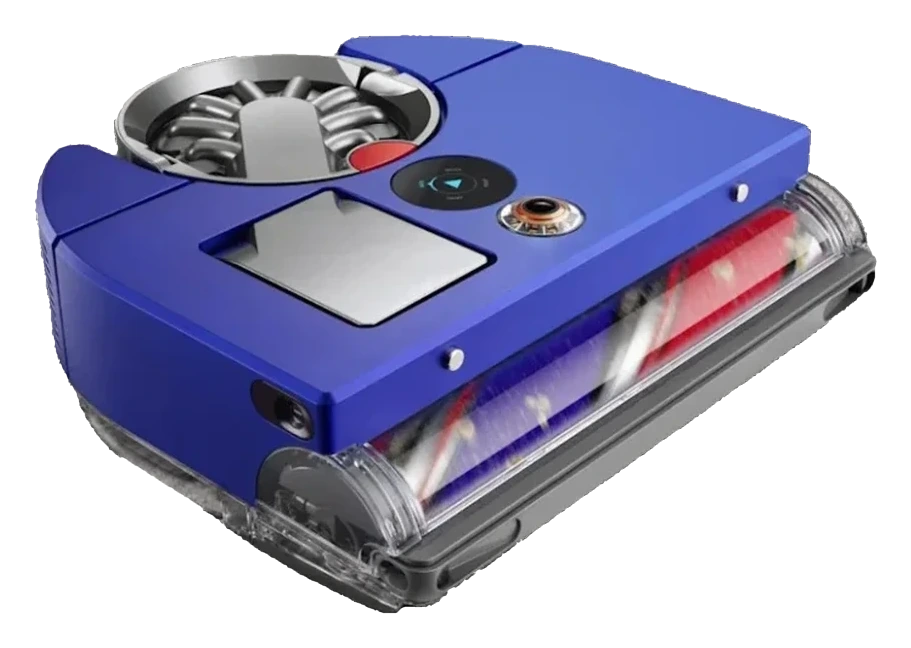
Dyson
Dyson 360 Vis Nav
- Autonomy
- IIIConditional
- Score
- 68/100Capable
- Readiness
- Ready Now
- Price
- $1,099.99list
Dyson
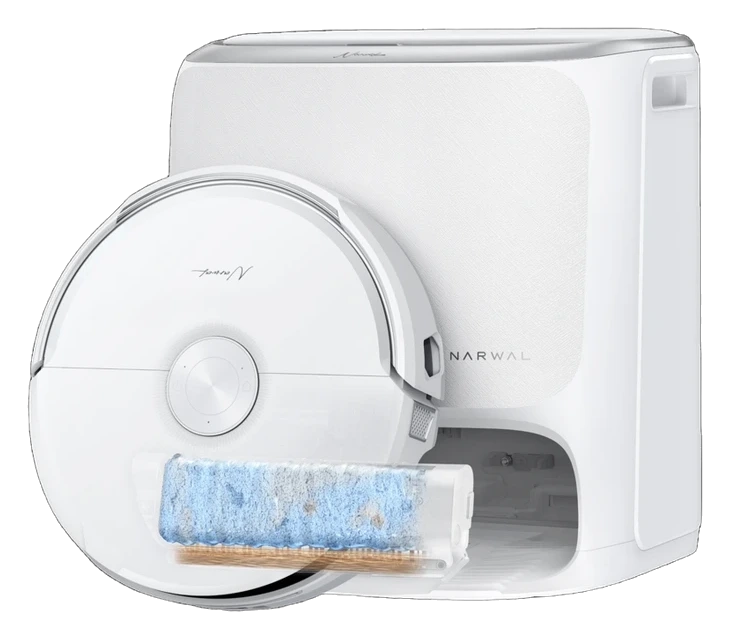
Narwal
Up to three
All robot vacuums. Every figure below is placed against the whole class, so a gap can be read against how much the class itself varies.
The conditions each robot was assessed against, side by side. Rows marked in gold are where these machines genuinely differ.
| Condition | Dyson 360 Vis Nav | Narwal Freo 20 |
|---|---|---|
| Home size | ||
| Under 1,500 sqftthey differ | GoodCapable but exceeds typical need; a mid-tier LiDAR vacuum covers compact homes at half the price. | DependsNarwal publishes no full-battery runtime or coverage area, so single-run coverage is unconfirmed even here. |
| 1,500 – 3,000they differ | GoodSingle-session coverage maps most homes in this range on standard mode. Multi-story layouts require two units. | DependsOnly a recharge figure is published: 86 minutes after a 30-minute top-up from 20%. |
| Over 3,000 | Depends65-minute runtime limits single-charge coverage; recharge-and-resume extends sessions but lengthens total cleaning time. Multi-story homes also require carrying the robot between floors. | DependsNo runtime, coverage area or independent large-home test has been published for this model. |
| Primary floors | ||
| Hard floors | GoodVision mapping and obstacle avoidance perform well on hard floors; cleaning power is well-suited for sealed wood and tile. | GoodA hot-water track mop rinsed during the run and pressed at 12 newtons targets sealed hard floors. |
| Low / medium pilethey differ | GoodHigh suction and the full-width brush bar perform consistently on low-pile carpet. Typical maintenance is weekly dustbin emptying. | DependsNarwal does not state whether the track mop lifts on carpet, so rugs may need no-mop zones. |
| High pile / shagthey differ | PoorOwner reports document marked suction loss on shag and high-pile carpet despite peak power. Not recommended for thick-pile environments. | DependsNo mop lift figure and no independent carpet test are published for this model. |
| Mopping needs | ||
| Vacuum only | GoodVacuum-only robot — matches a vacuum-only need. | GoodStrong vacuum; the mop lifts or detaches when not needed. |
| Light moppingthey differ | PoorThis model has no mopping function. | GoodActive mopping system covers routine floors easily. |
| Frequent moppingthey differ | PoorNo mop at all; choose a vacuum-and-mop robot instead. | GoodPressure or rotating mop with self-wash is built for frequent mopping. |
| You want to… | ||
| Empty bin myself | GoodManual dustbin emptying every 1-3 runs suits owners comfortable with frequent maintenance. Weekly filter care is standard. | GoodHands-on upkeep is light; the dock empties debris and washes and dries the mop. |
| Empty occasionallythey differ | DependsLacks self-emptying dock; suits mixed tolerance only if owners accept weekly-to-daily dustbin swaps depending on shedding rate. | GoodOwner tasks come down to water tanks, sensor wipes and a bag change up to every 120 days. |
| Set-and-forgetthey differ | PoorNo self-emptying base. Manual dustbin handling every 1-3 runs conflicts with true hands-off operation goals. | DependsWater tank refill and drain are not documented as automatic, so tanks still need handling. |
A robot being poor for a condition is a fact about fit, not a fault. “Depends” means the record names a limit worth reading, not that the answer is unknown.
A number only means something next to the spread it sits in. Each track is the real range across every classified robot in the class, with the median marked.
Not compared, because fewer than two of these robots carry a published figure: Runtime, Charge time, Noise, Weight.
Written on each record, and the only thing here every robot on the site carries.
What each design gives up to be good at what it is good at.
Premium price ($1,199) funds suction power and real-time obstacle detection, not dock automation. The dustbin remains manual: you are paying for cleaning power, not convenience.
Cleaning performance is strongest on hard floors and low-to-mid pile; owner reports show reduced effectiveness on shag and high-pile carpet despite the 65 air watt rating.
A mop rinsed during the run addresses the dirty-pad problem, and the whole claim rests on Narwal’s own figures until someone tests it on a real floor.
Two cameras replace LiDAR for mapping: strong at recognizing objects, but no one has published how it navigates a dark room.
Stated by the record itself. A robot being wrong for a household is a fact about fit, not a fault.
The upkeep ownership hands back to you, whatever the autonomy level says.
Classifications rest on different depths of evidence. A pre-release assessment and a verified one are not the same kind of claim.
| Robot | Evidence status | Sources reviewed | Last assessed |
|---|---|---|---|
| Dyson 360 Vis Nav | Provisional | 6 | Sep 2026 |
| Narwal Freo 20 | Provisional | 5 | Sep 2026 |
Evidence status counts the sources behind a classification, not their kind. A high count can be maker documentation and price coverage, so read it as how much was reviewed rather than as independent testing. How we weigh evidence.
 The full recordDyson 360 Vis NavSpecifications, evidence, the Fit Check in full, and every tracked change.
 The full recordNarwal Freo 20Specifications, evidence, the Fit Check in full, and every tracked change.
Robovations classifies robots; it does not rank them. Nothing on this page is a recommendation, and no manufacturer influences a classification or its placement here.
Comparing across classes is allowed — the page will switch to per-class positioning and tell you it has.