Skip to content
Saved
Comparison · 2 robots

Dreame Z1 Pro · Hayward AquaVac 6 Series

All robot pool cleaners. Every measure below is plotted against the full class, so a difference can be read against how much the class itself varies.
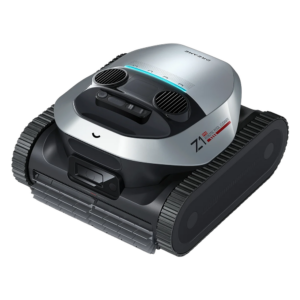
  1. Dreame Z1 Pro
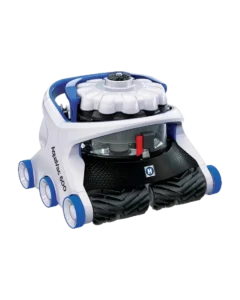
  2. Hayward AquaVac 6 Series
Dreame Technology (Dreametech)

Dreame Z1 Pro

Autonomy
III Conditional Autonomy
Score
56/100 Capable
Readiness
Promising Progress
Price
$999.99list
Hayward

Hayward AquaVac 6 Series

Autonomy
III Conditional Autonomy
Score
70/100 Strong
Readiness
Ready Now
Price
Not tracked

Up to three

01 Classification

What each one does on its own.

The Autonomy Ladder is the same five rungs for every robot on the site. A rung describes the conditions a robot handles without you, not how good it is.

V
Generalized
Any task, any setting
IV
Environmental
Handles new obstacles without help
III
Conditional
Finishes familiar jobs on its own
Dreame Z1 ProHayward AquaVac 6 Series
II
Assisted
Runs preset routines, needs rescue
I
Manual
One action, on command
02 Assessment

Where they actually differ.

The Robovations Score is nine inputs across three pillars, each weighted as shown and each scored so that more is better. A robot can lead on one and trail on another, which is the point of showing them apart. Cost of ownership and data handling are reported on each robot's own page and are never averaged into the score.

Capability

Task completion16% of score
Does it finish the job it is sold to do, unattended
  • Dreame Z1 Pro65
  • Hayward AquaVac 6 Series78
18median 72 across 354 scored robots100
Coverage and navigation10% of score
Does it work the whole area, and hold that between runs
  • Dreame Z1 Pro35
  • Hayward AquaVac 6 Series70
15median 70 across 344 scored robots100
Edge-case recovery10% of score
Does it recover from the failures its category presents
  • Dreame Z1 Pro30
  • Hayward AquaVac 6 Series26
18median 50 across 261 scored robots100
Operating envelope4% of score
How far conditions can vary before performance drops
  • Dreame Z1 Pro55
  • Hayward AquaVac 6 Series76
25median 70 across 320 scored robots100

Dependability

Field failure rate16% of score
Documented hardware failures per owner-year
  • Dreame Z1 Pro63
  • Hayward AquaVac 6 Series44
6median 70 across 344 scored robots100
Software stability14% of score
Whether updates fix more than they break
  • Dreame Z1 Pro71
  • Hayward AquaVac 6 Series82
15median 65 across 275 scored robots100
Support longevity10% of score
Committed parts, service and updates, with dates
  • Dreame Z1 Pro55
  • Hayward AquaVac 6 Series88
0median 63 across 354 scored robots100

Ownership burden

Routine maintenance12% of score
Hands-on time it asks for in normal operation
  • Dreame Z1 Pro40
  • Hayward AquaVac 6 Series68
22median 68 across 355 scored robots100
Consumables8% of score
Parts that must be bought to keep it working
  • Dreame Z1 Pro80
  • Hayward AquaVac 6 Series94
30median 69 across 354 scored robots100
03 Measured against the class

How far apart is a long way?

A number only means something next to the spread it sits in. Each track below is the real range across every classified robot in the class, with the median marked.

Weight60 with a published figure
  • Dreame Z1 Pro37 lbs
  • Hayward AquaVac 6 Series18.3 lbs
7.9 lbsmedian 21 lbs37 lbs
Height54 with a published figure
  • Dreame Z1 Pro11.1 in
  • Hayward AquaVac 6 Series10 in
3.5 inmedian 10.5 in19 in

Not compared, because fewer than two of these robots carry a published figure: Price, Suction, Runtime, Charge time, Noise.

04 Ownership

What the numbers leave out.

The trade-off

What each design gives up to be good at what it is good at.

Dreame Z1 Pro

The robot addresses all three core pool surfaces (floor, walls, waterline) in one cycle, but an independent review found first-run cleaning fell well short of that goal and only reached roughly 90 percent effectiveness after a firmware update.

Auto-parking at the waterline reduces the retrieval task compared to a fully submerged robot, but the same review found the five-minute window before it sinks back adds a different kind of attention requirement: promptness rather than physical retrieval.

Hayward AquaVac 6 Series

The filterless SpinTech canister removes cartridge and bag consumables from ownership entirely. In exchange the cleaner is a self-contained appliance that has to be lifted in and out and emptied after each cycle, with no plumbing integration to fall back on.

Who each one is wrong for

Stated by the record itself. A robot being wrong for a household is a fact about fit, not a fault.

Dreame Z1 Pro
Buyers wanting a mature, multi-generation product line
The Z1 Pro is Dreame's first robotic pool cleaner, with no prior generation's field record to draw on.
Owners who cannot check the app promptly after a cycle
An independent review documented the unit sinking back into the water roughly five minutes after parking at the waterline if it is not retrieved.
Saltwater pools above 5,000 ppm
The manufacturer's documented saltwater rating tops out at 5,000 ppm.
Hayward AquaVac 6 Series
Above-ground pools and inflatable structures
Oversized and designed for rigid in-ground geometry; cord management and wall navigation do not transfer.
Compact or oddly-shaped pools
Mapping assumes rectangular or standard curved geometry. Pools with complex depth changes or sharp ledges confuse navigation.
Owners avoiding corded equipment entirely
No battery-powered variant in this series; power cord of 50-60 feet is standard and non-negotiable.

What stays your job

The upkeep ownership hands back to you, whatever the autonomy level says.

Dreame Z1 Pro
  • Retrieval window: The robot climbs to the waterline when a cycle ends but sinks back after about five minutes if not lifted out, so a person needs to watch for the app notification rather than retrieve it at leisure.
  • Filter: The 180-micron filter needs periodic emptying and rinsing; no disposable filter cost was found in sources reviewed.
  • Remote/app setup: Mode selection happens in the app; live steering uses the included LiFi optical remote, which is not usable underwater alongside the app.
Hayward AquaVac 6 Series
  • After each cycle: Lift the cleaner out, open the debris canister by its red release knob and empty it, then rinse the canister with fresh water.
  • Weekly: Rinse the cleaner body with fresh water to clear pool chemistry, and check the brushes and rollers for embedded grit.
  • Monthly: Inspect the drive rollers and brush surfaces for wear and confirm wall contact is consistent.
  • Seasonally: Inspect the floating cable and the control unit’s supply cord for abrasion or cuts. The control unit runs from a GFCI-protected receptacle and should not be run through an extension cord. Store the cleaner and control unit indoors over winter if the pool is not used year round.
  • As needed: Untwist the floating cable, and replace brushes once worn.
05 Evidence

How much each of these is standing on.

Classifications rest on different depths of evidence. A pre-release assessment and a verified one are not the same kind of claim.

Evidence behind each classification
Robot Evidence status Sources reviewed Last assessed
Dreame Z1 Pro Verified 7 Aug 2026
Hayward AquaVac 6 Series Provisional 2 Aug 2026

Robovations classifies robots; it does not rank them. Nothing on this page is a recommendation, and no manufacturer influences a classification or its placement here.