Skip to content
Saved
Comparison · 2 robots

Dreame L40 Ultra Gen 2 · iRobot Roomba 960

All robot vacuums. Every measure below is plotted against the full class, so a difference can be read against how much the class itself varies.
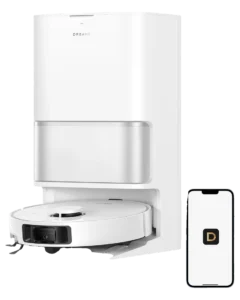
  1. Dreame L40 Ultra Gen 2
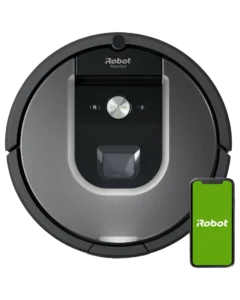
  2. iRobot Roomba 960
Dreame

Dreame L40 Ultra Gen 2

Autonomy
III Conditional Autonomy
Score
63/100 Capable
Readiness
Promising Progress
Price
$499.99confirmed
iRobot

iRobot Roomba 960

Autonomy
III Conditional Autonomy
Score
65/100 Capable
Readiness
Ready Now
Price
$699list

Up to three

01 Classification

What each one does on its own.

The Autonomy Ladder is the same five rungs for every robot on the site. A rung describes the conditions a robot handles without you, not how good it is.

V
Generalized
Any task, any setting
IV
Environmental
Handles new obstacles without help
III
Conditional
Finishes familiar jobs on its own
Dreame L40 Ultra Gen 2iRobot Roomba 960
II
Assisted
Runs preset routines, needs rescue
I
Manual
One action, on command
02 Assessment

Where they actually differ.

The Robovations Score is nine inputs across three pillars, each weighted as shown and each scored so that more is better. A robot can lead on one and trail on another, which is the point of showing them apart. Cost of ownership and data handling are reported on each robot's own page and are never averaged into the score.

Capability

Task completion16% of score
Does it finish the job it is sold to do, unattended
  • Dreame L40 Ultra Gen 275
  • iRobot Roomba 96068
18median 72 across 354 scored robots100
Coverage and navigation10% of score
Does it work the whole area, and hold that between runs
  • Dreame L40 Ultra Gen 275
  • iRobot Roomba 96070
15median 70 across 344 scored robots100
Edge-case recovery10% of score
Does it recover from the failures its category presents
  • Dreame L40 Ultra Gen 248
  • iRobot Roomba 96048
18median 50 across 261 scored robots100
Operating envelope4% of score
How far conditions can vary before performance drops
  • Dreame L40 Ultra Gen 276
  • iRobot Roomba 96062
25median 70 across 320 scored robots100

Dependability

Field failure rate16% of score
Documented hardware failures per owner-year
  • Dreame L40 Ultra Gen 244
  • iRobot Roomba 96091
6median 70 across 344 scored robots100
Software stability14% of score
Whether updates fix more than they break
  • Dreame L40 Ultra Gen 229
  • iRobot Roomba 96086
15median 65 across 275 scored robots100
Support longevity10% of score
Committed parts, service and updates, with dates
  • Dreame L40 Ultra Gen 246
  • iRobot Roomba 96052
0median 63 across 354 scored robots100

Ownership burden

Routine maintenance12% of score
Hands-on time it asks for in normal operation
  • Dreame L40 Ultra Gen 287
  • iRobot Roomba 96040
22median 68 across 355 scored robots100
Consumables8% of score
Parts that must be bought to keep it working
  • Dreame L40 Ultra Gen 280
  • iRobot Roomba 96054
30median 69 across 354 scored robots100
03 Measured against the class

How far apart is a long way?

A number only means something next to the spread it sits in. Each track below is the real range across every classified robot in the class, with the median marked.

Price193 with a published figure
  • Dreame L40 Ultra Gen 2$499.99
  • iRobot Roomba 960$699
$129.99median $699.99$1,799

Not compared, because fewer than two of these robots carry a published figure: Suction, Runtime, Charge time, Noise, Weight, Height.

04 Ownership

What the numbers leave out.

The trade-off

What each design gives up to be good at what it is good at.

Dreame L40 Ultra Gen 2

Suction rose from 11,000Pa to 25,000Pa, roughly a 127 percent increase over Gen 1, but cleaning time per floor-area remains stable; the duty-cycle ceiling is unchanged.

The Dual Flex Arm is an edge-reach mechanism, swinging the mop pad and extending the side brush toward baseboards and corners; it does nothing for obstacle avoidance or entanglement, which are handled by the navigation sensors and the TriCut brush.

iRobot Roomba 960

vSLAM navigation is proven over a decade of firmware iteration, but the round form factor leaves corner dead zones, and on this generation the remedy is a manual pass: the 960 does not save its map between runs, so the app offers no no-go lines or Keep Out Zones. Boundaries are set with the Dual Mode Virtual Wall Barrier that ships in the box.

The dock is compact and reliable, but there is no auto-empty: the 600 ml bin is large for its generation, so emptying is not a per-run chore, and every emptying is still done by hand.

Who each one is wrong for

Stated by the record itself. A robot being wrong for a household is a fact about fit, not a fault.

Dreame L40 Ultra Gen 2
High-pile carpet or shag flooring
Mainstream vacuum suction loses effectiveness on pile heights above 25mm; owner reports document reduced cleaning on Berber-class carpet.
Homes with dense pet hair mats
Anti-tangle on this machine comes from the TriCut brush, not from the Dual Flex Arm, which is an edge-reach mechanism. Brush checks remain a weekly job if shedding exceeds light-to-moderate levels.
Multi-part dock setup constraints
The all-in-one dock needs floor space, an indoor outlet, and reachable clean and dirty water tanks. Auto-empty itself produces noise during its 2-3 minute cycle.
iRobot Roomba 960
High-pile carpet and area rugs
Owner reports document suction loss and mapping gaps when the robot encounters shag or plush carpet thicker than ~1.25 inches. The fixed brush design cannot adjust for thick pile heights.
Homes with open wet areas or non-sealed grout
Water damage is not documented in product tests, but bathroom tile grout lines occasionally snag the round brush, causing temporary wedging. Sealed grout mitigates the risk.
Homes requiring 5 GHz Wi-Fi only or mesh networks with SSID hiding
The robot's Wi-Fi stack does not support 5 GHz bands or hidden networks. Homes without legacy 2.4 GHz access will require a temporary network bridge during setup.
Owners prioritizing minimal maintenance effort
The Roomba 960 empties by hand into a 600 ml bin; there is no auto-empty dock on this generation. The bin is roomy for its era, but emptying it, tapping out the filter and clearing the brush are all manual tasks.
Stairs with robot recovery expectations
The robot does not climb stairs and cannot return to an upper-floor dock unassisted. Single-floor deployment or manual relocation between levels is required.

What stays your job

The upkeep ownership hands back to you, whatever the autonomy level says.

Dreame L40 Ultra Gen 2
  • Weekly: Refill the dock’s clean water tank and empty the dirty tank; cadence tracks how much mopping is scheduled.
  • Weekly: TriCut brush hair removal in high-shedding homes; manual cleanout ~5 min.
  • Monthly: Filter inspection and tap-clean; wipe the dock washboard and the mop pad seats.
  • Roughly quarterly: Dust-bag swap. Dreame rates the dock for up to 100 days of hands-free operation before a change, and bags sell in multipacks at single-digit dollars each.
  • Every 3-6 months: Replace the DuoScrub mop pads once the fabric mats or stops releasing dirt.
  • Annually: Brush replacement if wear is visible.
  • As needed: Wipe the dock charging contacts and the robot’s sensor windows.
iRobot Roomba 960
  • Weekly: Empty dust bin (600 ml capacity); check brush and remove tangles.
  • Monthly: Clean dock contacts with dry cloth; wash side brush bristles.
  • Every 3–6 months: Replace primary brush if bristles show wear (aftermarket $20–$35).
  • Annually: Replace filter if clogged despite regular taps (aftermarket $15–$25).
  • As needed: Wipe optical cliff sensors if robot misjudges carpet thresholds.
05 Evidence

How much each of these is standing on.

Classifications rest on different depths of evidence. A pre-release assessment and a verified one are not the same kind of claim.

Evidence behind each classification
Robot Evidence status Sources reviewed Last assessed
Dreame L40 Ultra Gen 2 Verified 9 Aug 2026
iRobot Roomba 960 Discontinued 7 Aug 2026

Robovations classifies robots; it does not rank them. Nothing on this page is a recommendation, and no manufacturer influences a classification or its placement here.