
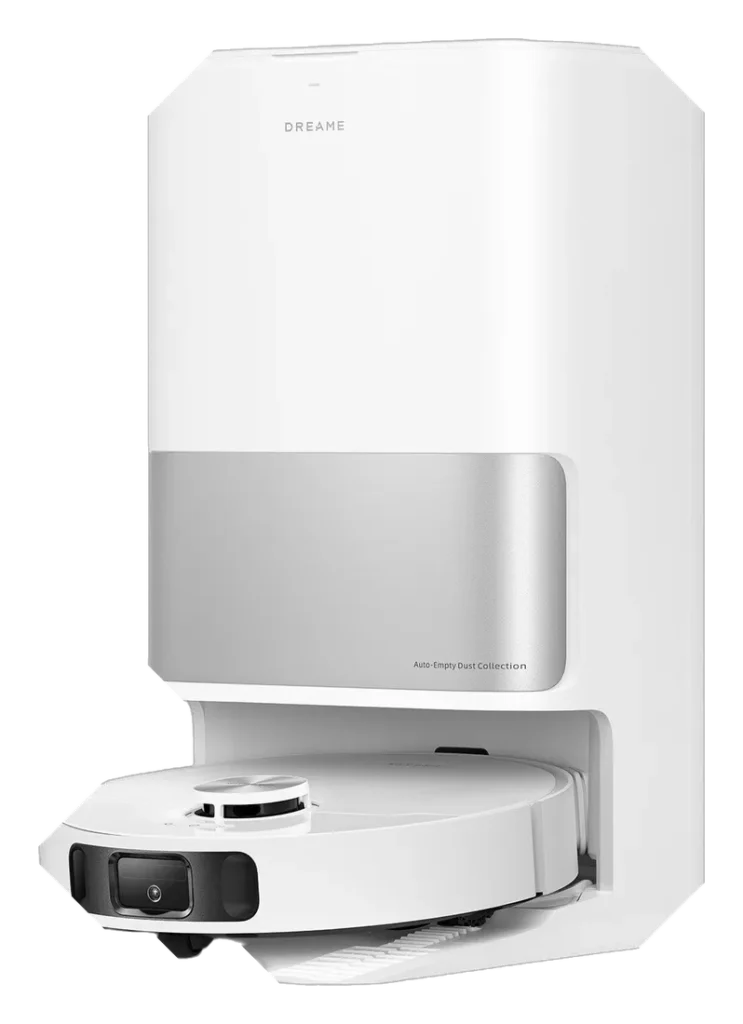
Dreame
Dreame L10s Ultra Gen 2
- Autonomy
- IIIConditional
- Score
- 79/100Strong
- Readiness
- Ready Now
- Price
- $589.99list
Dreame
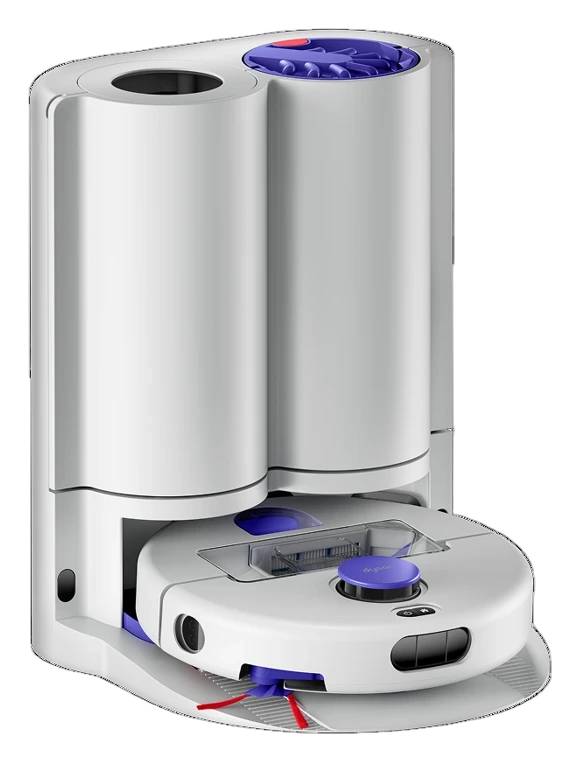
Dyson
Up to three
All robot vacuums. Every figure below is placed against the whole class, so a gap can be read against how much the class itself varies.
The conditions each robot was assessed against, side by side. Rows marked in gold are where these machines genuinely differ.
| Condition | L10s Ultra Gen 2 | R2 Nurovi Wash+Dry |
|---|---|---|
| Home size | ||
| Under 1,500 sqft | GoodCapable but exceeds what compact homes typically need; a cheaper model in this class would do the same job. | GoodLiDAR mapping and a 90-minute maximum run time, per Dyson, cover a compact floor plan in one charge. |
| 1,500 – 3,000they differ | Good180-minute runtime covers single-charge cleaning for homes in this range; multi-floor layouts supported. | DependsDyson publishes a 90-minute run time but no coverage area per charge, so mid-size homes are unconfirmed. |
| Over 3,000 | DependsRuntime caps at 180 minutes; large homes may require two scheduled runs or on-demand starts between auto-empty cycles. | Depends90-minute run time, 6.5-hour charge, and no published recharge-and-resume behavior for a home this size. |
| Primary floors | ||
| Hard floors | Good10000Pa suction effective on tile, hardwood, and laminate; mop attachment adds wet-cleaning capability. | GoodTwin-capture brush bar and suction pick up debris while the rotating pads wash hard floors in the same run. |
| Low / medium pilethey differ | GoodSuction handles low-pile and berber effectively; owner reports document consistent pickup with minimal fiber entanglement. | DependsUltrasonic sensor detects carpet and adjusts suction; Dyson publishes no mop-lift figure for crossing rugs. |
| High pile / shagthey differ | PoorOwner reports document suction loss on shag and high-pile carpets; LiDAR mapping also struggles with fiber-pattern interference. | DependsNo independent deep-pile test published, and Dyson does not state whether the wash pads lift clear of pile. |
| Mopping needs | ||
| Vacuum only | GoodStrong vacuum; the mop lifts or detaches when not needed. | GoodStrong vacuum; the mop lifts or detaches when not needed. |
| Light mopping | GoodActive mopping system covers routine floors easily. | GoodActive mopping system covers routine floors easily. |
| Frequent mopping | GoodPressure or rotating mop with self-wash is built for frequent mopping. | GoodPressure or rotating mop with self-wash is built for frequent mopping. |
| You want to… | ||
| Empty bin myself | GoodSelf-emptying dock reduces contact with dust; mop pads require manual rinsing 1-2 times weekly on high-shedding homes. | GoodThe dock empties the bin and washes the pads, so hands-on upkeep is lighter than this option allows. |
| Empty occasionally | GoodMop auto-wash and dock self-empty handle routine maintenance; water tank refill and sensor cleaning every 1-3 months. | GoodBin emptying every few months and occasional spare-part swaps are the main owner tasks Dyson describes. |
| Set-and-forgetthey differ | DependsDock-full alerts require app acknowledgment; robot will not resume operation until user dismisses notifications. | GoodDock self-empties, washes pads at 167°F, dries them at 113°F and refills; bin rated up to 90 days. |
A robot being poor for a condition is a fact about fit, not a fault. “Depends” means the record names a limit worth reading, not that the answer is unknown.
A number only means something next to the spread it sits in. Each track is the real range across every classified robot in the class, with the median marked.
Not compared, because fewer than two of these robots carry a published figure: Noise.
Written on each record, and the only thing here every robot on the site carries.
What each design gives up to be good at what it is good at.
Suction nearly doubled over the original L10s Ultra, from 5,300 Pa to 10,000 Pa; the navigation stack is carried over rather than replaced, so the gain is in cleaning power, not in what the robot understands about the room.
The station washes and hot-air dries the pads after every run and refills the robot itself; what it does not do is fill or empty its own tanks, and that stays with the owner.
Corner reach is the whole reason for the triangle pads, and the only public demo never pointed them at a corner.
Ninety days between bin emptyings is Dyson’s internal test figure; Dyson itself says real intervals vary with debris, habits and floor type.
Stated by the record itself. A robot being wrong for a household is a fact about fit, not a fault.
The upkeep ownership hands back to you, whatever the autonomy level says.
Classifications rest on different depths of evidence. A pre-release assessment and a verified one are not the same kind of claim.
| Robot | Evidence status | Sources reviewed | Last assessed |
|---|---|---|---|
| Dreame L10s Ultra Gen 2 | Provisional | 4 | Sep 2026 |
| Dyson R2 Nurovi Wash+Dry | Verified | 8 | Sep 2026 |
Evidence status counts the sources behind a classification, not their kind. A high count can be maker documentation and price coverage, so read it as how much was reviewed rather than as independent testing. How we weigh evidence.
 The full recordDreame L10s Ultra Gen 2Specifications, evidence, the Fit Check in full, and every tracked change.
 The full recordDyson R2 Nurovi Wash+DrySpecifications, evidence, the Fit Check in full, and every tracked change.
Robovations classifies robots; it does not rank them. Nothing on this page is a recommendation, and no manufacturer influences a classification or its placement here.
Comparing across classes is allowed — the page will switch to per-class positioning and tell you it has.