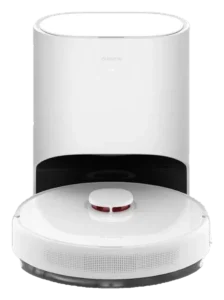
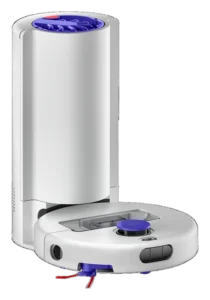
Dreame D10 Plus · Dyson R1 Nurovi Dry
All robot vacuums. Every measure below is plotted against the full class, so a difference can be read against how much the class itself varies.
- Dreame D10 Plus
- Dyson R1 Nurovi Dry


Dyson R1 Nurovi Dry
- Autonomy
- IIIConditional Autonomy
- Score
- 84/100 Pre-Order Ready
- Readiness
- Not assessed
- Price
- $549list
Up to three
What each one does on its own.
The Autonomy Ladder is the same five rungs for every robot on the site. A rung describes the conditions a robot handles without you, not how good it is.
Where they actually differ.
The Robovations Score is nine inputs across three pillars, each weighted as shown and each scored so that more is better. A robot can lead on one and trail on another, which is the point of showing them apart. Cost of ownership and data handling are reported on each robot's own page and are never averaged into the score.
Capability
- Dreame D10 Plus70
Not scored: Dyson R1 Nurovi Dry
- Dreame D10 Plus72
Not scored: Dyson R1 Nurovi Dry
- Dreame D10 Plus32
Not scored: Dyson R1 Nurovi Dry
- Dreame D10 Plus50
Not scored: Dyson R1 Nurovi Dry
Dependability
- Dreame D10 Plus73
Not scored: Dyson R1 Nurovi Dry
- Dreame D10 Plus77
Not scored: Dyson R1 Nurovi Dry
- Dreame D10 Plus73
Not scored: Dyson R1 Nurovi Dry
Ownership burden
- Dreame D10 Plus59
Not scored: Dyson R1 Nurovi Dry
- Dreame D10 Plus61
Not scored: Dyson R1 Nurovi Dry
How far apart is a long way?
A number only means something next to the spread it sits in. Each track below is the real range across every classified robot in the class, with the median marked.
- Dreame D10 Plus$399
- Dyson R1 Nurovi Dry$549
- Dreame D10 Plus4,000 Pa
- Dyson R1 Nurovi Dry21,000 Pa
- Dreame D10 Plus240 min
- Dyson R1 Nurovi Dry390 min
- Dreame D10 Plus7.9 lbs
- Dyson R1 Nurovi Dry7.5 lbs
- Dreame D10 Plus3.9 in
- Dyson R1 Nurovi Dry3.8 in
Not compared, because fewer than two of these robots carry a published figure: Runtime, Noise.
What the numbers leave out.
The trade-off
What each design gives up to be good at what it is good at.
The dock is convenient but not fully autonomous: it auto-empties the vacuum dustbin into a sealed 2.5 L bag that Dreame rates at about 45 days, but the mop is a separate clip-on module the owner fits, refills and removes by hand every few days.
LiDAR mapping is precise but coverage is single-sweep: after initial mapping, the robot runs fixed room-by-room paths rather than adaptive obstacle re-detection, leaving tight corners underserved if furniture has shifted.
At $549 the R1 keeps the R2’s navigation and the same 21,000 Pa suction on the same 352 mm chassis. What the lower price removes is wet cleaning, not sensing: the R2 costs more for mop hardware and a washing dock, and both robots map the same way.
Who each one is wrong for
Stated by the record itself. A robot being wrong for a household is a fact about fit, not a fault.
- High-pile carpet homes
- Owner reports document reduced suction on shag and deep pile. The mop module has no lift: left fitted, the pad drags across carpet, so it has to be unclipped by hand before any run that crosses plush flooring.
- Homes requiring fully hands-off mopping
- Mop cartridge cannot be auto-washed or refilled. Owners manually remove the cartridge between cycles, fill the water tank, and reattach. This defeats the autonomy promise on floors needing frequent mopping.
- Owners with 5 GHz-only Wi-Fi networks
- Device connects to 2.4 GHz only. Homes with 5 GHz-exclusive networks or mesh systems lacking 2.4 GHz bands will require network reconfiguration.
- Anyone needing mopping in the same device
- The R1 has no mop hardware at all. Buyers wanting wet cleaning need the R2 Wash+Dry or the R3 Spot+Scrub UV instead.
- US buyers wanting to purchase immediately
- No confirmed US ship date or retailer listing existed at launch; UK availability began same-day but the US window trails into later September.
- Buyers who want independent verification first
- No independent reviews, owner reports, or teardowns exist yet; every published figure so far traces back to Dyson's own launch materials.
- Buyers comparing on published battery or sound figures
- Dyson publishes run time and charge time but no battery capacity, no sound rating, and no onboard bin volume for the R1. Anyone shopping on those numbers has nothing to compare.
What stays your job
The upkeep ownership hands back to you, whatever the autonomy level says.
- Weekly: Brush and side-brush manual cleaning to remove hair tangled around bristles.
- Monthly: Primary filter cleaning via rinse or light tap to restore suction.
- Every 6-8 weeks: Replace the sealed dock bag; Dreame rates the 2.5 L bag at about 45 days of typical use. Bags are sold in multipacks.
- Every 3-6 months: Main brush replacement when wear becomes visible (approximately $12-18 per brush).
- Every 8-12 weeks: Wash or replace the microfiber mop pad; rinse and dry the water tank after mopping runs so it does not develop a mildew odor in humid climates.
- Every 6 months: Dock outlet and auto-empty channel inspection for debris blockage or moisture buildup.
- Every 90 days: Empty the dock’s 2.6 L bin; the dock is bagless and empties the robot after each run.
- Monthly: Clean the Twin-capture debris separator to maintain suction.
- Monthly: Wipe down and inspect the extending side sweeper for hair wrap.
- Every 3-6 months: Clean or replace the robot and dock filters; Dyson has not published an interval.
- As needed: Clear the anti-tangle brush bar of tangled hair and debris.
- Annually: Inspect wheels and sensors for dust buildup.
How much each of these is standing on.
Classifications rest on different depths of evidence. A pre-release assessment and a verified one are not the same kind of claim.
| Robot | Evidence status | Sources reviewed | Last assessed |
|---|---|---|---|
| Dreame D10 Plus | Provisional | 3 | Aug 2026 |
| Dyson R1 Nurovi Dry | Pre-Release | 10 | Sep 2026 |
Add a robot
Comparing across classes is allowed — the page will switch to per-class positioning and tell you it has.