

Aquabot
Aquabot Breeze IQ
- Autonomy
- IIAssisted
- Score
- 52/100Limited
- Readiness
- Not assessed
- Price
- $799.99list
Aquabot

Maytronics
Up to three
All robot pool cleaners. Every figure below is placed against the whole class, so a gap can be read against how much the class itself varies.
The conditions each robot was assessed against, side by side. Rows marked in gold are where these machines genuinely differ.
| Condition | Aquabot Breeze IQ | Maytronics Dolphin Na… |
|---|---|---|
| Pool type | ||
| In-ground | GoodDesigned for in-ground pools; compatible with gunite, vinyl, and plaster surfaces. | GoodDesigned for in-ground pools; wall-climbing and floor coverage engineered for this category. |
| Above-ground | PoorCorded design and single-brush geometry do not scale to above-ground pool installation. | PoorWeight and suction cup design do not fit above-ground sidewalls or inflatable pool walls. |
| Mixed setup | GoodStandard for this category, see specs for confirmation. | GoodIn-ground pools are the primary design; above-ground operation not recommended. |
| Pool size | ||
| Small (< 400 sqft) | GoodOptimized for pools under 10,000 gallons; cycle times remain 1-1.5 hours with good coverage. | GoodSmall pools (under 10,000 gallons) easily covered by single pass; 50-foot cord more than adequate. |
| Medium (400 – 800) | Good15,000 to 20,000 gallons is comfortable upper range; multiple cycles weekly recommended. | Good12,000–25,000-gallon pools are the design target. Full coverage in one cord placement typical. |
| Large (> 800)they differ | PoorRandom pattern becomes inefficient on pools over 25,000 gallons; daily operation or larger cleaner required. | DependsPools above 33 feet require repositioning cord or dual-unit deployment for complete coverage. |
| Debris load | ||
| Fine (sand / silt) | GoodCartridge filter efficiently captures fine sediment and silt; frequent rinsing maintains suction. | GoodFine-debris brush is the Nautilus Plus specialty; sand and silt are primary design targets. |
| Leaves / large debris | DependsHeavy leaf load requires pre-skimming and frequent basket emptying; random search prolongs collection cycles. | DependsHandles moderate leaf load but fine-brush clogs quickly in heavy-leaf seasons; weekly cleaning needed. |
| Algae / heavy foulingthey differ | PoorFloor-only design cannot reach walls or waterline where algae accumulates; manual brushing required. | DependsAlgae-heavy pools require frequent filter maintenance; brush can clog, slowing collection velocity. |
| Coverage you want | ||
| Floor only | GoodSingle brush provides consistent floor contact; sediment removal is reliable on routine maintenance pools. | GoodBrush-driven floor coverage is standard; reaches all floor geometries within cord reach. |
| Floor + wallsthey differ | PoorNo wall contact; this model addresses floor cleaning only. | GoodWall-climbing design covers vertical surfaces; floor-to-wall transition is proven in thousands of pools. |
| Floor + walls + waterlinethey differ | PoorWaterline and perimeter tile are outside this model's design scope. | DependsWaterline coverage is incidental (suction cups contact walls); not engineered as primary target like floor or walls. |
A robot being poor for a condition is a fact about fit, not a fault. “Depends” means the record names a limit worth reading, not that the answer is unknown.
Nine inputs across three pillars, each weighted as shown and each scored so more is better. A robot can lead on one and trail on another, which is the point of showing them apart.
A number only means something next to the spread it sits in. Each track is the real range across every classified robot in the class, with the median marked.
Not compared, because fewer than two of these robots carry a published figure: Runtime, Charge time, Noise, Height.
Written on each record, and the only thing here every robot on the site carries.
What each design gives up to be good at what it is good at.
Two active scrubbing brushes take the cleaner up inclines, walls and the waterline as well as across the floor, but coverage comes from a random search pattern rather than a map, so completeness is a function of cycle length rather than of planning.
The fine-porosity cartridges that capture silt and sand are the same porosity that loads quickly. In an algae bloom they can fill inside a single cycle, so the after-every-use rinse is what keeps pickup from falling off.
Cord-based operation eliminates wireless convenience but removes dependency on app uptime and cloud connectivity.
Stated by the record itself. A robot being wrong for a household is a fact about fit, not a fault.
The upkeep ownership hands back to you, whatever the autonomy level says.
Classifications rest on different depths of evidence. A pre-release assessment and a verified one are not the same kind of claim.
| Robot | Evidence status | Sources reviewed | Last assessed |
|---|---|---|---|
| Aquabot Breeze IQ | Discontinued | 1 | Aug 2026 |
| Maytronics Dolphin Nautilus CC Plus | Discontinued | 4 | Aug 2026 |
Evidence status counts the sources behind a classification, not their kind. A high count can be maker documentation and price coverage, so read it as how much was reviewed rather than as independent testing. How we weigh evidence.
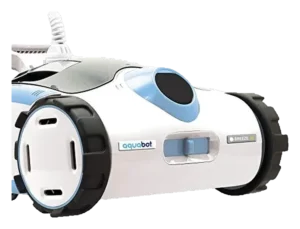 The full recordAquabot Breeze IQSpecifications, evidence, the Fit Check in full, and every tracked change.
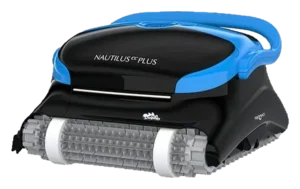 The full recordMaytronics Dolphin Nautilus CC PlusSpecifications, evidence, the Fit Check in full, and every tracked change.
Robovations classifies robots; it does not rank them. Nothing on this page is a recommendation, and no manufacturer influences a classification or its placement here.
Comparing across classes is allowed — the page will switch to per-class positioning and tell you it has.