

1X Technologies
1X NEO
- Autonomy
- IIAssisted Autonomy
- Score
- 63/100 Plausible
- Readiness
- Known Issues
- Price
- $20,000list
All humanoid robots. Every measure below is plotted against the full class, so a difference can be read against how much the class itself varies.
Up to three
The Autonomy Ladder is the same five rungs for every robot on the site. A rung describes the conditions a robot handles without you, not how good it is.
The Robovations Score is nine inputs across three pillars, each weighted as shown and each scored so that more is better. A robot can lead on one and trail on another, which is the point of showing them apart. Cost of ownership and data handling are reported on each robot's own page and are never averaged into the score.
None of these robots carries a scored assessment yet, so there is nothing to plot here. The classification and evidence below still apply.
A number only means something next to the spread it sits in. Each track below is the real range across every classified robot in the class, with the median marked.
Not compared, because fewer than two of these robots carry a published figure: Suction, Charge time, Noise.
What each design gives up to be good at what it is good at.
Tendon-driven compliance maximizes safety in shared spaces but leaves precision and contact-sensitive work unproven; with a published 154 lb lift and 18 lb per-arm payload, raw force is not what the design gives up.
Operator partnership ensures task flexibility and professional support but requires continuous human labor cost.
A $499 per month plan makes a home humanoid reachable without a $20,000 purchase, but keeps the robot on an ongoing subscription rather than owned outright.
Manipulation is a configuration choice, not a fixed ceiling: the standard build carries 23 DoF with four per arm, while the gripper and dexterous-hand builds reach 31 and 41 DoF at added cost.
Research-grade software means active debugging; stability and reliability are secondary to capability exploration in the development cycle.
Stated by the record itself. A robot being wrong for a household is a fact about fit, not a fault.
The upkeep ownership hands back to you, whatever the autonomy level says.
Classifications rest on different depths of evidence. A pre-release assessment and a verified one are not the same kind of claim.
| Robot | Evidence status | Sources reviewed | Last assessed |
|---|---|---|---|
| 1X NEO | Pre-Release | 12 | Sep 2026 |
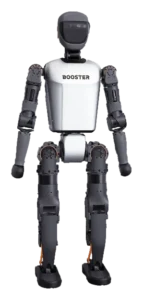
| Booster Robotics T1 | Not Consumer-Ready | 4 | Aug 2026 |
Comparing across classes is allowed — the page will switch to per-class positioning and tell you it has.