
Goal-based
Which companion robot is right for your home?
All four market as companions, yet three commit to a single operational model while one spreads across several, so form factor and price alone do not signal fit.

We may earn commission from qualifying purchases. This does not influence the comparison.
The investigation
5 questions this comparison examines
What is each robot's primary operational mode?
Companion robots differ not just in form but in how they deliver value. The primary mode determines whether a household goal is achievable at all.
Sony Aibo ERS-1000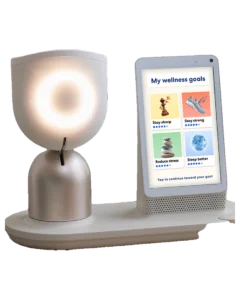 ElliQ 3
 temi V3Enabot EBO X
Intuition Robotics documentation describes ElliQ 3 as stationary and classified at Level I; it initiates conversations and reminders but does not navigate.
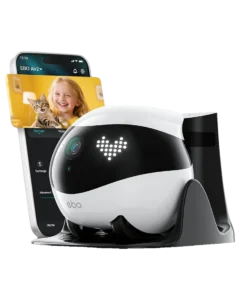
Enabot documents EBO X with V-SLAM mapping, autonomous auto-cruise, and manual remote driving; the mix of autonomous patrol and human-directed telepresence places it at Level II Assisted Autonomy.
Which robot suits an eldercare or wellness support goal?
Households supporting an older adult need proactive engagement, not just on-demand response. Architecture here is the key differentiator.
Sony Aibo ERS-1000ElliQ 3temi V3Enabot EBO XIntuition Robotics documents ElliQ 3's proactive conversational check-ins and structured family dashboard as core capabilities; the conversational wellness architecture is the structural distinction from the other three.
Enabot documents EBO X with medication reminders and elderly fall detection during auto-cruise, so it carries monitoring-style eldercare features but no conversational wellness system.
Which robot supports mobile telepresence within the home?
Telepresence goals require both mobility and reliable video. The mechanism of that mobility shapes the experience substantially.
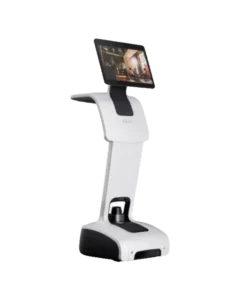
Sony Aibo ERS-1000ElliQ 3temi V3Enabot EBO Xtemi V3 documentation describes autonomous navigation to named locations and a built-in 10.1-inch HD touchscreen, making it the only unit here purpose-built for hands-off mobile video presence.
EBO X maps the home with V-SLAM and auto-cruises autonomously, and also supports manual remote driving; reaching a specific named room on spoken command is a temi V3 capability it does not match.
Which robot fits a remote family or pet monitoring goal?
Remote monitoring requires mobility, a camera feed, and low friction for occasional use. These requirements favor a different architecture than eldercare or ambient presence.
Sony Aibo ERS-1000ElliQ 3temi V3Enabot EBO XEnabot documents EBO X with an included laser pointer for pet engagement, a 4K stabilized camera, and remote two-way video as its primary use case; these monitoring features are absent from the other three.
temi V3 supports video calls and can be sent to check a room, yet its $3,950 price and system-managed navigation target commercial and eldercare settings rather than casual pet or family monitoring.
What ownership costs and commitments does each require?
Upfront price is not total cost. Subscription requirements, cloud dependencies, and ongoing service tiers vary significantly across these four robots.
Sony Aibo ERS-1000ElliQ 3temi V3Enabot EBO XElliQ 3 requires a care membership from day one for core wellness features to function. Aibo bundles a three-year AI Cloud Plan that then renews at roughly $99 to $299 per year and is required for full features.
All four robots depend on manufacturer cloud platforms; local-only operation is not documented for any of them, so service continuity depends on platform longevity.
In closing
What the evidence shows
Patterns that emerged across the questions above.
Three robots commit, one spreads
Aibo, ElliQ 3, and temi V3 each build around a single operational model, while EBO X spans monitoring, pet play, and partial eldercare alerts without matching any of the three on its own axis.
Subscriptions run deeper than the sticker price
ElliQ 3 requires a care membership from day one, and Aibo's AI Cloud Plan becomes a paid requirement after three included years, so total cost diverges from hardware price for both.
Autonomy level does not predict suitability
Three of the four share Level II classification, yet capabilities diverge widely, and Level I ElliQ 3 delivers the most structured eldercare functionality despite the lower autonomy rung.
Common questions