Skip to content
Saved

Goal-based/Robot Vacuums/4 robots compared/Reviewed Jun 2026

Are wet-and-dry robot mops worth it for small hard-floor homes?

The navigation gap separates one robot from three.Bissell SpinWave Robot is the only unit without persistent room mapping. At $299 MSRP, it operates at Level II; the other three operate at Level III with app-defined zones and room scheduling at $449-549.
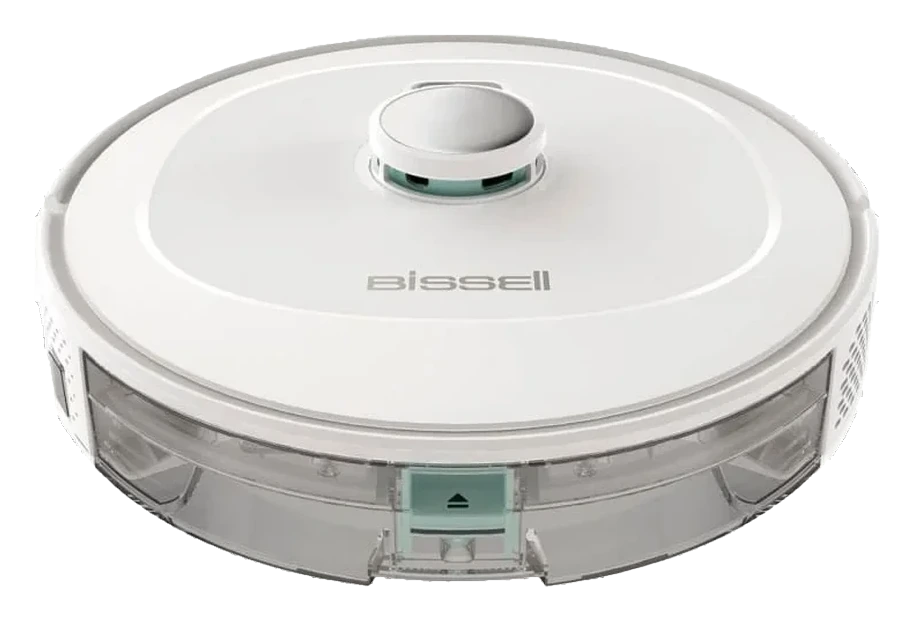
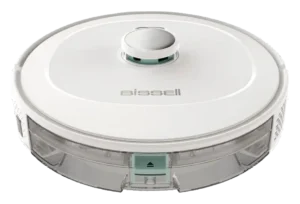
Bissell SpinWave RobotView recordBissellIISpinWave Robot
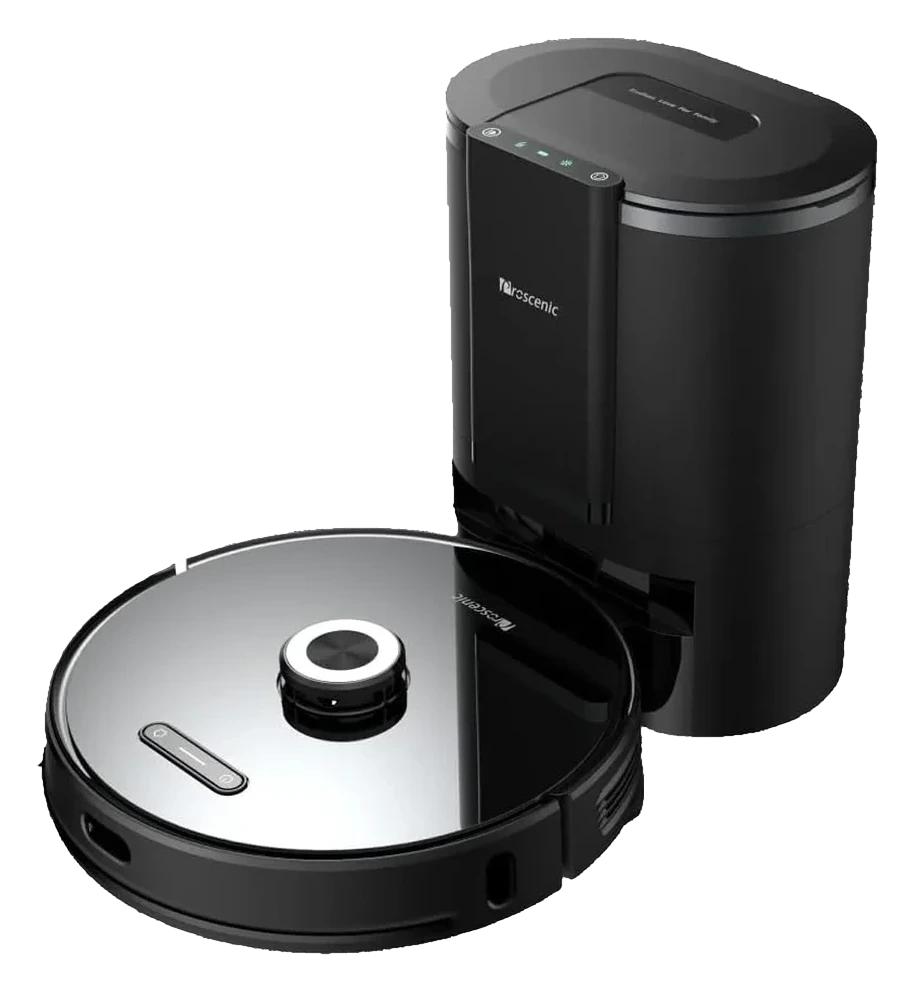
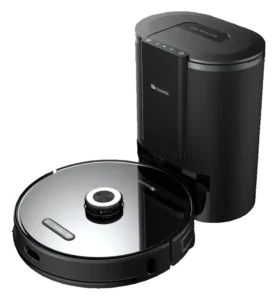
Proscenic M8 ProView recordProscenicIIIM8 Pro
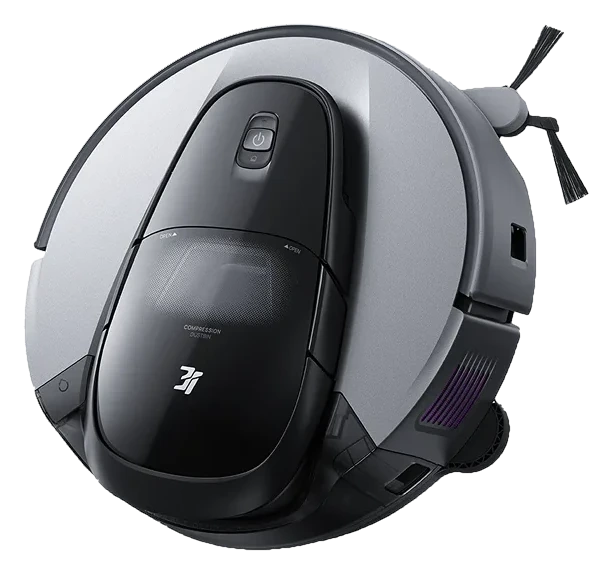
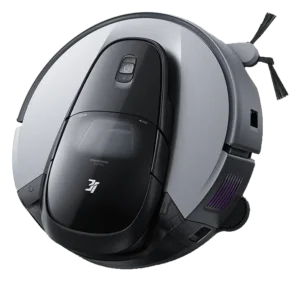
3i G10+View record3iIIIG10+
Full specifications19 measurements · 57 of 76 documented
MSRP
$299
$549
$449
$549
Rated runtime
100 min
250 min
Not documented
150 min
Charge time
240 min
240 min
Not documented
240 min
Battery capacity
80 Wh
Not documented
Not documented
72 Wh
Battery type
Li-ion
Li-ion
Not documented
Li-ion
Suction power
Not documented
2,600 Pa
18,000 Pa
2,200 Pa
Noise level
72 dB
66 dB
Not documented
60 dB
Navigation
Gyroscope dead-reckoning + bump sensor + physical dock IR return
LiDAR-SLAM + IMU + infrared time-of-flight + cliff and bump sensors (no camera)
LiDAR + camera-assisted obstacle avoidance
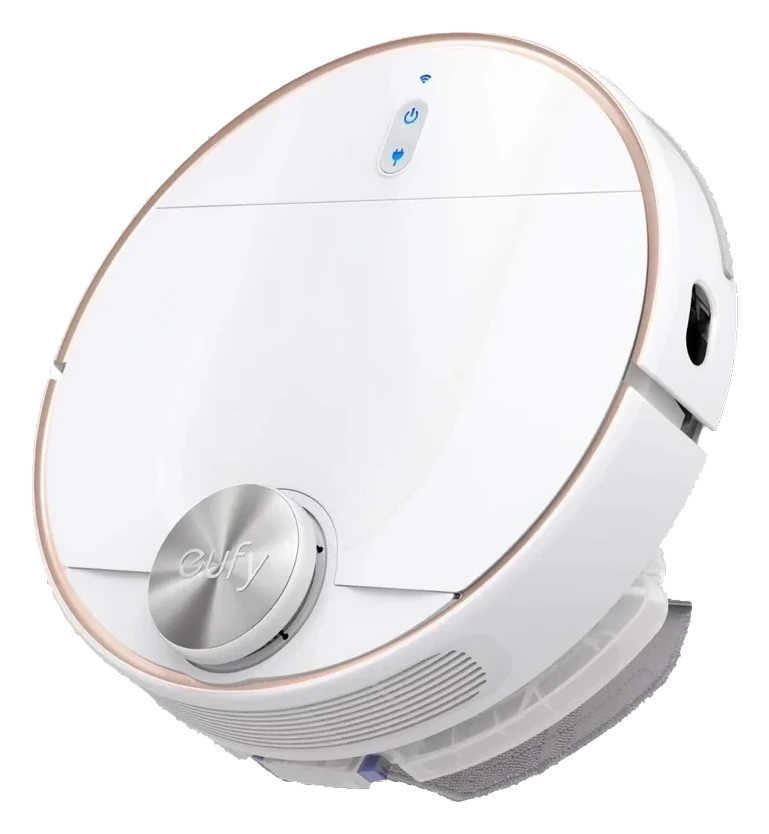
iPath Laser Navigation (LiDAR) with AI Map route planning, infrared cliff sensors and a bumper. No camera and no object recognition.
Connectivity
wifi
wifi, bluetooth, google_home
wifi
wifi, bluetooth, alexa
Dimensions (W×D×H)
12.3 × 13 × 3.3 in
13.4 × 13.4 × 3.9 in
14 × 14 × 4.3 in
13 × 13 × 4 in
Weight
7.5 lbs
7.7 lbs
Not documented
6.2 lbs
Form factor
Not documented
Not documented
round
Not documented
Readiness
Ready Now
Ready Now
Ready Now
Ready Now
Released
Jan 2020
Jun 2021
Jun 2025
Nov 2019
Water tank capacity
400 mL
300 mL
250 mL
Not documented
Dock type
Charge-only dock, no self-emptying
Auto-empty (bagged), debris only
Charge-only dock, no self-emptying
Onboard dustbin
Not documented
280 mL
1,000 mL
450 mL
Dust bag capacity
Not documented
4.3 L
Not documented
Not documented
Threshold climb
Not documented
Not documented
Not documented
0.7 in
01/05

Does each robot actually map the floor, or does it wander?

Navigation architecture sets the ceiling for everything else. A robot that cannot remember your home cannot skip rooms, schedule zones, or avoid no-mop areas reliably.

Where they differBissell SpinWave Robot — Persistent room map across sessions: No; resets each session
EvidenceBissell SpinWave RobotProscenic M8 Pro3i G10+Anker Eufy RoboVac L70 Hybrid
Navigation methodGyroscope dead-reckoning + bumpLiDAR-SLAM + IMU + cameraLiDAR + camera obstacle avoidanceLiDAR SLAM + AI obstacle avoidance
Persistent room map across sessionsNo; resets each sessionDiffersYes; room-level schedulingYes; multi-floor persistenceYes; multi-floor mapping
App no-go zone supportNo; physical barriers onlyYes; room-level no-go zonesYes; per-room zone settingsYes; app-defined zones
Autonomy level (Robovations classification)Level II: Assisted AutonomyLevel III: Conditional AutonomyLevel III: Conditional AutonomyLevel III: Conditional Autonomy
Sources & evidence
Robovations product record 5063, Jun 2026

Bissell SpinWave Robot Robovations product records data confirms gyroscope dead-reckoning with no room memory; sessions reset. Physical barriers are the documented method for zone control.

Proscenic, 3i US, and Anker manufacturer specs, accessed Jun 2026

Proscenic M8 Pro, 3i G10+, and Anker Eufy RoboVac L70 Hybrid all use LiDAR-SLAM per manufacturer documentation, enabling persistent maps and app-defined zones.

02/05

How does the mop system work and what does it demand weekly?

Three architectures are present: dual rotating pads that vacuum and mop simultaneously, a clip-on drag-mop attachment, and a motorized lift that raises pads onto carpet. Each creates a different maintenance rhythm.

Where they differBissell SpinWave Robot — Mop mechanism type: Dual counter-rotating microfiber pads
EvidenceBissell SpinWave RobotProscenic M8 Pro3i G10+Anker Eufy RoboVac L70 Hybrid
Mop mechanism typeDual counter-rotating microfiber padsDiffersClip-on water tank + drag padExtendable drag-mop; auto-deployMotorized mop-lift (10.5mm clearance)
Mop pad auto-wash in dockNo; hand-rinse requiredNo; hand-rinse requiredNo; manual pad rinseHot-water rinse; no detergent
Water tank fillManual; each sessionManual; each mopping sessionManual; ~250ml tank (~400-500 sqft)Manual; each session
Carpet compatibility with mop deployedNone; hard floor onlyLow-pile only; no auto-liftApp no-mop zones required on carpetLow-pile auto-lift to 10.5mm
Sources & evidence
Bissell official product page; CNET review, accessed Jun 2026

Bissell SpinWave Robot uses dual counter-rotating pads (the only architecture here with rotating rather than dragging action); manufacturer documentation and CNET review confirm hard-floor-only constraint.

Anker Support documentation; Robovations product record 3477, Jun 2026

Anker Eufy RoboVac L70 Hybrid mop-lift specs document 10.5mm clearance; owner reports on low-pile compatibility align with manufacturer limits; heavy soiling requires manual pad intervention per product FAQ.

3i US product FAQ, us.3itech.com, Jun 2026

3i G10+ water tank capacity (~250ml) and coverage estimate (~400-500 sqft per fill) sourced from manufacturer FAQ on us.3itech.com, accessed Jun 2026.

03/05

What does the dust collection system require, and how often?

Vacuuming and mopping create separate consumable streams. Dust collection architecture varies from manual bin emptying to self-emptying bags to debris compression, and each carries a different cost and frequency.

Where they differ3i G10+ — Dust collection type: Self-emptying; debris compression base
EvidenceBissell SpinWave RobotProscenic M8 Pro3i G10+Anker Eufy RoboVac L70 Hybrid
Dust collection typeManual dustbin (no dock auto-empty)Self-emptying; proprietary bag dockSelf-emptying; debris compression baseDiffersManual dustbin (no dock auto-empty)
Emptying frequency (typical household)After every runBag change every 2-4 weeksQuarterly or as-needed (compressed)After every run
Dock bag or filter replacement cost (approx.)~$15 filter every 3 months$8-12 per bag, 3-pack typical~$15-25 filter every 3-6 months~$12 HEPA filter every 3-6 months
Suction power (manufacturer spec)Not published2,600 Pa18,000 PaDiffers2,200 Pa
Sources & evidence
3i US product page and user manual, us.3itech.com, Jun 2026

3i G10+ debris compression base is the only unit here that avoids weekly manual emptying; manufacturer specs document quarterly intervals for typical households, with 0.5L internal compressed storage.

Proscenic.com consumables documentation; Reddit r/RobotVacuums, accessed Jun 2026

Proscenic M8 Pro bag-change cadence (2-4 weeks) is documented across Amazon owner reviews and Proscenic consumables pages; heavy-pet households trend toward the 2-week end.

3i US, Proscenic, and Anker manufacturer specifications, Jun 2026

3i G10+ 18,000 Pa suction is manufacturer-published; Proscenic M8 Pro 2,600 Pa and Anker Eufy RoboVac L70 Hybrid 2,200 Pa are from respective manufacturer specs.

04/05

What does the price gap actually buy: navigation, automation, or both?

The four robots span $299 to $549 MSRP. Whether that $250 spread buys real autonomy gains or only dock automation is the core question for a hard-floor apartment buyer.

Where they differBissell SpinWave Robot — MSRP: $299
EvidenceBissell SpinWave RobotProscenic M8 Pro3i G10+Anker Eufy RoboVac L70 Hybrid
MSRP$299Differs$549$449$549
Room mapping + schedulingNoYes; room-levelYes; room-levelYes; room-level
Dock dust automationNone; manual binSelf-empty (bag)Self-empty (compression)None; manual bin
Battery runtime (manufacturer spec)100 min250 minDiffersNot published150 min
Robovations overall score48 / 10066 / 10067 / 10068 / 100
Sources & evidence
Robovations product records 5063, 5110, 3477, 6903, Jun 2026

Bissell SpinWave Robot MSRP $299 is confirmed in Robovations product records; Proscenic M8 Pro and Anker Eufy RoboVac L70 Hybrid both carry $549 MSRP per records 5110 and 3477.

Proscenic manufacturer specifications; Anker Support, accessed Jun 2026

Proscenic M8 Pro 250-minute runtime is manufacturer-documented; Anker Eufy RoboVac L70 Hybrid 150-minute runtime confirmed via Anker manufacturer specs.

05/05

Where does a drag-mop stop being adequate for real hard floors?

Drag-pad mopping differs from rotating-pad or auto-wash mopping in saturation control and surface contact. Owner reports and manufacturer constraints define where the passive drag approach fails.

Where they differBissell SpinWave Robot — Mop pad contact method: Counter-rotating (active scrub)
EvidenceBissell SpinWave RobotProscenic M8 Pro3i G10+Anker Eufy RoboVac L70 Hybrid
Mop pad contact methodCounter-rotating (active scrub)DiffersPassive drag padPassive drag pad (auto-extend)Passive drag pad (lift-capable)
Known limit: stuck-on residueHandles light residue; no heavy scrubLight dust and surface film onlyLight dust and surface film onlyStandard dust; heavy soiling needs manual
Pad replacement frequencyEvery 2-4 months (weekly use)Weekly rinse; monthly if heavy useWeekly rinse; monthly if heavy useMonthly; 100-150 uses before fraying
Mop + vacuum in a single passYes; simultaneousYes; combined run possibleYes; single-pass mixed surfaceYes; simultaneous on hard floors
Sources & evidence
Bissell official SpinWave page; CNET review cited in Robovations record 5063, Jun 2026

Bissell SpinWave Robot is the only model here using counter-rotating pads rather than a drag method; manufacturer product page and CNET review both describe this architecture as the key differentiator for light scrubbing.

Anker product FAQ; Robovations product record 3477, Jun 2026

Anker Eufy RoboVac L70 Hybrid product FAQ documents heavy soiling requires manual intervention even with auto-wash rinse cycles; owner reports on Amazon confirm standard dust and light debris are within auto-wash scope.

Manufacturer documentation across all four units, Jun 2026

All four robots restrict wet-cleaning to light maintenance mopping. None document grout scrubbing, dried adhesive removal, or post-pet-accident disinfection as within scope.

In closing

What the evidence shows

Patterns that emerged across the questions above.

01

The navigation gap separates one robot from three

Bissell SpinWave Robot is the only unit without persistent room mapping. At $299 MSRP, it operates at Level II; the other three operate at Level III with app-defined zones and room scheduling at $449-549.

02

No robot in this tier eliminates mopping maintenance

All four require manual water tank refills and pad rinsing. The Anker Eufy RoboVac L70 Hybrid adds a hot-water rinse cycle; heavy soiling still requires manual pad intervention per manufacturer documentation.

03

Dock automation splits the three LiDAR models

3i G10+ offers debris compression for quarterly emptying; Proscenic M8 Pro provides self-empty with biweekly bag changes; Anker Eufy RoboVac L70 Hybrid requires per-run manual emptying despite its higher autonomy score.

Common questions

What readers ask about this comparison.

Q.
Will any of these robots handle a mixed tile-and-low-pile-carpet apartment without manual intervention?
The Anker Eufy RoboVac L70 Hybrid handles floor transitions automatically via a 10.5mm mop-lift, documented by manufacturer specs for low-pile carpet under 12mm nap. The 3i G10+ requires per-room no-mop zone configuration in the app. The Proscenic M8 Pro and Bissell SpinWave Robot require physical barriers or manual zone management.
Q.
Is the Bissell SpinWave Robot's rotating-pad mechanism a meaningful advantage over drag pads?
Counter-rotating pads provide more contact pressure than a passive drag pad on smooth hard floors, per manufacturer design documentation and CNET review coverage. The trade-off is that this architecture limits the unit to hard floors only; no lift mechanism exists, and wet contact on carpet risks mold per owner reports.
Q.
How much does ongoing consumable cost differ across these four robots?
Bissell SpinWave Robot pads run roughly $15-25 per set every 2-4 months; Proscenic M8 Pro dock bags run $8-12 every 2-4 weeks; 3i G10+ filter and pad costs total roughly $20-35 every 3-6 months with quarterly compression-dock emptying; Anker Eufy RoboVac L70 Hybrid pads run about $15 monthly under regular use per owner reports. Bag cadence makes the Proscenic M8 Pro the highest-frequency cost item.
Q.
Does the 3i G10+'s 18,000 Pa suction make a practical difference for apartment hard floors?
18,000 Pa is the manufacturer-published figure; Proscenic M8 Pro specifies 2,600 Pa and Anker Eufy RoboVac L70 Hybrid specifies 2,200 Pa. On bare hard floors, suction advantage diminishes because debris lifts with lower pressure. The gap is more meaningful on low-pile transitions where higher suction pulls debris from fiber gaps.
Q.
Which of these robots is designed for apartments under 800 square feet?
Robovations classification notes the 3i G10+ has a dock footprint and battery capacity that exceeds single-room or very small apartment needs; all four robots run 100-250 minutes per charge. The Bissell SpinWave Robot’s 100-minute runtime and compact dock suit smaller footprints, though its navigation architecture requires more owner direction per session.
Next up

Wire-free robot mowers compared: what do you actually get?

Read the comparison
Comparison ID: RV–CMP–7448 · Last reviewed Jun 23, 2026 · Based on owner reports, manufacturer documentation, and firmware release notes