
Goal-based
Self-emptying without a mop: vacuum-only docks for allergy and pet homes
Three of the four robots ship with self-emptying docks; one does not. That structural split, combined with differing mop capability, defines the primary maintenance question for allergy and pet households.
We may earn commission from qualifying purchases. This does not influence the comparison.
The investigation
5 questions this comparison examines
Which models include a self-emptying dock?
Self-empty capability is not uniform in this group. One model ships without any auto-empty dock, making the dock question the first filter for households seeking hands-off debris disposal.
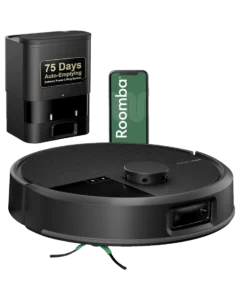
Max 705 VaciRobot Roomba 105 VacEureka E10siRobot Roomba Max 715iRobot Roomba Max 705 Vac product documentation confirms allergen-sealed auto-empty dock with 6-8 week bag replacement. Roomba 105 Vac documentation confirms no self-emptying dock; bin capacity approximately 0.35L with manual emptying required.
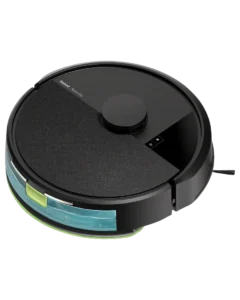
Eureka E10s manufacturer specs document the bagless dock as the unit's core differentiator: no dust bag purchase required; 60-day bin capacity in typical-shedding environments.
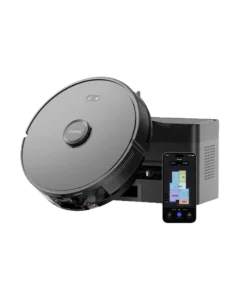
iRobot Max 715 dock documented with self-empty bag system and 60-day capacity per manufacturer and support page documentation.
Which robots are strictly vacuum-only with no mop hardware?
The comparison's central premise is avoiding water in the home. Two robots here are vacuum-only by design; two include mop-related hardware that adds maintenance or water-handling considerations.
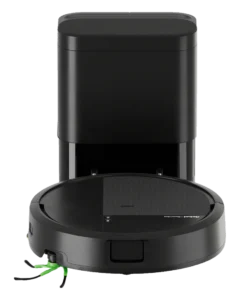
Max 705 VaciRobot Roomba 105 VacEureka E10siRobot Roomba Max 715iRobot Max 705 Vac and Roomba 105 Vac are both documented as vacuum-only designs on iRobot's product pages; no mop arm, pad, or water tank is included.
Eureka E10s product page documents an auto-lift mop pad that raises 10 mm on carpet detection. The water tank is a separate fill; owners who leave the tank empty operate in vacuum-only mode, but the mop hardware remains physically present.
iRobot Max 715 product takeaway documents it as a vacuum and mop combo successor to the Max 705, with integrated mopping capability and associated water-handling maintenance.
How does suction output differ across dock and no-dock models?
Suction power varies significantly within this group despite all four sharing Level III autonomy. Dock type does not determine suction; motor design and product tier do.
Max 705 VaciRobot Roomba 105 VacEureka E10siRobot Roomba Max 715iRobot Max 705 Vac manufacturer specifications list 12,000 Pa peak suction, the highest documented figure in this group. Eureka E10s specifications list 4,000 Pa. Roomba 105 Vac specifications list 7,000 Pa. Roomba Max 715 specifications list 8,500 Pa.
iRobot Max 715 documents 120-minute runtime per manufacturer specifications, the longest in this group. US pricing and retail availability remain unconfirmed as of June 2026; UK rollout confirmed.
What filtration does each model provide for allergen households?
Filtration design determines whether debris stays sealed from robot to dock. HEPA-grade and allergen-sealed designs differ materially across this group, with relevance for pet dander and dust-sensitive households.
Max 705 VaciRobot Roomba 105 VacEureka E10siRobot Roomba Max 715iRobot Max 705 Vac product documentation describes allergen-sealed bags as standard; HEPA-standard filtration noted in product specifications.
iRobot Max 715 manufacturer documentation describes sealed multi-stage filtration and a washable pre-filter designed for allergen containment; pre-filter rinse cadence documented as monthly.
Eureka E10s owner reports on Amazon note faster bagless bin clogging in high-shedding pet homes; Eureka documentation recommends monthly filter tap-cleaning for pet environments.
What does recurring maintenance look like across all four models?
Maintenance cadence is the operational consequence of dock choice. Bagged docks trade periodic purchase for hands-off emptying; bagless eliminates bag cost but demands bin attention; no-dock models shift labor to the user entirely.
Max 705 VaciRobot Roomba 105 VacEureka E10siRobot Roomba Max 715iRobot Max 705 Vac documentation lists allergen bag replacement at approximately $10-15 per bag at 6-8 week intervals. Max 715 documentation lists dock bag replacement at approximately $20-30 per bag at 60-day intervals. Both figures are sourced from iRobot product documentation.
Eureka E10s is the only model in this group with no recurring dock bag purchase. Bagless dock bin is documented at 60-day capacity for typical homes. Annual filter cost documented at $25-35 per Eureka product documentation.
Roomba 105 Vac ships without a self-emptying dock; the sole consumable is the robot filter, documented at $15-25 per brush assembly. Bin capacity is approximately 0.35L; weekly manual emptying is typical in pet homes per iRobot documentation.
In closing
What the evidence shows
Patterns that emerged across the questions above.
Dock consumable model is the primary structural split
Three robots self-empty; one does not. Within the dock group, only the Eureka E10s eliminates bag purchases entirely. The two iRobot dock units use allergen-sealed bags on distinct replacement cycles.
Two of the four robots include mopping hardware
Eureka E10s ships with an auto-lift mop pad and Roomba Max 715 is a documented combo unit; neither is strictly vacuum-only. Roomba Max 705 Vac and Roomba 105 Vac are the documented water-free designs in this group.
Suction output diverges sharply within the dock tier
At 12,000 Pa, the Max 705 Vac documents the highest suction in this group; the E10s documents 4,000 Pa. All four share Level III autonomy classification; dock type does not predict suction output.
Common questions