Why is the US government issuing cybersecurity advisories about robot vacuums?
The robots most likely to surface in a security disclosure are not the humanoids in the headlines. They are the one already mapping your floors.
On this page4 sections
On September 24, 2026, the U.S. Cybersecurity and Infrastructure Security Agency, whose advisories normally cover power stations and water-treatment controls, published one for a robot vacuum. The notice names the eufy Omni C20 and the Omni X10 Pro, lists three separate flaws, and scores the worst of them 9.4 out of 10.
The flaws have plain names: an operating-system command injection, a set of hard-coded credentials, and a security certificate the robot does not properly check. Together, the advisory says, they could let an attacker run system-level commands or execute arbitrary code on the machine. A firmware update closes them.
A floor cleaner does not look like critical infrastructure. But a modern one carries a camera, a microphone, a map of every room, and a standing connection to a company’s servers. So the useful question is not whether one robot shipped with a bug. It is which kind of machine keeps appearing in notices like this, and why.
Figure
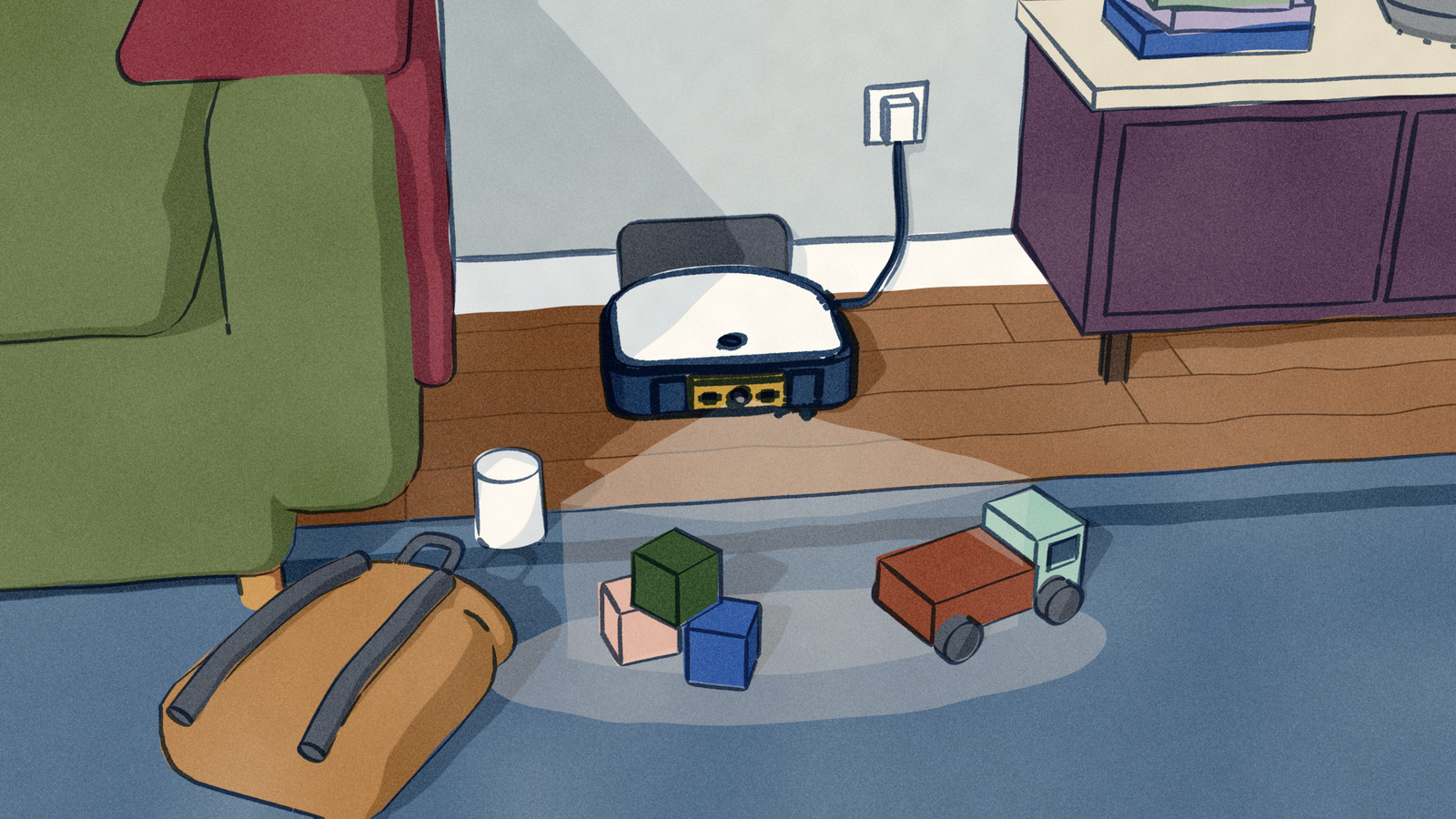
What crosses the boundary of the home
- Stays putMap and compute are hardware you own, so the same three streams never leave the building.
- Floor mapCrosses the wall. Anything over this line is held on a vendor server, under their retention policy rather than yours, for as long as they choose.
- Camera framesCrosses the same wall to the same server.
- Wi-Fi passwordCrosses the same wall to the same server.
A floor robot a cyber agency now tracks
An advisory like this measures exposure rather than ordering a recall. CISA says it has had no reports of the eufy flaws being used against anyone. The point is that the exposure shipped on the product and reached a severity a federal analyst judged worth a public notice.
The 9.4 belongs to the certificate flaw, which affects the C20. An attacker positioned on the robot’s network traffic could, the advisory describes, run code on it. A second weakness in how the two models pair could let an unauthenticated attacker issue system commands. The third exposes stored data, including the map of the home.
Owners are only protected once their robot pulls that firmware update, which leaves the fix in the hands of whoever remembers to let the app refresh. A machine that sits in a closet between cleans can stay on old code for months.
CISA’s industrial-control notices exist for equipment that can hurt people or halt a utility if it is subverted. A consumer vacuum earning one marks where these machines now sit. They are on the home network, carrying a camera and a cloud login, and reachable from outside the house.
The eufy notice is recent, and it is not alone. Over the past two years, independent security researchers have published findings on home robots from several makers that share almost no parts, and a federal agency has now put its name to one of them. Read side by side, the findings keep landing on the same short list of exposures.
What makes the eufy case ordinary rather than exceptional is the size of the thing being secured. These are not a handful of prototypes. Camera-equipped vacuums ship in the millions each year, and every one is a networked device that will outlive the attention its maker pays to it.
A vacuum sold in 2026 may still be mopping a kitchen in 2032, long after its model has left the shelves and its security team has moved to the next launch.
Successful exploitation of these vulnerabilities could allow an attacker to run system level commands or execute arbitrary code.
Why the vacuum keeps turning up
The robots that fill launch coverage are the humanoids: the walking machines with their stage demos, Tesla’s Optimus among them. On a continuous monitoring record of 1,376 dated updates about consumer robots, humanoids account for eight of the 170 marked as a setback. Robot vacuums account for 97, more than the other six classes together.
Some of that is arithmetic. Far more vacuums have sold than humanoids, so more sit in homes to fail, be recalled, or be opened up by a researcher.
But the kind of setback matters as much as the count. Software flaws make up 27 of the 170 entries and safety issues 23: fifty that turn on how the machine behaves once it is online, not on a part wearing out.
A vacuum is close to the exact device a remote intruder would design. It needs a floor plan, so it keeps one. Newer models add a front camera to dodge socks and charging cables, and a microphone for voice commands. It stores the Wi-Fi password to reach the cloud, and it stays awake and connected whenever it is docked.
A humanoid in a lab does not carry the household’s map, and a mower spends its season outdoors and switched off for months. The vacuum is the networked camera already bought by the million and left running inside the house. That is the surface a researcher probes, and it is why they tend to find plenty.
In 2024, a security researcher demonstrated the point on eleven Ecovacs models, including the Deebot X2. Over Bluetooth, from more than a hundred meters away, its camera and microphone could be turned on, and the spoken notice meant to warn an owner that the camera was live could be deleted.
One owner watched it happen to his own vacuum, the feed shown back to him on a screen beside him.
It’s like having a webcam that can roll around your house and look at your family.
The same few things, under four makers
Across the disclosures that follow, the companies differ, the countries differ, and the specific bug differs each time. The repetition is in what an attacker reaches once inside, and in the fact that one weakness tended to apply to a whole product line rather than a few unlucky units.
Ecovacs played the finding down at the time, telling reporters its owners had little to worry about and that any attack would need specialized tools and physical access.
But the demonstration had used a phone and a Bluetooth link from down the street, needing neither. A patch for the X2 arrived later that year, after several of the eleven models stayed exposed for months.
The quiet part was the warning file. These robots play a short spoken notice every few minutes so a person in the room knows the lens is active. The researcher showed the file could be removed, so the robot could watch with nothing to give it away. A camera with no indicator is simply a camera, and an owner glancing at a docked robot would read it as idle.
A year later the route in changed but the haul did not. A researcher found that Shark robot vacuums trusted a cloud setup in which one device’s certificate was allowed to send commands to others in the same Amazon Web Services region. A certificate pulled from a single disassembled unit became a skeleton key for the rest.
Term
device certificateEach connected robot is issued its own cryptographic certificate, a credential meant to let the cloud recognize that one machine and no other. When the permissions attached to it are drawn too broadly, a certificate copied from a single robot can speak for thousands.Over a single day the researcher counted more than 1.5 million Shark serial numbers talking to that region, and about 673,000 answered the vulnerable command.
The exposed data was the familiar set: live video on camera models, saved floor maps, and Wi-Fi passwords held in plain text. SharkNinja was told in March 2026 and patched it that July.
A misconfiguration in the cloud, rather than a bug in the robot, is what makes the number large. The flaw sat on the servers every unit talks to, so one working key reached across a whole region of them at once.
A credential baked into the cloud or the firmware is not a weakness in one robot. It is the same weakness in all of them, waiting on one person to find the key.
The pattern reaches past vacuums. On about 6,000 Yarbo yard robots, a researcher found a single root password baked into the firmware and shared across the fleet. An owner who changed it had it reset to the factory value on the next update.
Because the Yarbo drives itself around a yard, that one foothold also meant overriding the control that stops its blades, which moves the risk from privacy to a moving object with cutting tools. It opened the camera, the home’s GPS coordinates, and the Wi-Fi as well.
Yarbo agreed the findings were accurate, retired the shared credentials, and said it was moving to a separate credential for each machine. The flaw it was fixing had shipped on every unit the same way, which is the thread running through all four cases.
The same few exposures, across four makers
| Machine and maker | What a compromise could reach | Reported, then addressed |
|---|---|---|
| eufy Omni C20 and X10 Pro | Stored maps and system-level command execution | Advisory published September 2026, firmware update issued |
| Ecovacs Deebot X2 | Live camera and microphone over Bluetooth | Shown publicly in 2024, model patched that November |
| Shark robot vacuums | Camera feeds, home maps, and plaintext Wi-Fi across a cloud region | Reported March 2026, patched July 2026 |
| Yarbo yard robot | Camera, home GPS, Wi-Fi, and the emergency stop | Reported in 2026, shared credentials retired |
What it changes for someone choosing one
None of these four machines runs the same software or comes from the same company. What they share is a design in which the robot is a small computer, holding the household’s map and network keys and kept reachable through the maker’s cloud. When that arrangement fails, it tends to fail the same way, and for every owner at once.
It also fails quietly. A worn brush announces itself; a stolen certificate or a shared password leaves the vacuum cleaning exactly as before, while it answers to someone else.
So the useful conclusion is about where a vacuum’s security actually lives: somewhere you cannot see and cannot control, in the maker’s cloud configuration and in whether the company ships a fix and keeps shipping them. A spec sheet lists suction and run time. It lists none of this.
A machine bought mainly to save a chore is also a sensor package that files a floor plan, listens for a wake word, and holds a key to your home network. The classification work is to say so plainly, and to treat the cloud account as part of the product.
That changes which questions are worth asking. Does the machine need the cloud to work, or can it run on the home network alone? Does the camera have a physical shutter, or only a software indicator that can be switched off? How long has the maker promised security updates, and how did it handle the last disclosure?
The eufy notice carries one reassuring line: CISA has had no report of the flaws being used against anyone. It reads differently next to the reason the notice exists. Until a researcher looked and a fix went out, the camera parked in the corner of the room answered to anyone who knew how to reach it.