
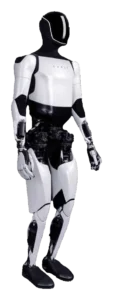
- Changes
- 5
- Tracking since
- Dec 2023
- Latest
- Sep 7, 2026
- Net movement
- Classification stable
- 2026
-
Tesla converts Fremont's former Model S/X line to Optimus production
Tesla is converting the Fremont factory space freed by the May 2026 end of Model S and Model X production into an Optimus manufacturing line, with Elon Musk describing early output as slow given roughly 10,000 unique parts on an entirely new line.
Full assessment2 claims · 3 technical notes · 2 sources
Where it standsAutonomy LadderIIIIIIIVVLevel IIAssisted AutonomyHuman ReadinessReady NowNew to MarketWaitKnown IssuesNot ratedPre-Consumer Assessment03050717638Concept StageWhat happenedTesla told JPMorgan in briefings reported 20 Aug 2026 that external Optimus sales are targeted for as early as H2 2027, with initial units going to internal training rather than customers.
WatchingActual weekly output against the internal target, since production timelines have slipped before.
Bottom lineThe line conversion itself is documented; specific near-term unit volumes reported by supply-chain rumor are not independently confirmed.
ImpactOn autonomy
- No autonomy or navigation change reported
- The story concerns manufacturing capacity and sales timing, not new onboard capability
On readiness
- No consumer purchase path exists yet; initial units go to internal training programs
- External sales are targeted for H2 2027 at the earliest, per Tesla's own briefing to JPMorgan
Claim check2 maker claims checked against the record. Open one to read the finding.
Coverage frames the Fremont conversion as a major production milestone
Documented findingMusk himself called Optimus "the hardest product to scale that we've ever had at Tesla" and said the ramp rate is impossible to predict this year, given an entirely new supply chainSome supply-chain reports describe a specific bulk parts order (roughly 5,000 units) tied to the Fremont line
Documented findingThat figure traces to unconfirmed Chinese supply-chain rumors reported by secondary outlets; Robovations could not independently verify an order of that size and treats it as unconfirmedEvidence2 sources · all linked
12Aug 2026Sep 2026filed 7 Sep 2026- 1Electrek20 Aug 2026
- 2Humanoids Daily7 Sep 2026
Technical notes3 sectionsFremont Conversion
Tesla’s final Model S and Model X rolled off the Fremont line on 9 May 2026. Tesla is converting part of that freed capacity into an Optimus manufacturing operation, with a stated long-term goal of up to 1 million Optimus units per year at Fremont. A separate, larger Optimus facility is planned at Giga Texas targeting 10 million units per year at full scale, with initial production lines there expected in 2027.
Sales Timeline
In briefings reported by Electrek on 20 Aug 2026, Tesla told JPMorgan that external Optimus sales are targeted as early as H2 2027, following a three-phase commercialization path. As of mid-2026, Tesla reported roughly 1,000-1,200 Optimus units deployed internally with zero external sales, with initial Fremont-built units directed to internal training rather than customers.
Unverified Parts-Order Reports
Separate Chinese supply-chain reports in early September 2026 described a bulk components order for approximately 5,000 Optimus units tied to the Fremont line’s commissioning. These reports are attributed to supply-chain rumor rather than a confirmed Tesla disclosure and are presented here with that caveat.
- 2025
-
Tesla shifts humanoid roadmap to Gen 3, superseding Optimus Gen 2 platform
Tesla's public communications and investor materials in early 2025 shifted focus to a next-generation Optimus configuration beyond Gen 2, with Gen 3 referenced as the target for external sales and broader deployment.
Path toFull assessment4 claims · 4 technical notes · 3 sources
Where it standsAutonomy LadderIIIIIIIVVLevel IIAssisted AutonomyHuman ReadinessReady NowNew to MarketWaitKnown IssuesNot ratedPre-Consumer Assessment↓ moved by this entry03050717638Concept StageWhat happenedGen 3 represents a significant hand and actuator upgrade built on the Gen 2 body platform, not an entirely new platform. Gen 2 remains operationally active in Tesla's internal factory pilot but is no longer the public-facing development milestone. For observers tracking consumer deployment potential, Gen 2's commercial window is effectively closed by this repositioning.
Bottom lineGen 3's commercial positioning closes the consumer deployment window for Gen 2; the platform's legacy is as a structured-environment pilot and hardware validation step, not a commercial product.
ImpactOn autonomy
- Gen 2 autonomy development is subordinated to next-generation platform work
- Factory deployment continues but no new autonomous capability milestones are expected for Gen 2
- Level II classification unchanged; platform is in maintenance mode, not active capability development
- Gen 3 roadmap references do not provide evidence of Gen 2 autonomous task completion
On readiness
- Consumer sales and external deployment now tied to Gen 3, not Gen 2
- Gen 2 will not be sold commercially per Tesla's stated roadmap direction
- Factory pilot represents the terminal use case for this hardware revision
- Readiness classification shifts to Wait; no consumer pathway remains open for Gen 2
Claim check4 maker claims checked against the record. Open one to read the finding.
Optimus will be available for external sale in the near term
Documented findingTesla's 2025 roadmap communications tied external sales to Gen 3; Gen 2 was not offered for purchase outside Tesla's own operationsGen 2 factory deployment validates commercial readiness
Documented findingInternal factory use under Tesla's own supervision is a controlled pilot, not a commercial deployment to third parties; no external customer has received or operated a Gen 2 unitTesla is on track for thousands of Optimus units by end of 2025
Documented findingProduction volume claims came from Musk investor-call statements; no third-party supply chain or financial filing confirmed unit counts consistent with those targets as of early 2025Gen 2 and Gen 3 development proceed in parallel
Documented findingTesla's public positioning focused Gen 3 as the commercial product; Gen 2 was described as a learning platform and internal deployment vehicle, not the commercial release candidateEvidence3 sources · 0 linked
132Jan 2025Mar 2025filed 10 Mar 2025- 1Tesla Q4 2024 Earnings Call29 Jan 2025named, not linked
- 2Reuters3 Feb 2025named, not linked
- 3Electrek30 Jan 2025named, not linked
Technical notes4 sectionsPlatform Supersession
Tesla referenced an Optimus generation beyond Gen 2 in late 2024 and 2025 investor communications. The next platform was described as incorporating further actuator, sensor, and software improvements. Tesla did not publish a detailed comparison of Gen 2 versus the successor platform’s specifications.
Gen 2 Operational Status
As of early 2025, Gen 2 units remained active in Tesla’s Fremont factory pilot. The factory deployment is ongoing but represents an internal use case; Tesla has not indicated plans to sell or license Gen 2 units externally.
Commercial Roadmap Shift
Tesla’s investor materials and Musk public statements positioned the subsequent generation as the target for a commercial sales launch. Pricing and availability for that platform were not disclosed in the timeframe of this entry. Gen 2’s commercial window is effectively closed by this repositioning.
Classification Consequence
With no external commercial deployment pathway and active development shifted to a successor, the Path to Readiness score component for Gen 2 declines. The overall PRA score reflects a platform that validated hardware concepts but will not reach consumer deployment in its current form.
- 2024
-
Optimus Gen 2 units at We Robot event confirmed as teleoperated, not autonomous
Optimus Gen 2 robots appeared at Tesla's We Robot event in October 2024, performing bartending and guest interaction tasks that appeared autonomous.
Full assessment4 claims · 4 technical notes · 3 sources
Where it standsAutonomy LadderIIIIIIIVVLevel IIAssisted AutonomyHuman Readinessmoved by this entryReady NowNew to MarketWaitKnown IssuesNot ratedPre-Consumer Assessment↓ moved by this entry03050717638Concept StageWhat happenedSubsequent reporting from Bloomberg and others confirmed the units were teleoperated by human pilots off-site. This disclosure is an autonomy classification anchor: teleop-dependent public demo is documented evidence for Level II, not a pathway above it.
Bottom lineThe We Robot appearance showed polished hardware; the teleop confirmation means the event is evidence for Level II robustness, not Level III autonomy.
ImpactOn autonomy
- Teleoperation confirmed as the operational mode during We Robot public demo
- Human pilots remotely controlled units for bartending and conversational interaction
- No portion of the demo was documented as fully autonomous end-to-end task execution
- Level II classification confirmed and anchored by teleoperation disclosure
On readiness
- Public-facing demo showed polished interaction but relied on human remote operation
- Teleoperation dependency means consumer autonomy timeline remains undocumented
- Demo appearance and confirmed teleop together signal hardware is presentable, not deployment-ready
- Readiness classification unchanged; demonstrated gap between appearance and capability is now documented
Claim check4 maker claims checked against the record. Open one to read the finding.
Optimus robots mingling with and serving guests autonomously
Documented findingBloomberg and other outlets confirmed post-event that human pilots operated the units remotely during the We Robot eventWe Robot showcased real-world Optimus capability
Documented findingThe event showcased hardware capable of executing teleoperated tasks in an unstructured social environment; autonomous equivalence was not demonstratedOptimus can conduct natural conversations with people
Documented findingConversational responses were routed through human operators, not an onboard autonomous language or decision system per post-event reportingThe demo represents progress toward consumer deployment
Documented findingTeleoperated demos demonstrate hardware robustness and form factor maturity; they do not document the autonomous decision-making required for consumer deploymentEvidence3 sources · 1 linked
123Oct 2024Nov 2024filed 5 Nov 2024- 1TechCrunch14 Oct 2024
- 2The Verge15 Oct 2024named, not linked
- 3Ars Technica16 Oct 2024named, not linked
Technical notes4 sectionsEvent Context
Tesla’s We Robot event on October 10, 2024 in Burbank, California included multiple Optimus Gen 2 units circulating among attendees, carrying drinks, and engaging in brief conversations. The presentation implied autonomous operation.
Teleoperation Disclosure
Bloomberg reported after the event that human operators were controlling the Optimus units remotely during the demo. Tesla did not publicly disclose the teleoperation at the time of the event. The units’ movements and spoken responses were directed by off-site pilots, not generated onboard autonomously.
Classification Implication
Per Robovations methodology, a robot whose public demonstration relies on human teleop cannot be classified above Level II. The We Robot disclosure is now the most recent documented public operation mode for Optimus Gen 2. It confirms the Level II classification and flags the gap between the appearance of autonomy and its documented absence.
Hardware Observation
Despite the teleop revelation, the event did document that Gen 2 hardware can operate in an unstructured public social environment without mechanical failure across multiple simultaneous units, which is a meaningful hardware durability signal.
-
Tesla deploys Optimus Gen 2 units to Fremont factory in limited pilot
Elon Musk stated in mid-2024 that Optimus units were operating inside Tesla's Fremont manufacturing facility handling parts tasks.
Full assessment4 claims · 3 technical notes · 3 sources
Where it standsAutonomy LadderIIIIIIIVVLevel IIAssisted AutonomyHuman ReadinessReady NowNew to MarketWaitKnown IssuesNot ratedPre-Consumer Assessment↑ moved by this entry03050717638Concept StageWhat happenedTesla has not published throughput figures, supervision ratios, or failure-rate data for the deployment. The key question is whether this constitutes autonomous task execution or supervised teleoperation in a production environment.
Bottom lineFactory presence is a meaningful development milestone; the undisclosed supervision and task scope prevent classification above Level II.
ImpactOn autonomy
- Factory task execution claimed but supervision and teleoperation extent undisclosed
- Manipulation in a known structured environment does not confirm general autonomy
- No third-party observation of the deployment was published
- Level II classification holds; factory context does not document unsupervised operation
On readiness
- Factory presence signals Tesla is stress-testing hardware in non-lab conditions
- No commercial pricing or external-deployment roadmap accompanied the announcement
- Deployment scope described as limited; scale and task variety not documented
- Industrial pilot does not indicate consumer readiness pathway
Claim check4 maker claims checked against the record. Open one to read the finding.
Optimus is working in our factory
Documented findingMusk confirmed units are inside Fremont; task scope, supervision ratio, and uptime are undisclosed per public reportingLimited production of Optimus underway
Documented findingTesla used this phrase in investor communications; unit count and production rate were not specified in publicly available filingsOptimus will reach 1,000 units by end of 2024
Documented findingNo third-party verification of production volume was published; the figure originated from Musk statements, which have historically run ahead of delivery schedulesFactory deployment proves the platform works
Documented findingDeployment in a known, controlled factory environment is a step; autonomous operation in varied unstructured settings is a different capability bar, and Tesla has not documented crossing itEvidence3 sources · 1 linked
12320 Jul 202425 Jul 2024filed 20 Jul 2024- 1Tesla Q2 2024 Earnings Call23 Jul 2024
- 2Reuters24 Jul 2024named, not linked
- 3CNBC25 Jul 2024named, not linked
Technical notes3 sectionsDeployment Context
Tesla’s Fremont factory provides a structured, GPS-denied indoor environment with predictable object placement. Tasks described in public statements involved moving parts and battery cells, which aligns with the scripted manipulation capabilities demonstrated in the December 2023 reveal.
Supervision Disclosure Gap
Tesla did not publish how many human supervisors monitor each unit, what the intervention rate is, or whether teleop fallback is active during the factory pilot. This gap is the primary reason the Level II classification is unchanged: a deployment with undisclosed supervision cannot be credited as autonomous operation.
Production Claim Context
Musk referenced limited production of Optimus units in 2024 investor calls. No SEC filing or Tesla shareholder letter published a specific unit count. Third-party supply-chain reporting as of mid-2024 did not confirm mass-production component sourcing consistent with the stated targets.
- 2023
-
Tesla Optimus Gen 2 revealed with revised hands and improved walking gait
Tesla released a reveal video in December 2023 showing Optimus Gen 2 walking faster and manipulating objects with a redesigned hand.
Full assessment4 claims · 4 technical notes · 3 sources
Where it standsAutonomy LadderIIIIIIIVVLevel IIAssisted AutonomyHuman ReadinessReady NowNew to MarketWaitKnown IssuesNot ratedPre-Consumer Assessment↑ moved by this entry03050717638Concept StageWhat happenedThe most significant documented improvement is the hand: 11 degrees of freedom with tactile sensing on each fingertip.
WatchingWhether Tesla provides structured test data or third-party evaluation to substantiate the capability claims.
Bottom lineThe hardware revision is real and documented; the gap between scripted demonstration and autonomous task deployment remains unaddressed.
ImpactOn autonomy
- Redesigned hand with 11 degrees of freedom enables finer object manipulation
- Faster walking gait documented at approximately 30% speed increase over Gen 1
- Tactile sensing on fingertips adds force-feedback capability absent in Gen 1
- All demonstrated tasks were scripted; end-to-end autonomous execution not documented
On readiness
- Hardware revision suggests active development cycle, not vaporware shelf
- No consumer pricing, timeline, or availability window disclosed at reveal
- Scripted demo conditions leave real-world task reliability unverified
- Improved hand dexterity expands potential use cases but deployment pathway remains undefined
Claim check4 maker claims checked against the record. Open one to read the finding.
Optimus Gen 2 walks 30% faster than Gen 1
Documented findingTesla's reveal video shows an increased walking pace; no independent measurement or load-bearing walking test was published11 degrees of freedom in the hand with tactile sensing
Documented findingTesla engineering slides document the DOF count and tactile sensors; real-world grasping reliability outside the demo environment is unverifiedGen 2 demonstrates improved balance and agility
Documented findingReveal footage shows the robot performing controlled movements; no structured balance-stress or perturbation testing data was publishedReady for factory deployment
Documented findingNo factory deployment was announced at reveal; Tesla described Gen 2 as a development-stage platformEvidence3 sources · 1 linked
12312 Dec 202315 Dec 2023filed 12 Dec 2023- 1Tesla AI Day / Optimus reveal video (December 2023)12 Dec 2023
- 2The Verge13 Dec 2023named, not linked
- 3IEEE Spectrum15 Dec 2023named, not linked
Technical notes4 sections
Hand Architecture
Optimus Gen 2 uses an actuated hand with 11 degrees of freedom. Tesla disclosed tactile sensing on each fingertip, enabling force feedback during object manipulation. The Gen 1 hand had fewer DOF and no tactile array per Tesla’s own comparison materials.
Locomotion
Tesla’s reveal video shows Gen 2 walking at a pace described by the company as approximately 30% faster than Gen 1. Ankle actuation was redesigned; Tesla cited improved balance as a result. No third-party gait analysis or stress-test data accompanied the announcement.
Weight
Tesla reported Gen 2 at approximately 57 kg, lighter than the Gen 1 prototype. The weight reduction was attributed to actuator and structural refinements.
Demo Conditions
All December 2023 reveal footage shows scripted sequences in a controlled indoor environment. Tesla did not release unscripted long-form operation footage or third-party testing data alongside the announcement.