
- Changes
- 3
- Tracking since
- Oct 2024
- Latest
- Dec 12, 2025
- Net movement
- Classification stable
- 2025
-
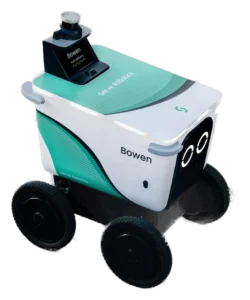
Serve Robotics Gen 3 fleet reaches 2,000-unit deployment milestone for Uber Eats
Serve Robotics confirmed deployment of the Gen 3 fleet at over 2,000 units across Uber Eats markets in major US cities, representing the scale target announced at the Gen 3 launch in October 2024.
Full assessment4 claims · 3 technical notes · 1 source
Where it standsAutonomy LadderIIIIIIIVVLevel IIAssisted AutonomyHuman ReadinessReady NowNew to MarketWaitKnown IssuesNot ratedPre-Consumer Assessment↑ moved by this entry03050717687Pre-Order ReadyWhat happenedThis milestone establishes Serve as the largest commercially deployed sidewalk delivery robot fleet by unit count in North America per available public disclosures. Operational transparency, specifically intervention frequency and city-level incident data, remains the gap between commercial scale and documented autonomous performance.
Bottom lineCommercial scale is verified; the performance claims embedded in that scale require independent data to confirm.
ImpactOn autonomy
- 2,000-unit fleet provides real-world edge-case exposure data for future autonomy improvements
- Remote supervision infrastructure scaled alongside hardware fleet, confirming Level II classification holds at commercial scale
- No documented reduction in operator intervention frequency per public reporting at milestone
On readiness
- Fleet scale validates Gen 3 production reliability under real commercial load
- Service availability confirmed in San Francisco, Los Angeles, and Las Vegas per manufacturer reporting
- Consumer purchase path remains absent; commercial service model only
Claim check4 maker claims checked against the record. Open one to read the finding.
2,000+ autonomous delivery robots operating across US cities
Documented findingManufacturer and investor communications confirm 2,000+ units deployed; "autonomous" in this context includes remote supervision fallback per documented operational practice.Market-leading fleet at commercial scale
Documented findingServe's 2,000-unit fleet is among the largest documented sidewalk delivery robot deployments in the US; independent fleet-count verification not available as competing operators do not publish unit counts uniformly.Proven reliability in real-world delivery conditions
Documented findingScale of deployment implies operational reliability; no third-party uptime, incident rate, or delivery success rate data published as of the fleet milestone announcement.Uber Eats partnership demonstrates enterprise demand
Documented findingUber Eats partnership is documented and ongoing; revenue per delivery, contract terms, and exclusivity scope not disclosed in public filings.Evidence1 source · all linked
- 1Serve Robotics Investor Relations20 May 2025
Technical notes3 sectionsFleet Composition and Geography
The 2,000-unit Gen 3 fleet operates across Uber Eats service zones in San Francisco, Los Angeles, and Las Vegas as of mid-2025, per Serve Robotics investor and press communications. Deployment is concentrated in higher-density urban corridors where sidewalk infrastructure is consistent. Rural and suburban deployments are not part of the current operating model.
Operations Infrastructure
At 2,000 units, Serve operates a remote supervision center staffed to handle interventions when Gen 3 robots encounter ambiguous scenarios. Manufacturer disclosures describe the supervision layer as covering intersection decision impasses and pedestrian interaction edge cases. The ratio of remote operators to active robots and the frequency of interventions remain undisclosed, which limits independent autonomy assessment beyond the Level II cap imposed by the architecture.
Financial Context
Serve Robotics is a publicly traded company (NASDAQ: SERV); investor filings provide the most complete picture of fleet size and commercial milestones. Revenue-per-delivery and unit economics are not broken out in a form that allows external ROI analysis. The 2,000-unit milestone was reported in the context of continued capital deployment and fleet expansion rather than a unit economics inflection point.
-
Serve Robotics expands Gen 3 operations to additional Uber Eats markets in early 2025
Serve Robotics confirmed geographic expansion of the Gen 3 fleet into additional US Uber Eats markets in early 2025, following the initial deployment phase launched in late 2024.
Full assessment3 claims · 3 technical notes · 2 sources
Where it standsAutonomy LadderIIIIIIIVVLevel IIAssisted AutonomyHuman ReadinessReady NowNew to MarketWaitKnown IssuesNot ratedPre-Consumer Assessment03050717687Pre-Order ReadyWhat happenedThe expansion reflects continued operator commitment from Uber Eats and builds toward the 2,000-unit target announced at the Gen 3 launch. Per-city deployment unit counts and intervention statistics across new markets were not disclosed in operator communications.
Bottom lineGeographic expansion is documented; autonomous performance data across new markets remains for independent reporters to surface.
ImpactOn autonomy
- New market deployments expose Gen 3 to varied sidewalk infrastructure and urban layouts
- Remote supervision staffing scaled to new geographies; Level II classification unaffected by expansion
- No software-side autonomy updates documented alongside the geographic expansion
On readiness
- Expanded geographic coverage increases service availability for Uber Eats orders in additional cities
- Fleet service model remains unchanged; Gen 3 is not available for consumer or independent operator purchase
- Expansion pace confirms Serve and Uber Eats commercial relationship is active and not contracted to a single pilot market
Claim check3 maker claims checked against the record. Open one to read the finding.
Expanding to serve more customers across the US
Documented findingMarket expansion documented in Serve investor and press communications; specific city names and unit counts per market not published at each expansion phase.Autonomous delivery at scale, city by city
Documented findingFleet operations confirmed in multiple cities; per-city autonomous completion rates and operator supervision frequency not disclosed by Serve or Uber Eats.Growing partnership with Uber Eats validates commercial model
Documented findingUber Eats partnership is active and documented; whether the model is margin-positive for Serve is not discernible from public filings as of early 2025.Evidence2 sources · 1 linked
125 Feb 202512 Feb 2025filed 12 Feb 2025- 1Serve Robotics Investor Relations5 Feb 2025named, not linked
- 2The Verge10 Feb 2025
Technical notes3 sectionsExpansion Phase
The early 2025 market expansion follows the October 2024 Gen 3 rollout announcement. Serve’s investor communications describe an active expansion program targeting additional Uber Eats delivery zones. The Gen 3 platform was designed to support fleet scaling with standardized hardware; the expansion does not introduce hardware changes, only geographic and unit-count growth.
Market Selection Criteria
Serve has publicly described its market selection as prioritizing dense urban sidewalk environments with consistent pedestrian infrastructure. Weather-limited markets (heavy snow, ice) are avoided given the sidewalk mobility design envelope. Cities already active at expansion include those with prior Serve Gen 1 and Gen 2 operations, reducing route-mapping overhead for new Gen 3 deployments.
Partnership Structure
The Uber Eats relationship is documented as a fleet deployment partnership rather than a purchase arrangement. Serve operates, maintains, and supervises the robots; Uber Eats routes delivery orders to the fleet. Revenue sharing terms are not publicly disclosed. Serve’s NASDAQ filings (ticker: SERV) are the primary public record for partnership scope and financial terms available to researchers.
- 2024
-
Serve Robotics announces Gen 3 sidewalk delivery robot for Uber Eats rollout
Serve Robotics announced the Gen 3 platform in October 2024, marking a hardware and compute architecture update from Gen 2.
Full assessment4 claims · 3 technical notes · 2 sources
Where it standsAutonomy LadderIIIIIIIVVLevel IIAssisted AutonomyHuman ReadinessReady NowNew to MarketWaitKnown IssuesNot ratedPre-Consumer Assessment03050717687Pre-Order ReadyWhat happenedNVIDIA Jetson integration and updated sensor configuration were cited in manufacturer materials. The announcement was timed to a fleet expansion agreement with Uber Eats targeting a scaled commercial rollout; specific unit commitments and city-by-city deployment schedules were not included in the public announcement.
Bottom lineGen 3 is a documented hardware upgrade; autonomous capability claims require independent validation as fleet data accumulates.
ImpactOn autonomy
- NVIDIA Jetson compute upgrade enables faster perception processing than Gen 2 platform per manufacturer
- Updated sensor configuration improves pedestrian and obstacle detection in documentation
- Remote supervision fallback remains documented operational requirement, capping classification at Level II
On readiness
- Gen 3 announcement confirms continued investment in platform rather than wind-down of product line
- Fleet service model unchanged: not available for consumer or SMB purchase
- Uber Eats partnership extension signals commercial demand but not consumer availability
Claim check4 maker claims checked against the record. Open one to read the finding.
Gen 3 delivers Level 4 sidewalk autonomy
Documented findingManufacturer press materials describe autonomous operation; investor and media coverage documents remote supervision as operational practice. Per Robovations classification rules, teleop-as-fallback caps autonomy at Level II.NVIDIA-powered edge AI delivers real-time autonomous decision-making
Documented findingNVIDIA Jetson compute platform documented in manufacturer announcement; specific SoC model (Orin Nano vs. Orin NX vs. AGX) not confirmed in public materials.Improved sensor suite reduces failure scenarios
Documented findingServe press release describes sensor improvements in qualitative terms; before/after failure rate or intervention rate data not published.Ready for large-scale commercial deployment
Documented findingFleet service agreement with Uber Eats confirms commercial operator demand; 2,000-unit build target announced but not confirmed as complete at announcement date.Evidence2 sources · 1 linked
1215 Oct 202418 Oct 2024filed 18 Oct 2024- 1Serve Robotics Press Release15 Oct 2024named, not linked
- 2TechCrunch17 Oct 2024
Technical notes3 sections
Compute Platform
Gen 3 uses NVIDIA Jetson compute for onboard perception and navigation processing. Serve Robotics cited the NVIDIA partnership in their announcement materials. The specific Jetson module (Orin Nano, Orin NX, or AGX Orin) was not disclosed in public-facing specifications; fleet operator documentation may contain additional detail not available in press releases.
Sensor Architecture
Manufacturer materials describe an updated sensor configuration relative to Gen 2, with improvements cited for pedestrian detection and intersection navigation. Specific sensor types (camera count, LiDAR model, sonar configuration) were not enumerated in the launch announcement. Previous Serve generations used a camera-forward architecture; Gen 3 sensor specifics remain operator-confidential.
Fleet Context
Gen 3 was announced alongside a fleet expansion plan for Uber Eats markets. The announced target was a build toward 2,000 units for deployment across US cities including San Francisco, Los Angeles, and Las Vegas. Gen 3 replaces prior-generation hardware in the active fleet; Gen 1 and Gen 2 units are phased out as Gen 3 units enter service.