
- Changes
- 5
- Tracking since
- Jan 2024
- Latest
- Sep 7, 2026
- Net movement
- Classification stable
- 2026
-
Samsung targets a separate humanoid robot prototype for CES 2027, reports say
Reports published 7-8 Sep 2026 describe Samsung's Robotics (RX) Business Promotion Office developing a general-purpose humanoid robot prototype, targeting a possible reveal at CES 2027, with CTO Jang-Hyun Yoon reported to lead both hardware and AI software teams.
Full assessment2 claims · 3 technical notes · 2 sources
Where it standsAutonomy LadderIIIIIIIVVLevel IIAssisted AutonomyHuman ReadinessReady NowNew to MarketWaitKnown IssuesNot ratedPre-Consumer Assessment03050717641Concept StageWhat happenedThis is a separate project from Ballie, whose own consumer launch Samsung shelved indefinitely in January 2026; Samsung has not confirmed the CES 2027 report.
WatchingFor an official Samsung confirmation or denial, and whether any showing is a prototype only, as reported, rather than a commercial product.
Bottom lineUnconfirmed reports describe a different Samsung team working toward a humanoid prototype; Ballie's own status is unchanged and remains shelved.
ImpactOn autonomy
- No change to Ballie's own autonomy classification
- The reported humanoid is a separate, unannounced Samsung project with no public specifications
On readiness
- Ballie's consumer launch remains indefinitely shelved as of this entry
- A reported CES 2027 appearance would be a prototype reveal, not a commercial launch, per the same reporting
Claim check2 maker claims checked against the record. Open one to read the finding.
Coverage headlines describe Samsung set to "unveil" a humanoid robot
Documented findingSamsung told reporters it "cannot confirm" the report; the sourcing traces to Korean media citing unnamed development activity, not a Samsung announcementThe story could be read as Ballie becoming a humanoid
Documented findingReporting describes a separate project inside Samsung's RX Business unit; Ballie itself remains the shelved rolling companion robot with no confirmed successor project namedEvidence2 sources · 1 linked
- 1Sammy Fans7 Sep 2026named, not linked
- 2Seoul Economic Daily7 Sep 2026
Technical notes3 sectionsReported Project
Sammy Fans and Seoul Economic Daily reported 7-8 Sep 2026 that Samsung’s Robotics (RX) Business Promotion Office is developing a humanoid robot prototype, with a possible debut targeted for CES 2027 in Las Vegas. Reporting names Jang-Hyun Yoon, Samsung’s CTO and President of the DX Division, as leading both hardware and AI software development, and states Samsung holds patents covering humanoid joints, robotic hands, and AI-based motion control. Samsung is reported to be focusing on general-purpose humanoid robots, with Rainbow Robotics (a Samsung-affiliated firm) handling industrial robots separately.
Confirmation Status
Samsung has not officially confirmed the CES 2027 plan and told reporters it “cannot confirm” the report. If a showing occurs, reporting characterizes it as a prototype reveal rather than a commercial product launch; separate reporting cites a longer-term company goal of commercial humanoids by 2028.
Relationship to Ballie
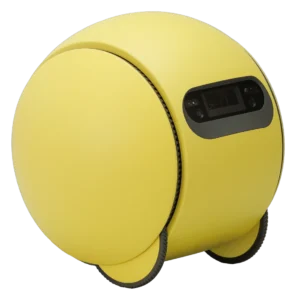
This reported project is distinct from Ballie, the rolling companion robot Samsung has shown at CES since 2020. Samsung indefinitely shelved Ballie’s consumer launch in January 2026 after repeated delays; no source reviewed describes Ballie itself becoming or being replaced by the reported humanoid.
-
Samsung indefinitely shelves Ballie's consumer launch after six years of demos
Bloomberg reported Samsung has indefinitely shelved Ballie's consumer launch, ending a six-year run of CES demonstrations without a shipping product.
Full assessment3 claims · 3 technical notes · 2 sources
Where it standsAutonomy LadderIIIIIIIVVLevel IIAssisted AutonomyHuman ReadinessReady NowNew to MarketWaitKnown IssuesNot ratedPre-Consumer Assessment03050717641Concept StageWhat happenedSamsung has said the platform continues internally as a research and design reference rather than a near-term retail product.
WatchingFor whether Samsung revives a consumer version at a future CES or quietly discontinues the platform.
Bottom lineSix years of CES demonstrations ended in an indefinite shelving rather than a retail launch.
ImpactOn autonomy
- No documented capability change; the shelving is a commercial decision, not a technical regression
- No new autonomy demonstrations have been published alongside the shelving report
On readiness
- Consumer purchase path remains unavailable with no announced relaunch timeline
- Samsung has not published a revised price or ship-date target since the shelving report
Claim check3 maker claims checked against the record. Open one to read the finding.
Samsung positioned Ballie across four CES cycles (2020, 2024, 2025) as a near-ready mobile smart-home hub
Documented findingBloomberg reports Samsung indefinitely shelved the consumer launch in January 2026 after repeated delaysSamsung Newsroom and CES materials described Ballie as evolving toward a shipping product each cycle
Documented findingBallie did not appear at CES 2026, the first CES since 2020 without a public showingSamsung framed Ballie as central to its SmartThings ecosystem vision
Documented findingSamsung has described the platform's continued role as internal research rather than a near-term consumer product, per reportingEvidence2 sources · all linked
Technical notes3 sectionsTimeline
Samsung introduced Ballie at CES January 2020 as a rolling, ball-shaped home robot concept. Samsung showed redesigned versions with an integrated projector at CES January 2024 and CES January 2025, each time without a confirmed retail price or ship date.
Reported Status Change
Bloomberg reported on January 7, 2026 that Samsung had indefinitely shelved Ballie’s consumer launch, citing unresolved technical and pricing questions accumulated across the multi-year demo cycle. The robot did not appear at CES 2026.
Current Status
Samsung has characterized the Ballie platform as continuing in an internal research and development capacity, informing spatially aware, context-driven design work, rather than as an active consumer product with a near-term launch plan.
- 2025
-
Samsung Ballie misses first-half 2025 launch window without explanation
The first-half 2025 commercial launch window Samsung announced at CES 2025 passed without a product release, retailer listing, pre-order opening, or public statement from Samsung on the delay.
Full assessment3 claims · 3 technical notes · 2 sources
Where it standsAutonomy LadderIIIIIIIVVLevel IIAssisted AutonomyHuman Readinessmoved by this entryReady NowNew to MarketWaitKnown IssuesNot ratedPre-Consumer Assessment03050717641Concept StageWhat happenedTechnology press noted the missed window. The lapsed timeline marked the second consecutive year in which Samsung stated a near-term availability commitment that did not materialize, shifting Ballie's track record from a single missed date to a documented pattern.
Bottom lineA second lapsed timeline with no public explanation is the clearest commercial signal to date that Ballie's path to consumer availability remains unresolved.
ImpactOn autonomy
- No new autonomy documentation released during the missed launch window
- Level II classification unchanged; no shipping hardware available for independent verification
- Gemini integration status post-delay not updated by Samsung
- Navigation architecture remains publicly undocumented
On readiness
- H1 2025 launch window closed with no product available for purchase
- No revised launch timeline published; availability horizon reset to unknown
- Retail pricing never disclosed; consumer planning basis eliminated
- Second consecutive missed commitment reduces credibility of future timeline statements
Claim check3 maker claims checked against the record. Open one to read the finding.
Ballie will launch in the first half of 2025 (CES 2025)
Documented findingFirst-half 2025 passed; no product released, no pre-order opened, no retail listing appearedSamsung Ballie is coming to consumers
Documented findingAs of July 2025, Samsung had not published a revised launch timeline, pricing, or updated product roadmapDevelopment is progressing toward consumer availability
Documented findingNo firmware, hardware, or production readiness updates disclosed during H1 2025; silence followed the missed windowEvidence2 sources · 1 linked
218 Jul 202515 Jul 2025filed 15 Jul 2025- 1The Verge10 Jul 2025
- 2CNET8 Jul 2025named, not linked
Technical notes3 sectionsMissed Window Context
Samsung’s stated H1 2025 launch target covered January through June 2025. No product appeared in retail listings, no pre-order was announced, and no press review units were distributed during this period, based on technology press reporting reviewed through mid-2025.
Samsung's Public Posture
Samsung did not issue a public statement explaining the delay or providing a revised launch timeline as of the entry date. This silence follows a similar pattern after the 2020 announcement, when a 2021 availability target passed without explanation before the 2024 redesign reveal.
Commercial Status
As of the entry date, Ballie had no MSRP, no retail channel, no pre-order mechanism, and no confirmed regional launch market. The product remains in an announced-not-launched status with two documented missed commercial commitments across a five-year announcement history.
-
Samsung Ballie announces Google Gemini integration and first half 2025 target
Samsung disclosed at CES 2025 that Ballie would run Google Gemini for onboard AI processing and targeted a first-half 2025 commercial launch.
Full assessment4 claims · 4 technical notes · 2 sources
Where it standsAutonomy LadderIIIIIIIVVLevel IIAssisted AutonomyHuman ReadinessReady NowNew to MarketWaitKnown IssuesNot ratedPre-Consumer Assessment03050717641Concept StageWhat happenedNaming Gemini as the AI stack gave the product its first documented software architecture detail, though capability claims remained tied to stage demonstrations rather than consumer testing. The first-half 2025 window was the most specific timeline Samsung had stated, making it a measurable commitment against which subsequent developments could be evaluated.
Bottom lineThe Gemini partnership named a real AI architecture, but the H1 2025 window closed without a launch, converting the commitment into evidence of continued delay rather than commercial progress.
ImpactOn autonomy
- Google Gemini named as onboard AI model; integration architecture not documented
- Natural language command scope implied by Gemini partnership; documented task list not published
- Autonomous home navigation reiterated; sensor and mapping architecture still undisclosed
- Level II classification unchanged; no new evidence of end-to-end task autonomy without supervision
On readiness
- First-half 2025 commercial launch target set a measurable shipping commitment
- Pricing not announced; consumer purchase decision remained speculative
- Gemini integration suggested potential for ongoing capability updates post-launch
- Retail channel and regional availability not specified at announcement
Claim check4 maker claims checked against the record. Open one to read the finding.
Ballie runs Google Gemini for advanced AI understanding
Documented findingPartnership confirmed by Samsung at CES 2025; specific Gemini model tier, on-device vs. cloud inference split, and latency not disclosedBallie will launch in the first half of 2025
Documented findingTimeline stated at CES 2025; no retail pre-order opened, no pricing announced, and the H1 2025 window subsequently passed without a commercial releaseBallie can understand and respond to complex home scenarios
Documented findingDemo interactions shown on stage; unscripted real-world performance in varied home environments not documentedGemini integration makes Ballie more capable than prior AI assistants
Documented findingGemini is a documented capable model; its specific implementation in Ballie's constrained rolling-sphere hardware has not been independently testedEvidence2 sources · 0 linked
126 Jan 20259 Jan 2025filed 9 Jan 2025- 1Samsung Newsroom6 Jan 2025named, not linked
- 2The Verge7 Jan 2025named, not linked
Technical notes4 sectionsAI Stack Disclosure
Samsung confirmed at CES 2025 that Ballie would use Google Gemini as its onboard AI model. This was the first public identification of a named AI framework for Ballie. Whether Gemini runs entirely on-device, relies on cloud inference, or uses a hybrid approach was not specified in the CES 2025 announcement.
Release Timeline
Samsung stated a first-half 2025 commercial release target at CES 2025. No retail pricing, pre-order channel, or regional launch priority was disclosed alongside the timeline.
Capability Scope
Demonstrated use cases at CES 2025 included projection of calendar and reminder content, responsive movement toward a user, and smart home device control via SmartThings. None of these demonstrations were conducted in uncontrolled home environments.
Hardware Unchanged
No hardware specification updates were disclosed at CES 2025 relative to the CES 2024 redesign. The rolling sphere form factor with integrated projector remained as previously described.
- 2024
-
Samsung Ballie redesigned as rolling sphere with built-in projector at CES 2024
Samsung debuted a redesigned Ballie at CES 2024, presenting a notably larger form factor with an integrated upward-facing projector capable of displaying content on ceilings and walls.
Full assessment5 claims · 4 technical notes · 2 sources
Where it standsAutonomy LadderIIIIIIIVVLevel IIAssisted AutonomyHuman ReadinessReady NowNew to MarketWaitKnown IssuesNot ratedPre-Consumer Assessment03050717641Concept StageWhat happenedThe projector capability represented a significant expansion of the stated use case beyond the 2020 concept's companion-robot framing. No pricing, shipping date, or retail availability was announced, leaving the product's commercial path unconfirmed.
Bottom lineThe 2024 redesign confirmed Samsung had substantially rethought Ballie's hardware, but the absence of pricing and shipping dates kept the product in concept territory despite a polished stage presentation.
ImpactOn autonomy
- Integrated projector adds active display surface output to mobile platform
- Obstacle avoidance demonstrated in controlled stage environment; architecture undisclosed
- Voice and gesture response shown but underlying AI stack not documented
- Autonomous docking behavior shown; sensor suite specification not published
On readiness
- Redesign confirmed active development after four-year gap from 2020 concept
- No pricing or availability announced; consumer purchase path remains undefined
- Projector use case introduced; daylight visibility and brightness not documented
- Stage demo conditions preclude assessment of uncontrolled home environment performance
Claim check5 maker claims checked against the record. Open one to read the finding.
Ballie can project content anywhere in your home
Documented findingCES demo showed projection in a darkened stage environment; performance in typical home lighting not documentedBallie responds to voice commands and gestures
Documented findingStage demonstrations showed scripted interactions; latency, accuracy, and failure modes under real conditions not publishedBallie autonomously navigates your home
Documented findingMovement shown on stage; mapping capability, obstacle avoidance breadth, and navigation architecture not disclosed by SamsungBallie integrates with SmartThings ecosystem
Documented findingIntegration stated as planned; no published API documentation or certified device list at time of announcementBallie represents a new category of home AI robot
Documented findingRolling projector robot is a novel form factor; no competing shipping product exists for comparison, making category claims unverifiableEvidence2 sources · 1 linked
128 Jan 202410 Jan 2024filed 10 Jan 2024- 1Samsung Newsroom8 Jan 2024
- 2The Verge9 Jan 2024named, not linked
Technical notes4 sections
Form Factor Revision
The 2024 Ballie is visibly larger than the golf-ball-sized 2020 concept, redesigned as a sphere large enough to house a projector assembly. The upward-facing projector is the primary new hardware element disclosed at CES 2024.
Projector Capability
Samsung described the projector as capable of displaying content on ceilings and vertical surfaces. Brightness rating, resolution, and throw distance were not published in the CES 2024 announcement materials reviewed by technology press.
AI and Connectivity
Samsung stated Ballie uses onboard AI processing for voice and gesture interaction and integrates with the SmartThings platform. The underlying chip, operating system, and AI model architecture were not disclosed.
Navigation
Stage demos showed Ballie moving across flat surfaces and returning to a charging dock. The navigation method (camera-based, ultrasonic, or other sensor fusion) was not specified in Samsung’s CES 2024 materials.