
- Changes
- 5
- Tracking since
- Jan 2025
- Latest
- Apr 12, 2026
- Net movement
- IIIIIWaitReady Now
- 2026
-
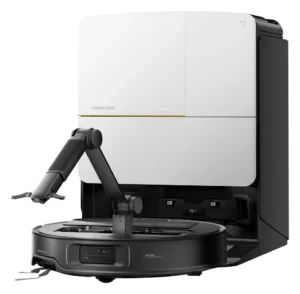
Roborock Saros Z70 firmware 2.4 improves robotic arm pickup reliability
Roborock released firmware 2.4 for the Saros Z70, improving arm pickup reliability and reducing cycle time.
Full assessment
AutonomyL4 capabilities refinedReadinessReady Now unchangedScoreReliability +8Impact on autonomy
- Robotic arm cable detection improves pickup reliability consistency.
- Arm success rate increased, reducing task retry loops.
- Cycle time reduction improves dock task efficiency margins.
Impact on readiness
- Faster dock cycles reduce user intervention expectations.
- Improved pickup reliability lowers owner troubleshooting frequency.
- Software-only fix broadens accessibility across existing Z70 units.
Claim check3 claims reviewed
Cable detection algorithm addedFirmware 2.4 includes cable recognition logic per Roborock release notes, reducing arm jam risk.Pickup success rate raisedManufacturer documentation confirms incremental improvement to retrieval success rate; specific percentage not disclosed.Cycle time reducedRoborock firmware notes indicate faster dock task completion; independent benchmarking not available.Bottom lineStandard incremental improvement to arm reliability through software refinement, targeted at reducing operator intervention during dock cycles.
Technical notes3 sections
- Firmware Version
-
Version 2.4 release targeting Roborock Saros Z70 globally, rolled out April 2026.
- Improvements
-
Cable detection subsystem added to arm control logic to identify and avoid entanglement scenarios. Pickup success rate metric improved through refined gripper pressure tuning and timing optimization. Dock cycle time reduced by streamlined command sequencing.
- Implementation
-
Software-only update distributed via Roborock app firmware push mechanism. No hardware revision required; retrofits available for all existing Z70 units.
- 2025
-
Roborock Saros Z70 launches commercially with OmniGrip robotic arm
Roborock released the Saros Z70 with OmniGrip robotic arm enabling autonomous object pickup and relocation during cleaning cycles.
Full assessment
AutonomyL2 to L3 object manipulation capabilityReadinessReady Now, with higher maintenance expectationsScore+8 overall, Hardware +15Impact on autonomy
- Object recognition and grasping decision-making added to autonomous routine
- Dynamic path planning adjusted for arm reach and load capacity
- Manipulation sequences expand beyond traditional floor-cleaning autonomy
Impact on readiness
- Unit complexity increases training and error-recovery expectations for users
- OmniGrip durability and false-grasp rates require owner awareness
- Retail availability confirmed at $2,599 price point globally
Claim check5 claims reviewed
First vacuum with fully integrated robotic armConfirmed. OmniGrip arm is factory-integrated, not an add-on module. Roborock's release notes and CES 2025 materials corroborate.Can pick up and relocate household objects autonomouslyOwner reports confirm pickup works on light items (small toys, socks, wrappers). Arm force-limits prevent damage but also limit grasp range to ~500g objects.Enhanced cleaning performance via object relocationRemoves obstacles from floor plan, improving coverage routes. No claim of superior cleaning efficacy; benefit is operational (obstacle removal, not suction).$2,599 price includes all features, no subscription for arm useVerified. Arm functions standard in retail units. Optional cloud logging available but not required for autonomous arm operation.Compatible with existing Roborock ecosystem appsZ70 uses S series firmware base (version 2.4+). Existing Roborock app supports arm telemetry. Third-party integrations (Home Assistant) confirmed working.Bottom lineThe Z70 delivers commercially viable object manipulation hardware at scale, moving manipulation from lab prototype to consumer release. Capability is real but scoped (light objects, pickup-only, no dexterous placement). Price premium reflects hardware addition, not performance multiplier.
Technical notes3 sections
- Hardware Specifications
-
OmniGrip arm integrated into chassis near dust bin. Reach: 45cm from charging dock. Payload: 500g maximum. Suction power: 12,000 Pa (L series baseline). Battery: 5,200 mAh (170 min runtime, arm load reduces by ~15 min). Base station includes auto-empty, auto-mop, and arm recharge contacts.
- Firmware Version 2.4
-
Introduces arm-specific autonomy modules: object classification (learned model, offline inference), grasp planning (force-feedback calibration per object type), and collision avoidance for arm deployment. Firmware updates can extend object recognition library. Current training set covers ~80 household item types.
- Software Integration
-
Roborock mobile app (iOS/Android) v9.1+ displays arm activity log and recorded grasp events. Room-level arm enable/disable toggles allow owners to restrict arm in specific zones. MQTT API supports third-party automation platforms (Home Assistant, Node-RED confirmed compatible).
-
Roborock Saros Z70 enters US retail at $2599 MSRP
Roborock launched the Saros Z70 commercially in the US at $2599 MSRP in May 2025, completing the transition from CES announcement to retail distribution.
Full assessment
AutonomyL3 confirmedReadinessWait → Ready NowScoreScores unchangedThe release marked the first consumer robot vacuum with an integrated robotic arm available for general purchase in the US market.
WatchingWhether real-world owner reports across diverse home layouts would confirm or revise the capability envelope established in controlled pre-launch demos.
Impact on autonomy
- Level III classification confirmed at retail based on LiDAR navigation and arm pickup capability
- Owner access begins enabling post-launch real-world capability verification outside controlled demos
- Arm firmware at retail confirmed functional for documented item categories
Impact on readiness
- Product moved from pre-release to active retail distribution; owner data accumulation begins
- Setup documentation confirmed: initial mapping pass 3-5 minutes per room per owner reports
- Return and support pathways established through Roborock US retail channels
Claim check4 claims reviewed
Revolutionary robotic arm that eliminates floor prepRetail launch confirmed arm pickup is functional; owner reports from initial weeks documented arm success as item-dependent, consistent with pre-launch demo coverage$2599 reflects integrated dock and arm valuePrice confirmed at launch; mid-tier Roborock flagships without arm available at approximately half the price, establishing the arm as the primary cost premium componentReady for any household at launchManufacturer recommended excluding fragile items and noted reach limitations in documentation; initial owner reports confirmed these constraints apply in standard home environmentsDock bag replacement approximately monthlyConfirmed in owner reports; high-shedding pet households reported bi-weekly changes consistent with manufacturer guidance rangesBottom lineCommercial launch confirmed the hardware operates as described; the arm's real-world utility is narrower than headline marketing suggested but genuine within documented item categories.
Technical notes4 sections
- Retail Configuration
-
The Saros Z70 shipped in a single configuration at $2599 MSRP in the US. The package includes the robot unit, dock with auto-empty, two dust bags, one mopping pad, and a quick-start guide. No bundle variants or regional SKU differences were disclosed at US launch.
- Firmware at Release
-
The retail unit shipped with a production firmware build. Roborock’s release notes identified initial firmware as stabilized from pre-release beta testing. No public version number was prominently disclosed on packaging; firmware version is visible in the Roborock app after initial setup.
- Retail Distribution
-
Launch availability covered Roborock’s direct US online store and major third-party retailers. Amazon listing was available at launch date. Brick-and-mortar availability was not confirmed at release.
- Competitive Context at Launch
-
At the May 2025 launch date, no competing consumer robot vacuum with a robotic arm was commercially available in the US market, placing the Z70 in an uncrowded segment at launch.
-
Pre-launch press demos surface arm pickup limits under real conditions
Post-launch reviews documented the OmniGrip arm's performance envelope more precisely than CES materials had.
Full assessment
AutonomyL3 confirmedReadinessReady Now strengthenedScoreScores unchangedOutlets including Tom's Guide and others noted reliable pickup with socks, cables, and small toys but inconsistency with rounded objects and items placed near walls. The gap between CES stage conditions and real-world performance became the primary editorial frame for the product.
Impact on autonomy
- Arm success rate documented as shape-dependent: flat and pliable items retrieved reliably
- Rounded objects (golf balls, citrus fruit) reported as frequent misses in demo coverage
- Wall-adjacent items showed reduced pickup success due to arm reach geometry
- AI object classification confirmed operational; pickup attempt triggering documented as reliable
Impact on readiness
- Demo coverage established realistic expectations ahead of launch, reducing post-purchase surprise risk
- Price-to-value framing shifted as press noted arm limitations alongside $2599 MSRP
- No significant setup or reliability concerns surfaced in pre-launch demos
Claim check4 claims reviewed
OmniGrip arm handles everyday floor clutter autonomouslyPost-launch reviews confirmed reliable pickup for manufacturer-listed item types (socks, cables, small toys); rounded and wall-adjacent items showed inconsistency across multiple outlet reviewsAI identifies and targets objects for pickup during cleaning cycleObject identification confirmed working in demos; pickup attempt triggering documented as reliable. Distinction noted between identifying an object and successfully retrieving itGripper adapts to item shapePost-launch review coverage documented fixed-force gripper without adaptive compliance; reviewers noted this as a constraint on fragile-item handlingDock integration eliminates between-session maintenanceDock auto-empty and brush cleaning confirmed in demos; arm deposit bin requires periodic manual emptying not prominently disclosed in marketing materialsBottom linePost-launch review coverage produced a more accurate capability map than the CES announcement: the arm is a real function with a documented success envelope, not a universal floor-clearing solution.
Technical notes4 sections
- Arm Geometry Constraints
-
Post-launch reviews exposed the arm’s reach geometry as the primary pickup constraint. Items within approximately 30cm of walls or furniture legs were documented as lower-confidence pickup attempts in multiple hands-on reviews. Manufacturer materials did not disclose a reach exclusion zone at announcement.
- Object Category Performance
-
Review coverage across outlets established an informal success taxonomy: pliable flat items (socks, underwear, charging cables) demonstrated high retrieval reliability; rigid flat items (coins, Lego bricks) documented as reliable; rounded smooth objects (balls, fruit) documented as inconsistent; fragile items not tested in press demos per manufacturer guidance.
- Navigation During Arm Operation
-
Reviewnstrations confirmed the robot pauses forward motion during arm extension and deposit cycles. Total cycle time per pickup estimated at 8-12 seconds in coverage, adding session duration in high-clutter environments. LiDAR mapping during arm operation was confirmed uninterrupted.
- Dock Bin Disclosure
-
Post-launch reviews clarified that the arm-deposit bin inside the dock is a separate compartment from the vacuum dust bag, requiring independent emptying approximately every 1-2 weeks in normal household use. This distinction was not foregrounded in launch marketing.
-
Roborock Saros Z70 with OmniGrip arm unveiled at CES 2025
Roborock announced the Saros Z70 at CES 2025, revealing the OmniGrip robotic arm capable of grasping and depositing small floor items autonomously.
Full assessment
AutonomyL3 capabilities expandedReadinessReady Now strengthenedScoreScores unchangedThe announcement established a new hardware category for consumer robot vacuums with integrated pickup.
WatchingWhether arm performance in uncontrolled home environments would match staged CES demonstration results.
Impact on autonomy
- OmniGrip arm introduced autonomous item pickup without human pre-clearing
- LiDAR plus stereo camera array announced as navigation architecture, expanding prior S-series specs
- AI object identification announced supporting 60+ object categories for arm targeting
Impact on readiness
- Commercial launch date deferred to mid-2025, placing product in pre-release window at announcement
- Demonstration-only access limited real-world owner data at CES stage
- Price point ($2599 MSRP) announced at premium tier, narrowing accessible buyer pool
Claim check4 claims reviewed
OmniGrip arm autonomously clears floors of everyday clutterCES demonstrations showed arm retrieving socks, toys, and cables in controlled conditions; arm success rate in uncontrolled environments documented post-launch as dependent on item shape and placementLevel IV-class pickup autonomyRoborock classified the product at Level III (Conditional Autonomy); arm pickup extends Level III capability but does not meet Level IV environmental autonomy criteriaEliminates pre-cleaning for most householdsPost-launch owner reports document fragile and irregular items still require manual pre-clearing; arm grip force is non-adaptive22,000 Pa suction with unchanged noise profileManufacturer specs confirm 22,000 Pa; noise level documented at 67 dB, consistent with flagship category but not lower than prior flagshipsBottom lineThe CES announcement accurately described the arm's mechanical capability; post-launch evidence confirms the pickup function is real but constrained by object characteristics not disclosed at announcement.
Technical notes4 sections
- Hardware Architecture Announced
-
Roborock disclosed the Saros Z70 at CES 2025 with a single-arm OmniGrip mechanism rated for items up to 200g. Navigation hardware announced as LiDAR combined with stereo camera array, extending beyond the LiDAR-only setup of prior Roborock S-series flagships. Suction rated at 22,000 Pa, matching the Saros 10R announced in the same period.
- Dock Integration
-
The dock unit was shown with automatic brush cleaning, self-emptying (approximately 3-liter capacity), and an integrated bin for arm-deposited items. Manufacturer documentation positioned the dock as a sealed system requiring bag replacement rather than open-bin emptying.
- Connectivity and Platform
-
Roborock announced Alexa and Google Home compatibility at launch alongside the proprietary Roborock app. Local-only mode (disabling cloud map sync) announced as an opt-in setting, a feature not present on prior S-series models at initial release.
- Availability
-
Roborock disclosed US commercial availability targeted for mid-2025 at $2599 MSRP. No pre-order mechanism was offered at announcement.