
- Changes
- 3
- Tracking since
- Apr 2024
- Latest
- Nov 10, 2025
- Net movement
- Classification stable
- 2025
-
Mentee Robotics demonstrates V3 production-oriented MenteeBot design
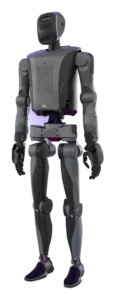
Mentee Robotics showcased a third-generation MenteeBot in early 2025, presenting a design focused on manufacturing scalability rather than one-off demonstration hardware.
Full assessment
AutonomyL2 heldReadinessNew to Market strengthenedScoreScores unchangedThe V3 iteration reflected feedback from warehouse pilot deployments and indicated an intent to move toward higher-volume production. Whether the design changes translate to expanded autonomous capability or improved task reliability in pilots remains to be documented in subsequent deployment reports.
Impact on autonomy
- Hardware redesign targets reliability for repeat task execution over extended shifts
- No new autonomous capability tier demonstrated beyond V1 pilot benchmark
- Improved actuator or structural durability claimed; specifications not published
Impact on readiness
- Production-oriented design signals intent to scale beyond single-customer pilots
- No commercial availability date or pricing structure announced with V3 reveal
- Manufacturability improvements reduce one barrier to future broader deployment
Claim check4 claims reviewed
V3 is production-readyDesign described as production-oriented; no confirmed manufacturing run volume, factory partner, or delivery timeline disclosedV3 incorporates lessons from warehouse pilotsManufacturer stated pilot feedback influenced design; specific changes and the problems they address were not detailed in available public materialsImproved hardware enables more demanding warehouse tasksTask scope expansion not documented; demonstration focused on mechanical design refinements rather than new capability scenariosMentee Robotics on path to scaled commercial deploymentV3 reveal signals progress in manufacturability; no supply chain partners, cost structure, or customer pipeline data published to support scale claimBottom lineV3 is a credible manufacturing-maturity milestone; the gap between a production-oriented prototype and a shipped commercial product is unquantified.
Technical notes4 sections
- Design Generation Context
-
The V3 MenteeBot represents the third major hardware iteration following the initial V1 public reveal in April 2024 and subsequent pilot-phase hardware. The V3 design intent, as stated by Mentee Robotics, is manufacturability: reducing part counts, standardizing subassemblies, and improving structural durability for multi-shift warehouse operation.
- Mechanical Refinements
-
Publicly available demonstration materials showed a refined body structure with changes to the torso and limb proportions compared to V1. Specific actuator changes, joint specifications, and end-effector design were not detailed in available sources. Weight and dimension specifications for V3 were not published at the time of the reveal.
- Software Continuity
-
No indication of a new software stack or major architecture change accompanying the V3 hardware. The platform’s deep learning-based task execution approach was described as continuous with prior iterations. No firmware version number published.
- Production Pathway
-
Mentee Robotics indicated intent to move toward higher-volume production with V3 as the design baseline. No manufacturing partner, contract manufacturer, or planned production volume was disclosed. Supply chain and component sourcing details remained proprietary at this stage.
- 2024
-
MenteeBot enters warehouse pilot phase with industrial logistics partners
Mentee Robotics confirmed MenteeBot had entered pilot deployments with industrial logistics customers, moving beyond demonstration-only status.
Full assessment
AutonomyL2 heldReadinessNew to Market strengthenedScoreScores unchangedPilots operate under continuous operator supervision in structured warehouse settings, with task scope limited to predefined material handling sequences. The path from supervised pilot to scaled commercial deployment remains undocumented; customer names and deployment scale were not disclosed.
Impact on autonomy
- Pilot tasks confirmed as scripted pick-and-place sequences in controlled zones
- No generalization to novel tasks or environments documented in pilot reports
- Operator intervention capability confirmed as standard requirement during execution
Impact on readiness
- Industrial pilot status moves platform from concept to limited operational deployment
- No consumer purchase path opened; industrial customer engagement model only
- Deployment requires vendor staff involvement in commissioning and ongoing oversight
Claim check4 claims reviewed
MenteeBot operating in real industrial environmentsPilot deployments confirmed; environments described as structured logistics centers with ongoing human operator presencePlatform demonstrates readiness for warehouse tasksTask scope limited to predefined sequences; manufacturer has not published success rate or error recovery data from pilotsPilot feedback informs ongoing developmentManufacturer stated that pilot data drives software iteration; specific capability changes attributed to pilot feedback not documented publiclyIndustrial humanoids ready to address labor shortagesPilot scale and throughput metrics not disclosed; gap between pilot performance and production-level deployment requirements unquantifiedBottom linePilot deployment is a meaningful step from demonstration; the absence of published performance data from those pilots leaves the operational claim largely unverifiable.
Technical notes4 sections
- Pilot Deployment Scope
-
Mentee Robotics reported warehouse pilots with industrial customers in the logistics sector. Specific pilot sites, customer names, and geographic locations were not disclosed. Task types described by the manufacturer center on material handling: moving items between locations in structured warehouse aisles with defined start and end points.
- Operator Integration
-
Pilot operating model requires human operators present for monitoring and intervention. Robots execute pre-programmed task sequences; operators handle exceptions, charging cycles, and any edge cases outside the robot’s programmed scope. This operator-in-the-loop structure is consistent with the Level II classification.
- Software Iteration
-
Manufacturer indicated active software development driven by pilot observations. No version numbers or changelog details were published. Improvement areas cited in general terms include object recognition reliability and task sequencing in partially obstructed environments.
- Commercial Model
-
No pricing, leasing structure, or minimum deployment scale disclosed. Customer engagement described as collaborative; vendor staff involvement in installation and ongoing operation confirmed as part of the pilot model.
-
Mentee Robotics unveils MenteeBot humanoid at public debut event
Mentee Robotics publicly revealed the MenteeBot in April 2024, led by co-founder Amnon Shashua, presenting a compact bipedal platform designed for human-collaborative warehouse tasks.
Full assessment
AutonomyL2 capabilities introducedReadinessNew to Market strengthenedScoreScores unchangedThe announcement positioned MenteeBot as an Israeli entrant in the industrial humanoid field, with pilot deployment intent stated.
WatchingFor documentation of actual pilot scope and operator-dependency requirements as the platform moves toward customer engagements.
Impact on autonomy
- Bipedal locomotion demonstrated in structured lab environment under supervision
- Object grasping and transfer shown for predefined pick-and-place sequences
- No autonomous task completion outside scripted demonstration documented
Impact on readiness
- Platform entered public awareness; no commercial availability or pricing disclosed
- Industrial pilot intent stated; consumer path explicitly deferred
- Operator oversight requirement built into described deployment model
Claim check4 claims reviewed
MenteeBot designed for seamless human-robot collaboration in real work environmentsDemonstrations showed structured scripted sequences; human operator oversight described as standard in the deployment modelPlatform ready for industrial pilotsPilot intent stated by manufacturer; no signed customer agreements or deployment timelines disclosed at revealCompact design suited to existing warehouse infrastructureForm factor dimensions not published at announcement; compatibility claims based on manufacturer description onlyFounded by world-class AI expertise (Mobileye co-founder involvement)Amnon Shashua's involvement documented; engineering team background supports machine vision and deep learning claims, though humanoid robotics is a distinct domain from autonomous drivingBottom lineThe April 2024 reveal established MenteeBot as a credible industrial humanoid concept; the gap between demonstration capability and pilot-ready deployment remained unquantified at announcement.
Technical notes4 sections
- Platform Architecture
-
MenteeBot presented as a full-body bipedal humanoid with two articulated arms, hands capable of object manipulation, and an upright torso designed for proximity to human workers. The form factor targets standard warehouse aisle and workstation dimensions. Specific joint count, degrees of freedom, and actuator type were not disclosed in public announcement materials.
- Locomotion and Manipulation
-
Demonstration footage showed walking on flat surfaces and basic pick-and-place object handling. End-effector design appeared optimized for structured grasping tasks rather than dexterous manipulation of arbitrary objects. No load capacity or reach specifications published at reveal.
- Sensing and Compute
-
Manufacturer indicated onboard compute for perception tasks; specific sensor suite (camera count, depth sensing approach) not detailed in publicly available announcement materials. Navigation architecture described as vision-based; no LiDAR or external beacon dependency claimed.
- Software Stack
-
Mentee Robotics cited deep learning and computer vision as core to the platform’s task execution approach, consistent with the founding team’s background. No software version, SDK, or API details disclosed at this stage.