
- Changes
- 2
- Tracking since
- Feb 2024
- Latest
- Aug 15, 2024
- Net movement
- Classification stable
- 2024
-
iRobot Financial Restructuring Raises Parts Supply Uncertainty for e5 Owners
iRobot's mid-2024 financial disclosures confirmed the company continued operating at a loss following the Amazon deal collapse, drawing on credit facilities to sustain operations.
Full assessment3 claims · 3 technical notes · 1 source
Where it standsAutonomy LadderIIIIIIIVVLevel IIAssisted AutonomyHuman ReadinessReady NowNew to MarketWaitKnown IssuesNot ratedRobovations Score04055708556CapableWhat happenedDiscontinued models including the e5 were explicitly excluded from the company's forward product roadmap.
WatchingFor any formal announcement of support-end timelines for pre-2020 hardware.
Bottom lineThe e5's position as a discontinued, no-Wi-Fi budget unit insulates it from app-deprecation risk, but the company's financial stress elevates OEM parts supply uncertainty for owners maintaining long-term units.
ImpactOn autonomy
- No autonomy capability changes; the e5 hardware is a fixed 2018 design with no update path.
- Manufacturer technical documentation access may narrow as iRobot consolidates its web presence.
On readiness
- Confirmed exclusion from forward roadmap removes any remaining chance of software support.
- OEM replacement parts supply chain becomes more uncertain as iRobot focuses on current SKUs.
- Secondary-market buyers face higher long-term parts risk than at original discontinuation.
Claim check3 maker claims checked against the record. Open one to read the finding.
iRobot is refocusing to emerge stronger from restructuring
Documented findingFinancial filings through mid-2024 showed continued operating losses; the company drew on emergency credit facilities, per SEC filings and press coverageExisting products remain fully supported
Documented findingiRobot's stated strategy focused resources on current-generation premium lines; no public support-continuation pledge was made for pre-2020 discontinued modelsThird-party parts will cover gaps
Documented findingAftermarket filter and bin parts remain available for the e5 through retailers; however, iRobot's own parts catalog reliability declined per owner forum reports through 2024Evidence1 source · all linked
- 1iRobot Investor Relations8 Aug 2024
Technical notes3 sectionsFinancial Context
Following the January 2024 acquisition collapse, iRobot published financial disclosures through mid-2024 indicating the company was operating at a loss and had accessed credit facilities to fund ongoing operations. The company publicly stated a strategy of concentrating investment in its premium, Wi-Fi-connected product lines (j-series and above).
Product Roadmap Exclusion
The Roomba e5 (model E515020) was not referenced in any forward-looking product or support documentation from iRobot during this period. Its discontinuation from primary retail had occurred before the acquisition attempt; the 2024 restructuring confirmed no reversal of that status.
Practical e5 Impact
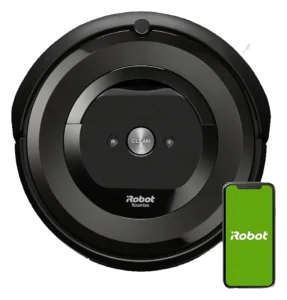
The e5 has no Wi-Fi or app dependency, which means app deprecation events do not affect it. The primary owner risk is OEM consumable availability: the e5’s proprietary dust bin gasket and primary filter are sold under iRobot SKUs. Third-party aftermarket equivalents exist for both items but vary in fit quality per owner forum reports. Owners relying on iRobot’s own parts store should verify stock before the catalog narrows further.
-
Amazon Acquisition Collapse Leaves iRobot Support Commitments in Question
The European Commission's January 2024 rejection of Amazon's $1.4 billion acquisition of iRobot triggered immediate layoffs of approximately 350 staff and the departure of founder Colin Angle as CEO.
Full assessment3 claims · 3 technical notes · 2 sources
Where it standsAutonomy LadderIIIIIIIVVLevel IIAssisted AutonomyHuman ReadinessReady NowNew to MarketWaitKnown IssuesNot ratedRobovations Score04055708556CapableWhat happenedFor owners of discontinued hardware like the e5, the contraction of iRobot's support workforce signals reduced capacity to honor warranty claims and fulfill spare-parts orders.
WatchingWhether iRobot publishes a formal support-end date for the e5.
Bottom lineThe acquisition collapse and subsequent restructuring left the e5's long-term parts and warranty support in a materially weaker position than before January 2024.
ImpactOn autonomy
- No autonomy capability changes; hardware is unchanged post-restructuring.
- Support staff reduction may delay firmware issue resolutions for older models.
On readiness
- Secondary-market-only status further reinforced by reduced manufacturer support capacity.
- Warranty fulfillment for e5 units becomes less reliable with reduced service workforce.
- Sparse-parts availability risk elevated as iRobot focuses resources on current-generation products.
Claim check3 maker claims checked against the record. Open one to read the finding.
iRobot stands behind its products with ongoing support
Documented findingiRobot's January 2024 restructuring reduced headcount by roughly 31%; owner reports document slower warranty and parts response times following the layoffsThe acquisition by Amazon would strengthen iRobot's product ecosystem
Documented findingEU regulators concluded the deal would harm competition in the robot vacuum market; the deal was abandoned before closingiRobot remains committed to existing product lines
Documented findingiRobot confirmed a strategic refocus on its premium product lines following the layoffs; discontinued models including the e5 received no specific support-continuity commitmentEvidence2 sources · all linked
12Jan 2024Feb 2024filed 1 Feb 2024- 1The Verge17 Jan 2024
- 2iRobot Press Release22 Jan 2024
Technical notes3 sections
Corporate Event
The European Commission formally blocked Amazon’s acquisition of iRobot on January 17, 2024, citing concerns about Amazon’s ability to disadvantage competing robot vacuum brands on its marketplace. iRobot and Amazon had first announced the deal in August 2022 at a reported value of approximately $1.4 billion.
Operational Impact
iRobot announced layoffs of approximately 350 employees, representing roughly 31% of its workforce, within days of the deal’s collapse. Founder and CEO Colin Angle stepped down concurrent with the announcement. The company appointed a new CEO and began a cost-reduction program.
e5-Specific Consequences
The Roomba e5 (model E515020) had already been discontinued from primary retail channels before the acquisition attempt. The workforce reduction diminishes iRobot’s capacity to service warranty claims on discontinued hardware. Replacement parts including the e5’s main filter and dust bin remain available through third-party suppliers, but iRobot’s own parts catalog availability is less certain post-restructuring.