
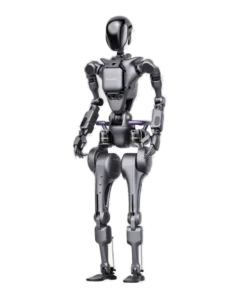
- Changes
- 3
- Tracking since
- Jul 2023
- Latest
- Jun 5, 2024
- Net movement
- Classification stable
- 2024
-
Fourier GR-1 ROS SDK and simulation tools released for research community
Fourier Intelligence published the GR-1 SDK alongside simulation tools that allow ROS-based task development and testing outside of physical hardware access.
Full assessment
AutonomyL2 capabilities expandedReadinessPromising progress strengthenedScoreScores unchangedThe release directly addresses a recurring barrier for research institutions evaluating humanoid platforms: the cost and logistics of physical unit access before committing to a deployment. Whether the simulation environment accurately models real hardware behavior, particularly joint dynamics and sensor noise, is the open validation question.
Impact on autonomy
- ROS-compatible SDK enables external task-module development for scripted autonomous sequences
- Simulation environment allows pre-deployment validation of control algorithms
- End-to-end autonomous operation still requires physical hardware and on-site technician support
Impact on readiness
- SDK release lowers entry barrier for research institutions without existing hardware access
- No consumer access pathway opened; SDK targets technical operators and researchers
- Simulation tooling accelerates deployment preparation for institutions on the 100+ unit waitlist
Claim check3 claims reviewed
Full simulation fidelity for real hardware behaviorSimulation environments for humanoids typically approximate joint dynamics; fidelity gaps between simulation and physical hardware are a known challenge in the field. Fourier has not published accuracy benchmarks for the GR-1 simulation model.SDK enables any ROS developer to deploy GR-1 tasksROS compatibility documented. Deployment to physical hardware still requires on-site technician coordination and training. SDK alone does not substitute for operator expertise in physical deployment contexts.Open research platformSDK is publicly available for development. Physical hardware acquisition remains institutional; individual or consumer purchase not offered.Bottom lineThe SDK release is a concrete step toward broader research adoption; simulation fidelity and real-hardware transfer accuracy need independent validation before the toolchain is used as a deployment shortcut.
Technical notes3 sections
- SDK Components
-
The GR-1 SDK includes ROS-compatible motion planning interfaces, joint control APIs, and a simulation environment supporting task scripting and pre-deployment testing. The simulation model covers bipedal locomotion, dual-arm manipulation primitives, and sensor input emulation for the onboard camera array. Documentation targets research institution workflows with existing ROS infrastructure.
- Integration with Existing Workflows
-
ROS compatibility allows research teams to port existing manipulation and locomotion task code to the GR-1 control interface without a full rewrite. Simulation testing enables algorithm iteration before scheduling time on physical hardware, reducing per-experiment cost for institutions with limited unit access.
- Deployment Boundary
-
SDK and simulation tooling do not alter the physical deployment model. On-site technician support remains a deployment requirement. Teleop fallback architecture is unchanged. The SDK extends the pre-deployment phase; it does not modify the operational autonomy profile.
SourcesFourier Intelligence Developer Documentation 2024-06-05Robotics Business Review 2024-06-07 - 2023
-
Fourier GR-1 reaches 100-unit delivery milestone to research institutions
Fourier Intelligence disclosed that more than 100 GR-1 units had been delivered to external research institutions and industrial partners, a supply-chain and manufacturing milestone without close precedent among general-purpose humanoid platforms at the time.
Full assessment
AutonomyL2 heldReadinessPromising progress strengthenedScorePRA track record +5The deliveries establish a real-world operational dataset that lab demos cannot provide. Whether that deployment base generates published performance data or remains within partner confidentiality boundaries is the key evidence gap to monitor.
Impact on autonomy
- 100+ deployed units create the first at-scale real-world operational feedback loop for GR-1
- Teleop fallback remains the documented architecture across deployments
- No autonomous capability advancement disclosed alongside the delivery milestone
Impact on readiness
- Delivery milestone signals manufacturing scale beyond prototype quantities
- Institutional-only access confirmed; no consumer purchase pathway opened
- Multi-country deployment expands the operating environment diversity of the evidence base
Claim check3 claims reviewed
100+ units delivered to research institutionsManufacturer-confirmed milestone. Recipient institution names, country distribution, and unit breakdown between academic and industrial contexts not fully disclosed.GR-1 is production-readyDelivery volume implies production manufacturing capability beyond prototype. Reliability data across 100+ units in field operation has not been independently published.Deployments span multiple countriesFourier Intelligence materials reference international research partners. Specific country count and partner identities not disclosed in public communications.Bottom lineThe 100-unit milestone is a genuine manufacturing and commercial signal; the absence of published field-performance data from recipient institutions limits what it can prove about operational reliability.
Technical notes3 sections
- Delivery Context
-
The 100-unit delivery milestone encompasses academic robotics laboratories and industrial pilot programs. Fourier Intelligence confirmed the figure in early 2024 communications. Units are distributed across research institutions that have publicly or privately committed to GR-1 integration into their robotics programs.
- Manufacturing Implications
-
Reaching 100+ external deliveries requires repeatable manufacturing at a scale most research-humanoid platforms have not achieved. It implies a supply chain for actuators, compute modules, and structural components that supports consistent unit production rather than custom-fabricated prototypes.
- Operational Diversity
-
Multi-country deployment exposes the GR-1 to varied facility layouts, temperature ranges, and task environments beyond Fourier’s own lab. Whether this operational diversity produces documented capability or reliability findings depends on institution publication behavior, not just Fourier’s disclosures.
+5Pra track score -
Fourier GR-1 unveiled at WAIC 2023 as first general-purpose humanoid platform
Fourier Intelligence introduced the GR-1 at WAIC 2023, marking a significant pivot from the company's prior rehabilitation robotics focus toward a general-purpose humanoid platform.
Full assessment
AutonomyL2 confirmedReadinessPromising progress strengthenedScoreScores unchangedDisclosed specifications included bipedal locomotion, dual-arm manipulation, and a ROS-compatible SDK. The primary signal to watch is whether Fourier's established rehab-hardware supply chain can support the delivery volumes implied by institutional demand.
Impact on autonomy
- Bipedal locomotion and dual-arm coordination confirmed as core architectural capabilities
- ROS-compatible control architecture disclosed; enables researcher-level task scripting
- Teleop fallback built in; autonomous operation scoped to scripted task domains
Impact on readiness
- Institutional deployment target announced; no consumer availability indicated
- Prior Fourier rehab robotics track record cited as engineering credibility signal
- No pricing or delivery timeline publicly disclosed at WAIC
Claim check4 claims reviewed
General-purpose humanoid robotPlatform confirmed as bipedal dual-arm design. General-purpose task range is aspirational at announcement; documented task capability at unveiling covers locomotion and basic manipulation in controlled demos.Fourier's rehab heritage translates to humanoid safetyManufacturer cites prior rehabilitation robotics experience as the safety design foundation. Independent safety certification for the GR-1 in non-rehab contexts not documented at announcement.Ready for research deploymentROS SDK and simulation tools cited as deployment enablers. First external deployments not yet confirmed at time of WAIC announcement.Commercial availability expected soonNo delivery timeline or pricing disclosed. Institutional partnership interest documented; purchase pathway for external buyers not announced.Bottom lineWAIC 2023 established GR-1 as a credible research-humanoid entrant with a defined architecture; the delivery and deployment track record built after the announcement is the more substantive evidence base.
Technical notes3 sections
- Hardware Specification at Announcement
-
GR-1 is a bipedal humanoid with dual articulated arms. Manufacturer-disclosed dimensions position it at approximately 164 cm height and 55 kg mass, consistent with a design targeting human-environment compatibility. Six RGB cameras and an AI-assisted 3D mapping system are cited for navigation. Teleoperation via AR headset over 5G is part of the disclosed control architecture.
- Software Stack
-
ROS-compatible SDK published alongside the announcement. Simulation tools allow research institutions to develop and test task modules before deploying to physical hardware. The onboard compute stack supports both autonomous scripted execution and real-time teleop handoff.
- Design Heritage
-
Fourier Intelligence’s prior product lines focused on exoskeleton and rehabilitation robotics. The GR-1 borrows actuator and safety-monitoring design philosophies from that lineage, particularly around safe human-proximity operation. WAIC 2023 was the platform’s first major public showing.