
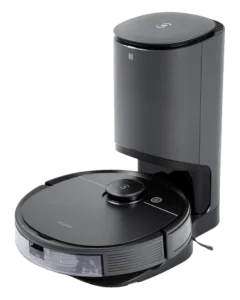
- Changes
- 2
- Tracking since
- Aug 2024
- Latest
- Nov 10, 2024
- Net movement
- Classification stable
- 2024
-
Ecovacs Home app update narrows T8 AIVI scheduling and zone-management features
Ecovacs Home app changes in late 2024 affected legacy T8 AIVI zone and scheduling controls, with owner reports documenting lost custom room-sequence configurations after the update.
Full assessment
AutonomyL3 unchangedReadinessNot Recommended unchangedScoreScores unchangedThe T8 AIVI received no compensating firmware update. Owners relying on multi-room selective scheduling should verify their map configurations in the current app version.
Impact on autonomy
- Room-sequence scheduling controls restructured in app; prior custom configurations may reset
- AIVI obstacle avoidance functions unaffected; cloud processing endpoint still active
- Map storage on-robot retained; zone labels and sequence logic stored app-side are at risk
Impact on readiness
- Owners must rebuild custom zone-scheduling configurations after app update
- No firmware patch available for T8 AIVI to restore legacy app behavior
- Basic room cleaning and AIVI remain functional; advanced scheduling requires reconfiguration
Claim check3 claims reviewed
Cloud-based architecture future-proofs your robotApp-side storage of zone configurations means server-side changes can silently remove features from discontinued hardwareT8 AIVI app experience remains consistent post-discontinuationOwner reports on Reddit and Ecovacs support forums documented custom scheduling loss following 2024 app updateLiDAR maps stored on robot are preservedOn-robot map data is preserved; zone labels and scheduling logic stored in app/cloud are subject to app-version changesBottom lineApp-side feature storage creates ongoing maintenance risk for discontinued hardware with no firmware support path.
Technical notes4 sections
- App Update Impact
-
Ecovacs Home app updates in late 2024 reorganized the zone management and room-sequence scheduling interface. Legacy Deebot models including the T8 AIVI, which use an older API layer, experienced configuration drift. Owner reports described disappearance of previously configured room-sequence order and loss of custom zone naming in some accounts.
- Architecture Context
-
The T8 AIVI stores map geometry on-robot via LiDAR SLAM. Zone labels, scheduling rules, and room-sequence configurations are stored app-side and synced via the Ecovacs cloud. When app restructuring breaks the API contract for legacy device types, on-robot map geometry is preserved but app-side metadata is vulnerable to reset.
- No Firmware Recourse
-
Because the T8 AIVI is discontinued, no firmware patch was issued to accommodate the new app API version. Owners must manually re-enter zone labels and rebuild scheduling sequences in the updated app interface.
- Functional Status
-
Core cleaning, AIVI obstacle avoidance, and LiDAR mapping remain operational. The loss is limited to advanced scheduling configuration. Basic whole-home cleaning runs are unaffected.
-
Security researchers document Ecovacs camera vacuum vulnerabilities at DEF CON 2024
Security researchers Dennis Giese and Braelynn presented Ecovacs Deebot vulnerabilities at DEF CON 32 in August 2024, with findings that covered the camera-equipped T8 generation.
Full assessment
AutonomyL3 capabilities expandedReadinessNot Recommended unchangedScorePrivacy -10The research documented potential for unauthorized camera access and account takeover vectors. Owners of T8 AIVI units should audit Ecovacs Home app permissions and consider disabling AIVI cloud features pending any vendor response.
Impact on autonomy
- AIVI cloud dependency flagged as attack surface by published security research
- On-robot camera access documented as a reachable vector in researcher findings
- LiDAR-only fallback mode remains unaffected by camera-specific vulnerabilities
Impact on readiness
- Published CVEs or equivalent disclosures increase risk profile for camera-on units
- Ecovacs Home app account security is a prerequisite for safe AIVI operation
- Disabling AIVI in app removes cloud-camera exposure for privacy-sensitive owners
Claim check4 claims reviewed
Cloud AIVI processing is secure and privateResearcher presentation at DEF CON 2024 documented authentication weaknesses in Ecovacs camera robot cloud pipeline covering T8-generation hardwareApp privacy toggle fully disables camera cloud uploadResearcher findings raised questions about whether app-level toggles fully prevent data transmission; Ecovacs disputed scope of findingsEcovacs camera vacuums meet consumer privacy expectationsABC News and The Guardian covered the research with specific reference to Deebot camera models; broader media coverage followedFirmware updates address security issues promptlyT8 AIVI is discontinued with no active firmware support; security patches are not available for this modelBottom lineDiscontinued status means T8 AIVI owners have no patch pathway for vulnerabilities identified in the 2024 research.
Technical notes4 sections
- Research Scope
-
Security researchers Dennis Giese and Braelynn presented findings at DEF CON 32 (August 2024) covering multiple Ecovacs Deebot models. Their analysis covered the cloud architecture shared by camera-equipped Deebot models, including the T8 generation platform. The research examined account takeover vectors, camera access pathways, and authentication handling in the Ecovacs Home cloud backend.
- T8 AIVI Relevance
-
The T8 AIVI uses the same cloud-AIVI pipeline architecture covered in the research. Because the robot is discontinued, Ecovacs has no stated obligation to release security patches for it. The app privacy toggle (disabling AIVI) remains the only mitigation available to owners.
- Vendor Response
-
Ecovacs disputed certain exploitability claims in the research but did not provide model-specific patch timelines. No security update was issued for the T8 AIVI following the research publication.
- Mitigation Available to Owners
-
Disabling AIVI in the Ecovacs Home app removes cloud camera upload. LiDAR-only mode operates without cloud transmission. Network segmentation (IoT VLAN) provides additional isolation for owners who retain the device.
SourcesDEF CON 32 Presentation – Giese and Braelynn 2024-08-11The Guardian 2024-08-19Data posture