
- Changes
- 2
- Tracking since
- Apr 2024
- Latest
- May 10, 2024
- Net movement
- Classification stable
- 2024
-
Astribot S1 dual-arm speed demonstration video draws global attention
Astribot released video footage demonstrating the S1's dual arms performing rapid manipulation tasks in a controlled lab environment, with manufacturer claims of 10 m/s peak arm speed.
Full assessment
AutonomyL2 heldReadinessNew to Market strengthenedScoreScores unchangedThe footage generated significant coverage in robotics press, positioning S1 among the most-discussed manipulation platforms of mid-2024. Whether the demonstrated speed translates to sustained real-world task performance under variable load remains undocumented.
Impact on autonomy
- Teleop-assisted scripted routines shown; no autonomous task sequencing documented
- Dual-arm coordination demonstrated in controlled lab conditions only
- Peak speed claims unverified by independent third-party measurement
Impact on readiness
- Research-platform positioning reinforced; no consumer availability indicated
- No pricing or purchase pathway disclosed alongside demo materials
- Expert operator presence implied throughout all demonstrated sequences
Claim check4 claims reviewed
10 m/s peak arm speedManufacturer specification. Demo footage shows rapid motion in scripted lab sequences; independent measurement of sustained speed under uncontrolled task conditions has not been published.Human-level dexterity in manipulation tasksDemo shows specific scripted pick-and-place and folding tasks. Generalization to novel objects or unstructured environments is not documented in the footage.Ready for commercial deploymentPlatform positioned as research and commercial pilot system. No retail channel, no regulatory certification, and no pricing disclosed at time of demo release.Dual-arm coordination exceeds single-arm platformsDemo footage documents coordinated dual-arm motion in scripted scenarios. Comparative benchmarking against other platforms is not published by the manufacturer or third parties.Bottom lineThe demo footage documents impressive scripted manipulation speed; the gap between lab-scripted and field-autonomous operation is the key open question.
Technical notes3 sections
- Demonstrated Capability Profile
-
Published footage shows the S1’s dual-arm system performing high-speed pick-and-place, folding, and insertion tasks in a structured lab environment. Manufacturer specifications list 10 m/s peak arm speed. The wheeled base remains stationary during demonstrated manipulation sequences, consistent with a platform optimized for upper-body task performance rather than mobile manipulation under load.
- Teleop Architecture
-
Demo footage is consistent with scripted or teleoperated control sequences. No footage of end-to-end autonomous task completion in an uncontrolled environment was released alongside the speed demonstration. On-site operator presence is visible or implied in all published clips.
- Platform Context
-
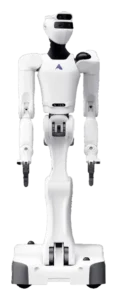
S1 is a wheeled-base dual-arm configuration, distinct from bipedal humanoid designs. This architecture trades bipedal locomotion for a lower center of gravity and a more stable manipulation platform, a deliberate trade-off for lab and structured industrial environments.
-
Astribot S1 publicly unveiled as commercial research platform at launch event
Astribot publicly disclosed the S1 platform, confirming a wheeled-base dual-arm configuration aimed at research institutions and commercial pilot programs.
Full assessment
AutonomyL2 confirmedReadinessNew to Market strengthenedScoreScores unchangedThe announcement established the product's identity but left pricing, deployment timeline, and autonomous capability depth undisclosed. Whether Astribot follows with a structured research-partner program or moves toward broader commercial access is the primary commercial signal to watch.
Impact on autonomy
- S1 architecture confirmed as wheeled-base dual-arm; locomotion scope is floor-level mobility
- Teleop control cited as primary operation mode in launch materials
- Manipulation task range not quantified; structured lab demos referenced
Impact on readiness
- No consumer pricing or purchase pathway disclosed at announcement
- Deployment described as research and commercial pilot contexts only
- Regulatory certifications for either consumer or industrial use not mentioned
Claim check3 claims reviewed
Designed for real-world deploymentLaunch materials describe research and commercial pilot use cases. No customer deployment case studies published at time of announcement.Dual-arm system enables complex task executionArchitecture confirmed; task complexity range is not quantified. Demo references are to controlled lab sequences.Advanced manipulation capabilitySpecific manipulation benchmarks not disclosed at announcement. Capability depth is described qualitatively by manufacturer.Bottom lineThe announcement established S1 as a real product with a defined architecture; the gap between platform disclosure and operational deployment data remains wide.
Technical notes3 sections
- Platform Architecture Disclosed
-
Astribot confirmed a wheeled-base form factor with dual articulated arms. The wheeled base is designed for operation in structured indoor environments; no stair-climbing or outdoor terrain capability is claimed in launch materials. Arm configuration targets manipulation tasks rather than bimanual locomotion support.
- Operational Model
-
Launch communications position teleoperated control as the primary interaction mode, with scripted autonomous sequences for repeatable tasks. A fallback to manual teleop is built into the operational design, consistent with Level II classification.
- Target Deployment Context
-
Announced use cases include research laboratory environments and commercial pilot programs in manufacturing and logistics contexts. Consumer availability is explicitly out of scope for the initial release phase. On-site operator support is described as a deployment requirement.