
- Changes
- 4
- Tracking since
- Mar 2025
- Latest
- Oct 2, 2026
- Net movement
- Classification stable
- 2026
-
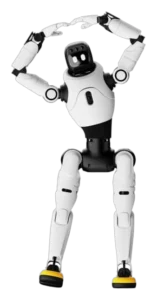
AgiBot deploys 100 Lingxi X2 humanoids across ASD retail stores
AgiBot placed 100 Lingxi X2 humanoids in ASD retail stores, where the robots greet shoppers and answer product questions on the floor.
Full assessment3 claims · 4 technical notes · 3 sources
Where it standsAutonomy LadderIIIIIIIVVLevel IIAssisted AutonomyHuman ReadinessReady NowNew to MarketWaitKnown IssuesNot ratedPre-Consumer Assessment03050717650PlausibleWhat happenedThe rollout moves the model from staged demonstrations into a sustained, customer-facing commercial role.
WatchingWhether the retailer discloses uptime, customer engagement data, or any incident reports from day-to-day store use.
Bottom lineThe confirmed fact is a 100-unit, model-specific retail deployment; broader shipment-share and fleet-size figures come from separate, sometimes conflicting counts.
ImpactOn autonomy
- Deployment uses existing conversational and product-query functions; no new capability documented.
- Store environment is structured and attendant-supervised, unlike open outdoor or home settings.
On readiness
- 100-unit retail rollout is the largest documented customer-facing deployment of this model.
- Sustained in-store operation offers evidence beyond scripted demos or trade-show appearances.
Claim check3 maker claims checked against the record. Open one to read the finding.
AgiBot frames the rollout as proof the Lingxi X2 is ready for real-world commercial service.
Documented findingReporting describes a structured, attendant-supervised retail setting with scripted greeting and product-question functions, not open-ended customer service.Coverage links the rollout to AgiBot's broader position in 2026 humanoid shipments.
Documented findingShipment tracking reports disagree on AgiBot's exact 2026 share, with published estimates ranging roughly between 35 and 44 percent depending on the source and period measured.The deployment is described alongside a much larger humanoid robot rollout at a Chinese theme park in the same reporting window.
Documented findingThat theme-park deployment spans more than 300 units across multiple AgiBot robot models, not the Lingxi X2 alone; only the 100-unit retail figure is specific to this model.Evidence3 sources · all linked
1231 Oct 20262 Oct 2026filed 2 Oct 2026- 1technology news publication1 Oct 2026
- 2robotics industry analysis site2 Oct 2026
- 3trade publication2 Oct 2026
Technical notes4 sectionsDeployment Scope
AgiBot placed 100 Lingxi X2 humanoid units into ASD retail stores, a commercial deployment reported in early October 2026 and documented as specific to the X2 model rather than AgiBot’s wider robot lineup.
Documented Function
Reporting describes the units greeting customers on the sales floor and answering product questions, a scripted, retail-specific task set rather than open-ended customer service. The stores remain staffed by human employees, and the robots operate inside a structured, supervised environment rather than an unstructured public setting.
Separate Deployment, Different Scale
The same reporting period also covers a larger rollout of more than 300 AgiBot robots at a Chinese theme park, but that fleet spans multiple AgiBot robot models and types. The 100-unit figure applies only to the Lingxi X2 in the retail setting, and the two deployments should not be combined into one fleet count.
Context
The retail rollout follows a period of rapid shipment growth for AgiBot. Industry shipment tracking for the first half of 2026 credits AgiBot with the largest unit count among humanoid makers, though separate trackers have published different totals and share estimates for the same period; the exact figures remain unsettled and are not restated here.
-
AgiBot opens Lingxi X2 developer access program to expanded research partners
AgiBot extended Lingxi X2 developer access to a broader set of research institutions and technology companies, moving beyond the founding partner cohort.
Full assessment4 claims · 4 technical notes · 2 sources
Where it standsAutonomy LadderIIIIIIIVVLevel IIAssisted AutonomyHuman ReadinessReady NowNew to MarketWaitKnown IssuesNot ratedPre-Consumer Assessment03050717650PlausibleWhat happenedThe expansion indicates manufacturing readiness for small-batch research units but does not open a consumer channel.
WatchingFor whether AgiBot discloses commercial pricing tiers or a timeline toward general availability.
Bottom lineThe expanded access program is a meaningful commercial development milestone for a research-stage platform; it does not signal an imminent consumer launch.
ImpactOn autonomy
- Expanded deployment base may generate additional manipulation dataset breadth for future capability updates
- Operator-assistance model unchanged; Level II classification holds across expanded partner access
- Developer tooling and simulation environment availability confirmed for new partner cohort
On readiness
- Broader research access increases vendor track record data available for future assessment
- Access model remains partner-agreement only; no retail availability announced
- Thermal management and sustained-operation limits remain undocumented publicly after expanded rollout
Claim check4 maker claims checked against the record. Open one to read the finding.
Platform ready for scaled deployment
Documented findingExpanded to a wider research cohort; scale is small-batch research units, not commercial volume manufacturingBroad partner ecosystem established
Documented findingDeveloper program expanded; roster of specific partner institutions is not fully publicResearch findings will accelerate commercial roadmap
Documented findingAgiBot has not published a commercial launch timeline; expanded access creates more data but does not commit to a delivery scheduleFull developer support for all new partners
Documented findingSimulation environments and vendor technical support confirmed as part of access agreements; depth of support for new cohort versus founding partners is not documentedEvidence2 sources · 1 linked
1210 Feb 202613 Feb 2026filed 10 Feb 2026- 1AgiBot Developer Program Announcement10 Feb 2026
- 2The Robot Report13 Feb 2026named, not linked
Technical notes4 sectionsAccess Program Expansion
AgiBot moved the Lingxi X2 developer program from its initial founding-partner cohort to a broader set of research institutions and technology companies. Program terms include simulation environments and direct vendor technical support, consistent with the original access model.
Hardware State at Expansion
No hardware revision or specification change was announced alongside the expanded access rollout. Published dimensions (approximately 65 inches height, 121 lbs weight) and Li-ion battery chemistry remain as stated at the original announcement. Thermal dissipation limits and sustained-operation duration remain undisclosed in public materials.
Manufacturing Readiness Signal
Onboarding a wider research cohort implies small-batch production capability beyond a single prototype. AgiBot has not disclosed unit volumes, production rate, or supply chain status in public materials accompanying the program expansion.
Classification Implications
The expanded access program does not change the Level II classification or the research-only readiness assessment. The platform continues to require developer or operator oversight for novel task scenarios. A commercial launch announcement or documented autonomous task generalization would be the relevant signals for a future classification review.
- 2025
-
AgiBot reveals Lingxi X2 compact humanoid for research partnerships
AgiBot formally introduced the Lingxi X2 as a research-partnership platform targeting dexterous manipulation in confined environments.
Full assessment4 claims · 4 technical notes · 2 sources
Where it standsAutonomy LadderIIIIIIIVVLevel IIAssisted AutonomyHuman ReadinessReady NowNew to MarketWaitKnown IssuesNot ratedPre-Consumer Assessment03050717650PlausibleWhat happenedThe announcement established a developer-access program rather than a commercial launch path.
WatchingWhether AgiBot publishes a commercial roadmap or expands the partner roster beyond its initial cohort.
Bottom lineAnnouncement established a research platform with credible engineering framing; commercial and consumer deployment timeline remains undisclosed.
ImpactOn autonomy
- Platform positioned at Level II with documented operator-assistance fallback for novel tasks
- Dexterous arm architecture described as optimized for speed and torque density in constrained spaces
- Simulation tooling included in developer package to support scripted task development
On readiness
- Access restricted to research partnerships; no consumer purchase path announced
- Developer documentation and direct vendor support bundled into initial access agreements
- No retail pricing or consumer support infrastructure disclosed at announcement
Claim check4 maker claims checked against the record. Open one to read the finding.
Compact frame optimized for real-world dexterous tasks
Documented findingArchitecture documented for constrained-space manipulation; real-world deployment remains research-tier, not commercialAgile and high-speed arm performance
Documented findingManufacturer cites torque density; thermal limits under sustained high-load operation are not publicly specifiedDeveloper-ready platform with simulation support
Documented findingSimulation tools confirmed in developer access package; generalization to unscripted scenarios requires operator input per manufacturer disclosureAgiBot as a capable humanoid manufacturer
Documented findingAgiBot is a recent Zhiyuan spinoff; no track record of consumer product delivery at announcementEvidence2 sources · 1 linked
12Mar 2025Jul 2025filed 11 Mar 2025- 1AgiBot Official Announcement15 Jul 2025
- 2IEEE Spectrum18 Jul 2025named, not linked
Technical notes4 sectionsPlatform Architecture
The Lingxi X2 is a compact bipedal humanoid described by manufacturer documentation as optimized for dexterous manipulation in confined environments. Height is approximately 65 inches; published weight is approximately 121 lbs (55 kg). Battery chemistry is Li-ion; capacity and runtime are not disclosed in announcement materials.
Arm Design
AgiBot cites high torque density in the arm joints as a design priority, targeting speed and precision in constrained-space tasks. Specific degrees-of-freedom count and joint specifications are not in publicly available announcement materials. Manufacturer discloses thermal management as an active engineering constraint under sustained high-load operation.
Access Model
At announcement, Lingxi X2 availability was restricted to research partnerships and developer agreements. Developer access includes simulation environments and direct vendor technical support. No model number suffix or tier variants disclosed at announcement.
Manufacturer Context
AgiBot is a spinoff from Zhiyuan Robotics, a Chinese robotics organization. Formation and Lingxi X2 reveal were covered by robotics-focused media in mid-2025. Manufacturing scale and supply chain readiness at announcement are not publicly documented.
-
Lingxi X2 bicycle-riding demonstration draws international media attention
AgiBot published demonstration footage of the Lingxi X2 riding a bicycle, exhibiting real-time dynamic balance and coordinated leg-arm motion.
Full assessment4 claims · 4 technical notes · 2 sources
Where it standsAutonomy LadderIIIIIIIVVLevel IIAssisted AutonomyHuman ReadinessReady NowNew to MarketWaitKnown IssuesNot ratedPre-Consumer Assessment03050717650PlausibleWhat happenedThe clip drew significant coverage in international robotics media as evidence of agile whole-body coordination. Independent verification of repeatability and conditions under which the demo was conducted has not been published.
Bottom lineThe demonstration is a credible capability signal for whole-body dynamic control; it does not constitute evidence of deployable autonomy or commercial readiness.
ImpactOn autonomy
- Demonstration documents whole-body dynamic balance beyond scripted static poses
- Coordinated leg-arm motion shown in non-trivial locomotion task requiring continuous feedback
- Balancing on a moving bicycle requires reactive control loop not present in typical scripted demos
- Generalization of this balance capability to unstructured work tasks remains undocumented
On readiness
- Demo increases technical credibility but does not alter research-only access model
- No commercial path announced alongside demonstration release
- Repeatability data and failure-rate statistics not published with the footage
Claim check4 maker claims checked against the record. Open one to read the finding.
World-class agility demonstrated in bicycle riding
Documented findingFootage documents a bicycle-riding performance; trial conditions, number of attempts, and failure modes are not disclosed in released materialsWhole-body coordination at human-comparable speed
Documented findingVisual evidence shows coordinated motion; quantitative comparison to human performance is not documented in accompanying materialsProof of readiness for real-world deployment
Documented findingManufacturer framing positions the demo as a capability signal; commercial or research deployment path was not updated alongside the footage releaseReactive balance control in unstructured conditions
Documented findingThe bicycle task requires dynamic feedback; whether the same control architecture generalizes to unscripted environments is not documentedEvidence2 sources · 1 linked
12Mar 2025Oct 2025filed 11 Mar 2025- 1AgiBot Demo Release20 Oct 2025
- 2TechCrunch22 Oct 2025named, not linked
Technical notes4 sections
Demonstration Task
The released footage shows the Lingxi X2 mounted on a bicycle, pedaling and maintaining upright balance across a surface. The task requires continuous reactive whole-body coordination: leg actuation for pedaling, arm adjustments for steering and balance correction, and torso stabilization against dynamic lean.
Control Architecture Inference
Bicycle riding requires a real-time feedback loop responding to lean angle, velocity, and steering input. This is consistent with the reactive control architecture implied by the manufacturer’s torque-density design emphasis. Specific controller type, update frequency, and sensor configuration used in the demo are not disclosed in publicly available materials.
Demo Conditions
AgiBot did not publish trial conditions, number of successful runs, or failure cases alongside the footage. Robotics media coverage treated the video as a capability demonstration without independent verification of repeatability. Physical context (surface type, speed, duration) is observable from footage but not formally documented by the manufacturer.
Relation to Platform Classification
The demonstration reinforces the Level II classification: the agility shown is consistent with Assisted Autonomy where a capable platform executes a specific task with pre-structured inputs. Generalization to novel unscripted environments would be required for a higher classification and is not evidenced by this footage.