
Approaches compared
Replacing a pressure-side pool cleaner with a robot: energy and upkeep
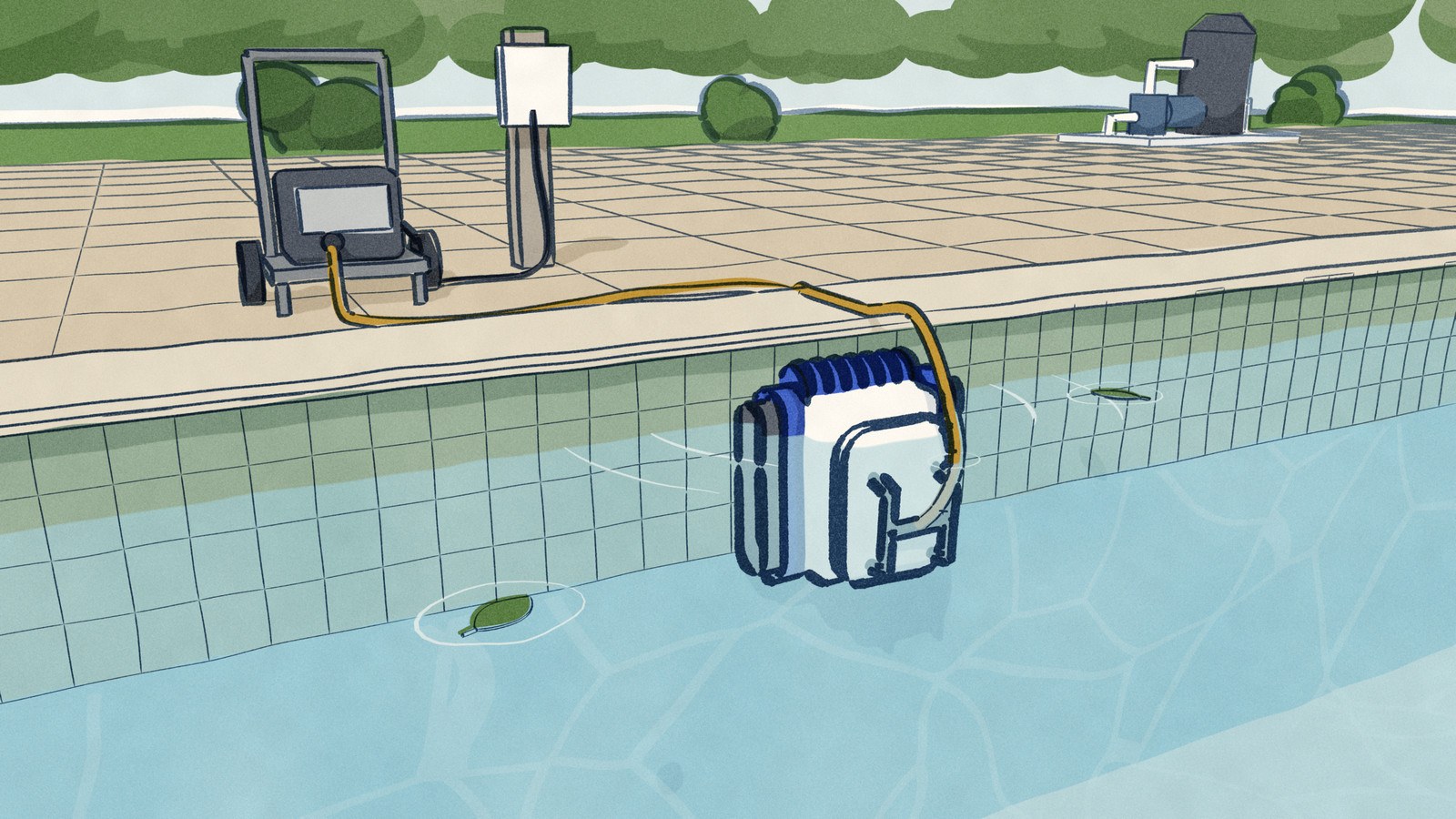
A pressure-side cleaner runs off the pool pump, and many need a booster pump too. Here two robots that carry their own motors show what a person takes on in power and upkeep when one replaces it.
This page checks
- What drives itThe pool pump, or its own motor
- Power it drawsMaker ratings, and how long it runs
- Where the debris goesAnd what you empty, how often
- Between runsIn the pool, or out of it
Polaris
Where to buy
Saltwater corrosion warranty exclusion draws owner attention post-purchase
Full specifications13 figures on record · 8 differ
Some links earn Robovations a commission. Nothing on this page is ranked by it.
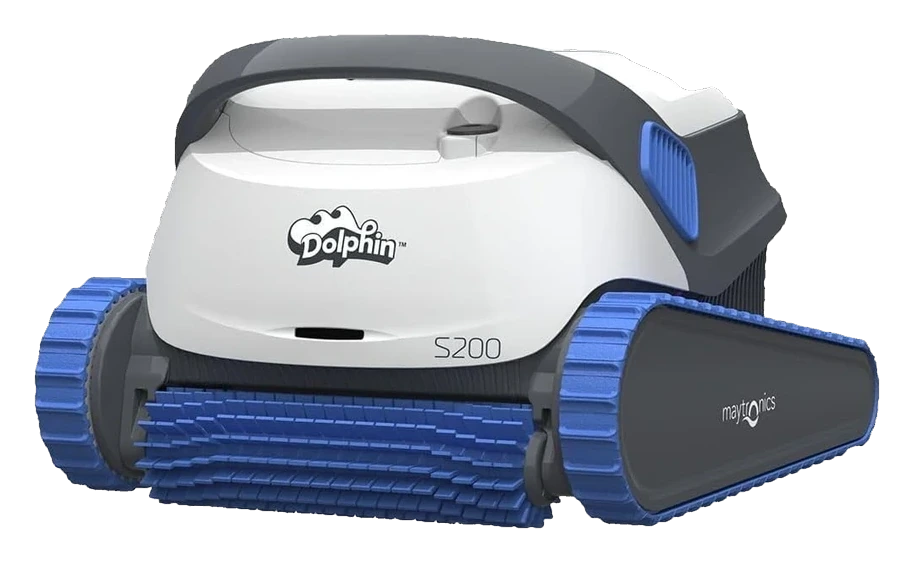
 Dolphin S200
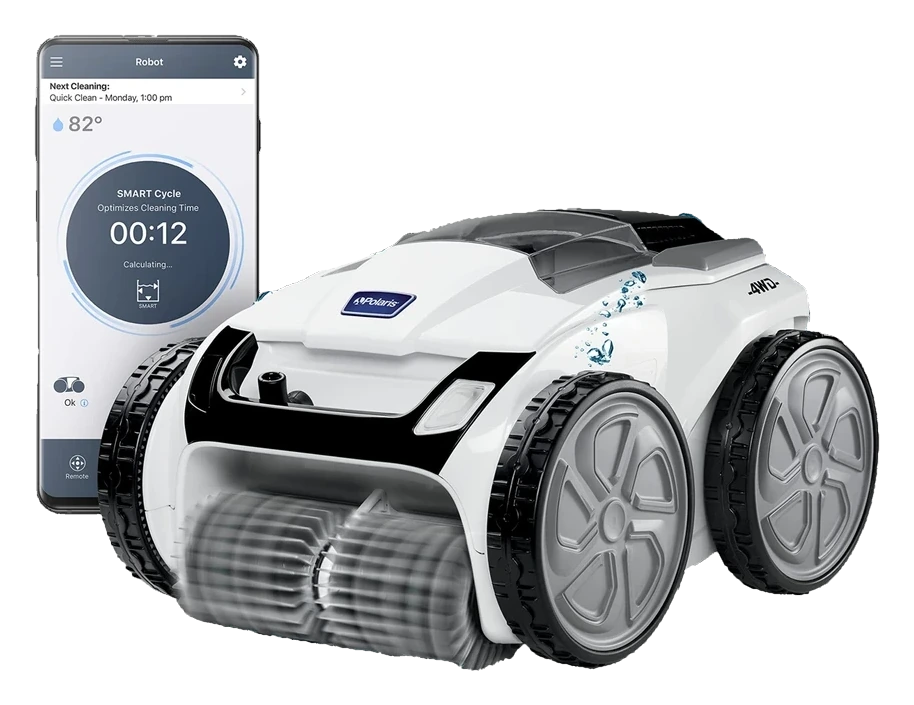
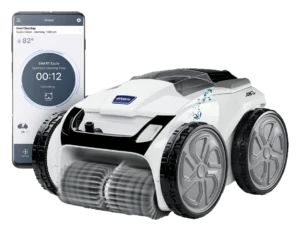 VRX iQ+
Pump or motor
What each design asks in power and upkeep
Both robots run without the pool pump. Maytronics rates its supply at 120 W and Polaris at 150 W, for runs of about two hours. Both robot makers say to rinse the filter after each cycle.
Its own motors, fed by a power supply with a weekly timer.
Maytronics manualIts own motors, fed by a control box on a 70 ft floating cable.
Polaris owner's manual120W
Rated output of the Dolphin power supply for US corded models.
Maytronics safety instructions150W max
Installed load stated in the owner's manual.
Polaris owner's manual2hours
Default cycle. The timer can run it daily, every other day or every third day.
Maytronics product page and manual1.25 to 2.75hours
Quick Clean to Deep Clean. Smart Cycle sets its own time. Custom runs go up to 3.5 hours.
Polaris owner's manualAn on-board basket. The Maytronics manual says to clean it after each cycle.
Maytronics manualA 5 L on-board canister. The manual says to clean it after every cycle, even on a schedule.
Polaris owner's manualIts timer runs it on a schedule for a week. It must come out before anyone swims. It weighs 17.9 lb.
Maytronics manual and product pageThe manual says to remove it after each cycle. Its Lift System brings the 21 lb cleaner to the waterline.
Polaris owner's manualNo interval found
Searched the manual and product page for a replacement interval.
Maytronics manualBrushes at the wear indicator or every two years, whichever comes first.
Polaris owner's manualSame on both: no dock. Each one leaves debris for a person to empty by hand from the robot’s own filter.

Your home
How each one fits a home like yours
Set the conditions that describe your home. Each robot answers from its own Fit Check; nothing is scored until you choose.
Fit check
Describe your home
Pick what applies. Each robot answers from its own record.
Sources
Where every figure comes from
- Dolphin S200 · maytronics.com US store page; S200 user manual 99996202-USW (manuals.maytronics.com); Maytronics safety instructions for US corded models
- VRX iQ+ · Polaris owner's manual H0655800 Rev C (Alpha iQ+/VRX iQ+, dealer-hosted PDF); Leslie's listing for cable and canister
- Pressure-side reference · Polaris 280 owner's manual (dealer-hosted PDF), for the booster pump a pressure-side cleaner is built around
Every figure was read from the maker's own manual, product page or brochure on 2 Oct 2026. Wattages are maker ratings. No independent measurement of energy use was found for either robot.
Questions
What readers ask
Do these robots use less power than a pump-driven cleaner?
The robots carry their own supply: 120 W for the Dolphin, 150 W max for the Polaris, for runs of about two hours. No measured comparison with a pump-driven cleaner was found.
Does a robot mean turning the pool pump off?
A robot does not need the pump to clean. The pump still does the pool’s filtering.
Can a robot use the skimmer or suction line the old cleaner used?
No. Each robot plugs into its own power supply on a GFCI outlet, set 10 to 12 ft from the pool edge.
Common questions