Skip to content
Saved

Goal-based/Specialty Robots/4 robots compared/Reviewed Oct 15, 2026

Microduck, Neakasa M1 Plus, Miko 3, EMO: what’s each for?
Each robot automates a different kind of task.One trains machine-learning policies, one automates a chore, one teaches through guided play, and one explores a desk; none is a substitute for the others.
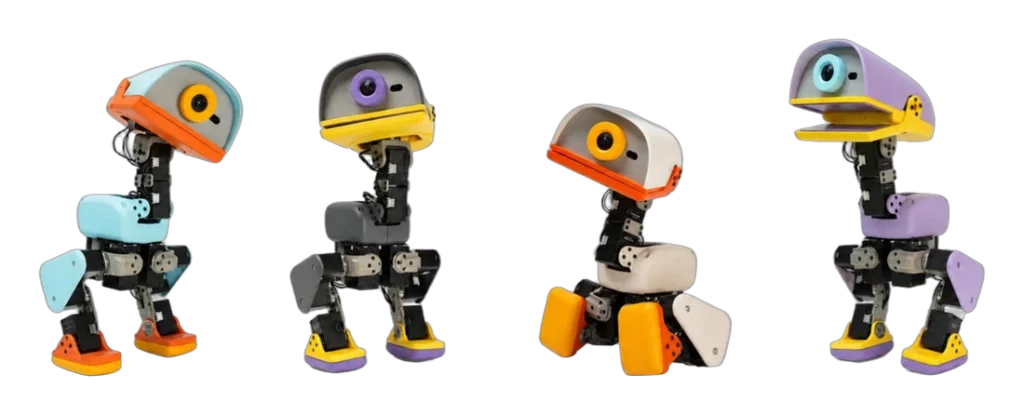
Hugging Face MicroduckView recordHugging Face (built with Pollen Robotics)IIHugging Face MicroduckBase price at launch$399$399
Neakasa M1 PlusView recordNeakasaIIM1 PlusBase price at launch$549.99$549.99
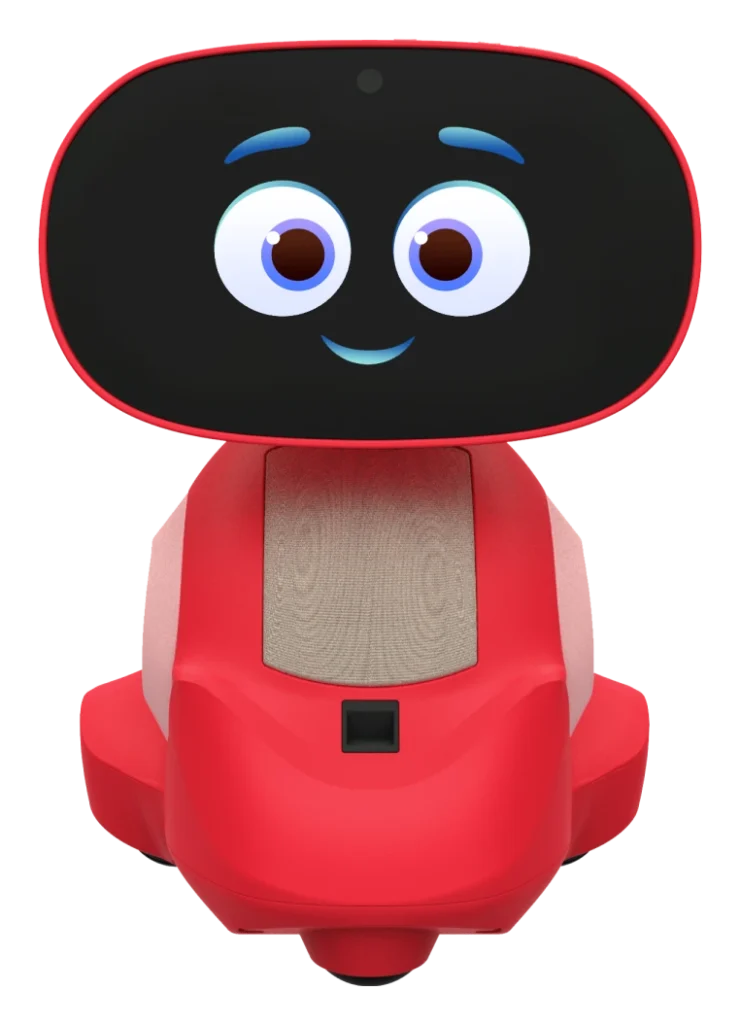
Miko 3View recordMikoIIMiko 3Base price at launch$299
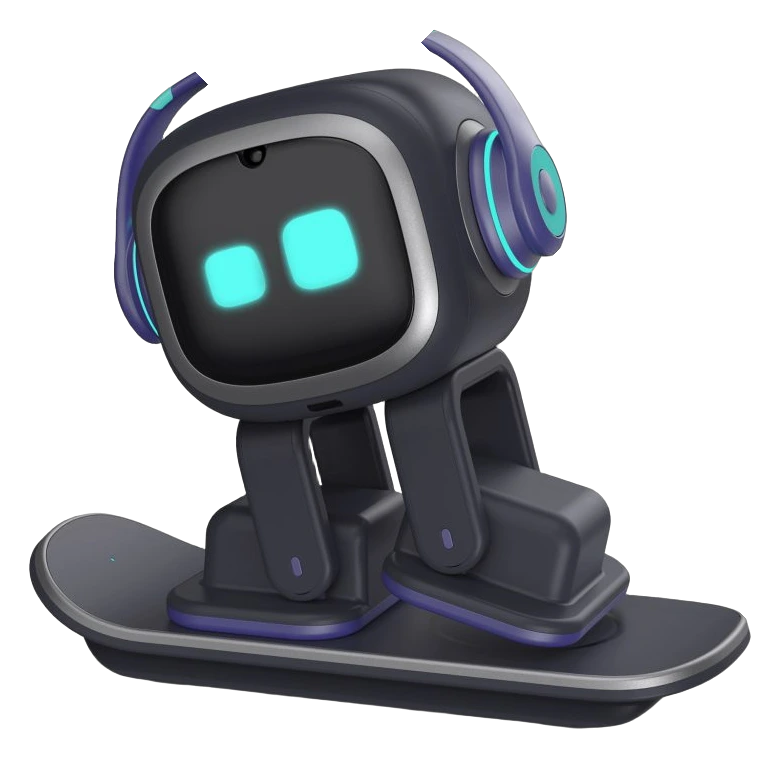
EMOView recordLiving.AIIIEMOBase price at launch$279$279
Full specifications10 measurements · 32 of 40 documented
MSRP
$399
$549.99
$299
$279
Rated runtime
60 min
Not documented
360 min
240 min
Battery type
Not documented
Li-ion
Li-ion
Li-ion
Navigation
Wide-angle front camera + 8×8 time-of-flight LiDAR + dual IMU
None (stationary enclosure; no locomotion)
Time-of-flight range sensor and odometric wheel sensors (maker); no room mapping or docking
Bounded desktop-area exploration using a time-of-flight distance sensor and 4 optical drop sensors for edge avoidance; self-docks to a magnetic Home Station
Connectivity
wifi, bluetooth
Not documented
wifi
wifi, bluetooth
Dimensions (W×D×H)
Not documented
Not documented
5.5 × 6.3 × 8.67 in
3.7 × 2.6 × 4.6 in
Weight
1.76 lbs
22.81 lbs
2 lbs
0.54 lbs
Form factor
bipedal
Not documented
wheeled_base
bipedal
Readiness
Not documented
Ready Now
Ready Now
Ready Now
Sensors
Wide-angle front camera, 8×8 ToF LiDAR, 2 IMUs, 2 NFC antennas, microphones
Not documented
Time-of-flight range sensor, odometric sensors (Miko launch release)
10+ internal sensors including a time-of-flight distance sensor, 4 optical drop sensors, a 6-axis gyroscope/accelerometer, a touch sensor, and a light sensor
01/05

What task is each robot actually built to do?

All four share a product category and an autonomy level, but the physical task each one performs is not the same, from training a biped to cleaning litter.

Where they differNeakasa M1 Plus — How each robot physically moves: Stationary; internal mechanism only
EvidenceHugging Face MicroduckNeakasa M1 PlusMiko 3EMO
Core function of the robotProgrammable biped research platformAutomated self-cleaning litter boxKids' STEAM companion and tutorDesktop companion pet
How each robot physically movesWalks on two legs (15 servos)Stationary; internal mechanism onlyDiffersRolls on flat surfacesRoams a bounded desktop area
Primary way you control itRetrainable policy or game controllerApp settings; no manual controlVoice conversation plus companion appVoice, face tracking, wake word
What activity it is built forSim-to-real reinforcement learning on real legsDaily litter cleanup, no human scoopingGuided STEAM games and video callsFace tracking and animated reactions
Sources & evidence
Neakasa product page, Oct 2026

Manufacturer documentation describes the M1 Plus as a fixed litter-box unit with no roaming or navigation system, unlike the other three robots in this set.

Pollen Robotics design documentation, Sep 2026

Pollen Robotics' own design materials describe the Microduck's software stack as open-source and retrainable, while the mechanical hardware remains proprietary to the company.

02/05

How does each one handle voice and camera data?

Voice assistants and cameras raise different privacy questions depending on where recordings go, whether they are stored, and what the manufacturer discloses in its documentation.

Where they differMiko 3 — How long biometric data is kept: Face and voice kept 3 years
EvidenceHugging Face MicroduckNeakasa M1 PlusMiko 3EMO
How voice and audio get handledLocal use needs no accountApp discloses little about handlingAudio deleted right after transcriptionShort clip sent to servers
How long biometric data is keptNot documented in this recordNot documented in this recordFace and voice kept 3 yearsDiffersNot documented in this record
Where camera or photo data goesNo camera documentedNo camera; infrared sensors only720p video sent on callsStays on-device by defaultDiffers
Whether it works without internetYes, for local useYes, after initial setupNo; cloud AI requiredNo; voice needs internet
Sources & evidence
Miko privacy policy, Oct 2026

Miko's published privacy policy states conversational audio is deleted after transcription, but face and voice biometric data is retained for up to three years from last use.

Living.AI product page, Oct 2026

Living.AI's documentation states camera photos remain stored on the device by default and are only sent to the companion app if a user chooses to share them.

03/05

What does each one cost today, and what's included?

Sticker price is only part of the picture; some of these robots add optional packs or a content subscription that changes what a buyer gets for the base price.

Where they differMiko 3 — Recurring or optional cost structure: Subscription required for most content
EvidenceHugging Face MicroduckNeakasa M1 PlusMiko 3EMO
Base price at launch$399$549.99$299$279
What ships inside the boxRobot, 1 battery, cable, controllerLitter-box unit onlyRobot plus companion app accessRobot plus Home Station dock
Recurring or optional cost structureOptional $39-$119 accessory packsNone documented beyond litter and bagsSubscription required for most contentDiffersNo subscription documented
Current delivery timeline at this price4-6 months for new ordersNot documented in this recordEstablished; ships on orderEstablished; ships on order
Sources & evidence
a hands-on review, Mar 2025

A documented hands-on review found most of Miko 3's games, stories and coding activities locked behind the Miko Max subscription, which the review priced between $99 and $180 a year.

Pollen Robotics product listing, Oct 2026

Pollen Robotics lists the Microduck's $399 box as including one robot, one battery, a USB-C cable and a game controller, with accessory and developer packs sold separately.

04/05

How much independent evidence exists for each robot?

Hugging Face Microduck is weeks old; the other three have been sold for years, and only one of the four has a documented independent hands-on review.

Where they differHugging Face Microduck — How much independent hands-on evidence exists: None yet; not broadly shipped
EvidenceHugging Face MicroduckNeakasa M1 PlusMiko 3EMO
How long it has been on salePre-orders opened Aug 2026Established; no launch date givenReleased October 2021Established, several years on market
How much independent hands-on evidence existsNone yet; not broadly shippedDiffersNot documented in this recordOne documented hands-on review (2025)Active community; no review cited
A documented limitation on the recordLocal model size capped by NPUNo automatic litter-level managementNo obstacle avoidance while movingNo whole-room navigation; desk-bound
Reported demand since launch10,000+ units sold within daysNot documented in this recordNot documented in this recordNot documented in this record
Sources & evidence
Pollen Robotics pre-order page, Aug 2026

Pollen Robotics opened pre-orders for the Microduck on August 27, 2026, with first deliveries targeted before the end of the year, too recent for ownership or failure reports to exist.

a hands-on review, Mar 2025

A documented hands-on review of Miko 3, conducted in March 2025, found no obstacle avoidance while the robot was moving, though it survived several falls undamaged.

05/05

What does Level II autonomy look like on each machine?

Level II autonomy covers very different behavior across these four, from a robot that waits for a trained policy to one that triggers its own cleaning cycle.

Where they differEMO — How the task manages itself: Self-returns to Home Station
EvidenceHugging Face MicroduckNeakasa M1 PlusMiko 3EMO
What triggers the robot into actionTrained policy or controller inputInfrared sensors detect cat exitVoice command or app launchWake word or face detection
How long it runs before rechargingAbout 1 hourMains-powered; no battery6-7 hours continuous playAbout 2 hours
How the task manages itselfResets per trained behaviorHuman adds litter; bot bags wasteNo mapping or docking functionSelf-returns to Home StationDiffers
What the owner still has to doTrains or selects behaviorsRefills litter, empties sealed binApproves content, charges deviceMostly hands-off once docked
Sources & evidence
Living.AI product page, Oct 2026

Living.AI's documentation describes EMO navigating back to its Home Station to recharge on its own, the only one of these four that docks itself.

Neakasa product page, Oct 2026

The Neakasa M1 Plus runs on mains power and pauses its cleaning cycle if its infrared sensor array detects a cat re-entering the bin.

In closing

What the evidence shows

Patterns that emerged across the questions above.

01

Each robot automates a different kind of task

One trains machine-learning policies, one automates a chore, one teaches through guided play, and one explores a desk; none is a substitute for the others.

02

Ongoing cost falls on different owners

Miko 3's content library sits mostly behind an annual subscription, while the Microduck, Neakasa M1 Plus and EMO carry no subscription requirement documented in their records.

03

Evidence depth tracks time on the market

Miko 3 carries years of use and a documented independent review. EMO and the Neakasa M1 Plus have years on the market too, but no independent review is cited in either record. The Microduck has pre-order sales figures but no comparable ownership record yet.

Common questions

What readers ask about this comparison.

Q.
Is the Hugging Face Microduck a toy or a research tool?
It ships as a consumer product with a game controller for casual play, but its open-source policy software and retrainable behaviors are aimed at people who want to train and modify a physical robot themselves.
Q.
Does the Neakasa M1 Plus work with any kind of litter?
No. It requires clumping or scoopable litter; non-clumping litter is not compatible with its internal sifting mechanism.
Q.
Does Miko 3 require a subscription to use?
A free tier exists but is limited to one module or story per section; a hands-on review found most content gated behind an annual or monthly add-on.
Q.
Can EMO navigate a whole room?
No. A laser-defined virtual boundary limits it to a bounded desktop area, not full-room or multi-room movement.
Q.
Is there independent testing of the Hugging Face Microduck yet?
Not that this record documents. Pre-orders opened in August 2026 with deliveries targeted before the end of the year, too recent for independent ownership or failure data to exist.
Next up

Has anyone independently tested these robot vacuum combos?

Read the comparison
Comparison ID: RV–CMP–13857 · Last reviewed Oct 15, 2026 · Based on owner reports, manufacturer documentation, and firmware release notes