Skip to content
Saved
Comparison · 2 robots

Pudu D7 · Zeroth Bridge

All humanoid robots. Every measure below is plotted against the full class, so a difference can be read against how much the class itself varies.
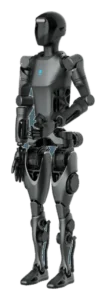
  1. Pudu D7
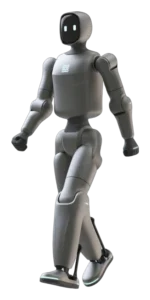
  2. Zeroth Bridge
Pudu Robotics

Pudu D7

Autonomy
IIAssisted Autonomy
Score
89/100 Pre-Order Ready
Readiness
Not assessed
Price
Not tracked

Zeroth

Zeroth Bridge

Autonomy
IIAssisted Autonomy
Score
54/100 Plausible
Readiness
Not assessed
Price
$3,999list

Up to three

01 Classification

What each one does on its own.

The Autonomy Ladder is the same five rungs for every robot on the site. A rung describes the conditions a robot handles without you, not how good it is.

V
Generalized
Any task, any setting
IV
Environmental
Handles new obstacles without help
III
Conditional
Finishes familiar jobs on its own
II
Assisted
Runs preset routines, needs rescue
Pudu D7Zeroth Bridge
I
Manual
One action, on command
02 Assessment

Where they actually differ.

The Robovations Score is nine inputs across three pillars, each weighted as shown and each scored so that more is better. A robot can lead on one and trail on another, which is the point of showing them apart. Cost of ownership and data handling are reported on each robot's own page and are never averaged into the score.

None of these robots carries a scored assessment yet, so there is nothing to plot here. The classification and evidence below still apply.

03 Measured against the class

How far apart is a long way?

A number only means something next to the spread it sits in. Each track below is the real range across every classified robot in the class, with the median marked.

Weight48 with a published figure
  • Pudu D799.2 lbs
  • Zeroth Bridge28.7 lbs
26.5 lbsmedian 142.6 lbs661.4 lbs
Height51 with a published figure
  • Pudu D765 in
  • Zeroth Bridge34.7 in
34.7 inmedian 66.9 in86.6 in

Not compared, because fewer than two of these robots carry a published figure: Price, Suction, Runtime, Charge time, Noise.

04 Ownership

What the numbers leave out.

The trade-off

What each design gives up to be good at what it is good at.

Pudu D7

The dual 7-DOF arms deliver real manipulation, but neither hand achieves the dexterity or speed of a human operator, handoff tasks still demand human intervention or pre-taught scripted sequences.

Zeroth Bridge

$3,999 buys a biped with a published joint map and no published runtime.

Because control is replayed motion or live teleoperation, every new behavior is something a developer has to build.

Two weights on one page: about 10 kg in the header, about 13 kg in the spec table.

Who each one is wrong for

Stated by the record itself. A robot being wrong for a household is a fact about fit, not a fault.

Pudu D7
Unstructured consumer home environments
The D7 is not designed, priced, or distributed for household use. Consumer robotics assume minimal supervision; the D7 requires facility staff oversight and structured operating spaces.
Fully autonomous multi-floor navigation
Wheeled base excels on single-level flat surfaces. Multi-floor environments or steep stairs require physical relocation between levels, limiting independent deployment in complex buildings.
Situations requiring bipedal stability on narrow passages
Wheeled base provides wider stance and footprint than bipedal alternatives. Narrow doorways, tight warehouse aisles, or confined spaces may constrain maneuverability despite the compact torso.
Zeroth Bridge
Households expecting a robot that does chores
Launch materials list walking, squatting, dancing, backflips and obstacle avoidance as its built-in skills. None of the sources reviewed describes a household task such as tidying, fetching or laundry.
Buyers who need a firm delivery date
Zeroth's store calls the first batch a pre-order and names no ship window. Chinese coverage reports 1,000 JD.com units sold within a week without stating when they deliver.
Anyone wanting unattended operation around people or pets
Control runs through replayed motion or live teleoperation, and no fall-recovery or emergency-stop behavior is documented for a 13 kg machine that performs backflips.
Projects that need camera-based perception out of the box
The sensor list names an IMU, a circular microphone array and capacitive touch sensing and does not list a camera, although obstacle avoidance is advertised. Confirm the perception hardware before planning vision work.
Manipulation work needing heavy payloads or dexterous hands
The end effector is a two-finger gripper rated for 2 kg, on arms reaching 30 to 40 cm, which limits the platform to light, simple grasps.

What stays your job

The upkeep ownership hands back to you, whatever the autonomy level says.

Pudu D7
  • Weekly: Gripper and end-effector inspection for wear or damage.
  • Monthly: Arm and base mechanical component lubrication per manufacturer schedule.
  • Every 3-6 months: Joint calibration and sensor alignment verification.
  • As needed: Gripper pad or tool changeover based on task requirements.
Zeroth Bridge
  • After every use: Recharge the pack; Zeroth lists a 12.6 V, 3.2 A charging input but no runtime or charge time.
  • After every use: Clear a flat area before walking or acrobatic routines, since fall recovery is undocumented.
  • As needed: Update the OpenBridge SDK and robot firmware as Zeroth releases builds.
  • As needed: Inspect joints and two-finger grippers after falls or backflips; no inspection interval is published.
  • As needed: Keep operation within the 32-104°F range Zeroth lists.
05 Evidence

How much each of these is standing on.

Classifications rest on different depths of evidence. A pre-release assessment and a verified one are not the same kind of claim.

Evidence behind each classification
Robot Evidence status Sources reviewed Last assessed
Pudu D7 Not Consumer-Ready 1 Sep 2026
Zeroth Bridge Pre-Release 6 Sep 2026

Robovations classifies robots; it does not rank them. Nothing on this page is a recommendation, and no manufacturer influences a classification or its placement here.