Skip to content
Saved
Comparison · 2 robots

Mammotion Yuka 1500 · Segway Navimow H2

All robot lawn mowers. Every measure below is plotted against the full class, so a difference can be read against how much the class itself varies.
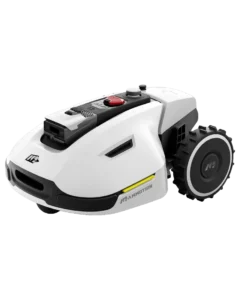
  1. Mammotion Yuka 1500
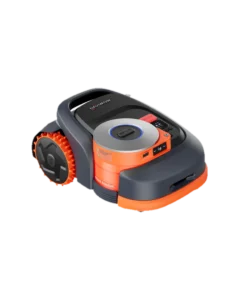
  2. Segway Navimow H2
Mammotion

Mammotion Yuka 1500

Autonomy
IV Environmental Autonomy
Score
75/100 Strong
Readiness
Ready Now
Price
$1,599list
Segway

Segway Navimow H2

Autonomy
IV Environmental Autonomy
Score
65/100 Capable
Readiness
Promising Progress
Price
$1,799list

Up to three

01 Classification

What each one does on its own.

The Autonomy Ladder is the same five rungs for every robot on the site. A rung describes the conditions a robot handles without you, not how good it is.

V
Generalized
Any task, any setting
IV
Environmental
Handles new obstacles without help
Mammotion Yuka 1500Segway Navimow H2
III
Conditional
Finishes familiar jobs on its own
II
Assisted
Runs preset routines, needs rescue
I
Manual
One action, on command
02 Assessment

Where they actually differ.

The Robovations Score is nine inputs across three pillars, each weighted as shown and each scored so that more is better. A robot can lead on one and trail on another, which is the point of showing them apart. Cost of ownership and data handling are reported on each robot's own page and are never averaged into the score.

Capability

Task completion16% of score
Does it finish the job it is sold to do, unattended
  • Mammotion Yuka 150072
  • Segway Navimow H275
18median 72 across 354 scored robots100
Coverage and navigation10% of score
Does it work the whole area, and hold that between runs
  • Mammotion Yuka 150074
  • Segway Navimow H272
15median 70 across 344 scored robots100
Edge-case recovery10% of score
Does it recover from the failures its category presents
  • Mammotion Yuka 150052
  • Segway Navimow H235
18median 50 across 261 scored robots100
Operating envelope4% of score
How far conditions can vary before performance drops
  • Mammotion Yuka 150060
  • Segway Navimow H284
25median 70 across 320 scored robots100

Dependability

Field failure rate16% of score
Documented hardware failures per owner-year
  • Mammotion Yuka 150070
  • Segway Navimow H229
6median 70 across 344 scored robots100
Software stability14% of score
Whether updates fix more than they break
  • Mammotion Yuka 150074
  • Segway Navimow H265
15median 65 across 275 scored robots100
Support longevity10% of score
Committed parts, service and updates, with dates
  • Mammotion Yuka 150078
  • Segway Navimow H267
0median 63 across 354 scored robots100

Ownership burden

Routine maintenance12% of score
Hands-on time it asks for in normal operation
  • Mammotion Yuka 150094
  • Segway Navimow H281
22median 68 across 355 scored robots100
Consumables8% of score
Parts that must be bought to keep it working
  • Mammotion Yuka 1500100
  • Segway Navimow H271
30median 69 across 354 scored robots100
03 Measured against the class

How far apart is a long way?

A number only means something next to the spread it sits in. Each track below is the real range across every classified robot in the class, with the median marked.

Price71 with a published figure
  • Mammotion Yuka 1500$1,599
  • Segway Navimow H2$1,799
$24.99median $1,999$5,999

Not compared, because fewer than two of these robots carry a published figure: Suction, Runtime, Charge time, Noise, Weight, Height.

04 Ownership

What the numbers leave out.

The trade-off

What each design gives up to be good at what it is good at.

Mammotion Yuka 1500

Base-station-free does not apply here: RTK still requires hardware installation, though not wire burial. Vision adds capability but increases calibration and software dependencies.

Segway Navimow H2

Upfront mapping effort replaces ongoing wire maintenance. Zero buried boundaries, but 30-60 minute initial setup trades monthly perimeter inspection against one-time configuration.

LiDAR-camera redundancy adds weight and cost. Robust positioning lists at $1,799 for the H210 and $2,199 for the H220, versus simpler wire-guided models at $800-1100. Autonomy justifies the premium only on larger, complex yards.

Who each one is wrong for

Stated by the record itself. A robot being wrong for a household is a fact about fit, not a fault.

Mammotion Yuka 1500
Owners who want to unbox and mow the same hour
The reference station has to be mounted on the supplied pole or a wall bracket and paired in the app, and the mowing boundary is recorded by driving the machine around the perimeter before the first autonomous run. It is owner-installed work with no site survey and no contractor involved, but it is not a zero-setup machine.
Yards under dense tree canopy or hemmed in by tall structures
Positioning is RTK GNSS, so it depends on a clear view of the sky. Heavy overhead canopy and tall walls degrade the fix. Open, featureless turf is not a problem for this machine; it is the condition RTK works best in.
Owners preferring minimal capital upfront; modular accessories not needed
The RTK reference station is included in the package rather than bought or installed separately, but the optional sweeper or collector adds $400-500 on top, and fitting it drops the rated maximum slope from 28 degrees to 18 percent, about 10 degrees. Total system cost still exceeds wire-guided alternatives.
Segway Navimow H2
Terrain steeper than the rated gradient
Segway rates the H2 to 45 percent grade (24 degrees). Ground steeper than that sits outside the rated operating envelope, and no behavior is published beyond it. Terrain analysis is upfront; unsuitable properties should be filtered before purchase.
Complex boundary geometry or frequent layout changes
Initial mapping takes 30-60 minutes; remapping after major property changes requires app interaction or walk-through. Set-it-and-forget-it assumes stable yard layout.
Owners needing weekly customization or quick repositioning
Boundary changes are not real-time. Mower cannot be paused mid-session and relocated elsewhere without app intervention. Designed for consistent, autonomous cycles on fixed geographies.

What stays your job

The upkeep ownership hands back to you, whatever the autonomy level says.

Mammotion Yuka 1500
  • Monthly: Inspect the blades for damage or missing hardware; wipe the RTK reference station and the charging contacts.
  • Every 2-3 months: Replace the pivoting blades. Mammotion sells them as inexpensive multipacks and documents them as replace-only consumables. They are not sharpened; grinding an edge back onto a pivoting blade thins and unbalances it on a machine that runs unattended.
  • Seasonally: Clean the camera lenses and the underside of the deck before the first run of spring; charge and store indoors in cold climates.
  • As needed: Apply firmware updates through the app; redraw or edit the boundary in the app if the yard layout changes, since the map does not update itself.
Segway Navimow H2
  • Annually: Blade replacement (~$45-65 per set).
  • Seasonally: Dock cover inspection and weather-seal check.
  • As needed: Boundary remapping via app after major landscape changes or property additions.
  • Quarterly: Dock contact cleaning and debris removal from LiDAR sensor dome.
  • Monthly: Battery health check via app; no manual intervention required for normal operation.
  • As needed: Wheel cleaning after heavy rain or muddy conditions to prevent slip.
05 Evidence

How much each of these is standing on.

Classifications rest on different depths of evidence. A pre-release assessment and a verified one are not the same kind of claim.

Evidence behind each classification
Robot Evidence status Sources reviewed Last assessed
Mammotion Yuka 1500 Verified 7 Aug 2026
Segway Navimow H2 Verified 8 Aug 2026

Robovations classifies robots; it does not rank them. Nothing on this page is a recommendation, and no manufacturer influences a classification or its placement here.