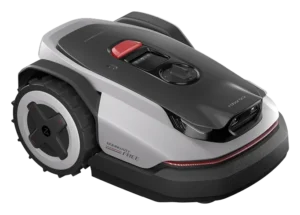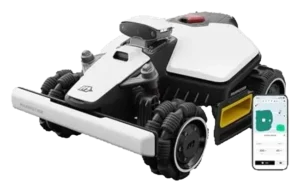
Mammotion LUBA Mini AWD · Roborock RockNeo Q110H
All robot lawn mowers. Every measure below is plotted against the full class, so a difference can be read against how much the class itself varies.
- Mammotion LUBA Mini AWD
- Roborock RockNeo Q110H
What each one does on its own.
The Autonomy Ladder is the same five rungs for every robot on the site. A rung describes the conditions a robot handles without you, not how good it is.
Where they actually differ.
The Robovations Score is nine inputs across three pillars, each weighted as shown and each scored so that more is better. A robot can lead on one and trail on another, which is the point of showing them apart. Cost of ownership and data handling are reported on each robot's own page and are never averaged into the score.
Capability
- Mammotion LUBA Mini AWD75
- Roborock RockNeo Q110H62
- Mammotion LUBA Mini AWD82
- Roborock RockNeo Q110H64
- Mammotion LUBA Mini AWD65
- Roborock RockNeo Q110H45
- Mammotion LUBA Mini AWD75
- Roborock RockNeo Q110H55
Dependability
- Mammotion LUBA Mini AWD73
- Roborock RockNeo Q110H70
- Mammotion LUBA Mini AWD77
- Roborock RockNeo Q110H66
- Mammotion LUBA Mini AWD82
- Roborock RockNeo Q110H60
Ownership burden
- Mammotion LUBA Mini AWD91
- Roborock RockNeo Q110H70
- Mammotion LUBA Mini AWD100
- Roborock RockNeo Q110H66
How far apart is a long way?
A number only means something next to the spread it sits in. Each track below is the real range across every classified robot in the class, with the median marked.
- Mammotion LUBA Mini AWD$1,599
- Roborock RockNeo Q110H$1,299
- Mammotion LUBA Mini AWD160 min
- Roborock RockNeo Q110H95 min
- Mammotion LUBA Mini AWD26.5 lbs
- Roborock RockNeo Q110H27 lbs
- Mammotion LUBA Mini AWD11.1 in
- Roborock RockNeo Q110H10.6 in
Not compared, because fewer than two of these robots carry a published figure: Suction, Runtime, Noise.
What the numbers leave out.
The trade-off
What each design gives up to be good at what it is good at.
No wire to bury, and no walk-around either: the working area is created by the mower, through automatic boundary detection or by driving it around the perimeter with the app’s joystick. What replaces the wire is a satellite fix, so the antenna needs a clear view of the sky.
Running costs are trivial next to the purchase price. Mammotion’s 24-piece blade set is about USD 49 and the disc takes three at a time, so the ownership decision is made almost entirely at checkout.
$1,299 buys wire-free RTK and stereo-camera obstacle avoidance; two-wheel drive is what gives way on sand, pavers and steep grass.
Navigation got better across Gizmodo’s week of testing, so the first mows are the roughest ones.
Who each one is wrong for
Stated by the record itself. A robot being wrong for a household is a fact about fit, not a fault.
- Lawns under heavy canopy or hemmed by tall structures
- Positioning is satellite-based. Dense tree cover, or a narrow side yard between tall walls, cuts the sky view the RTK fix depends on. That is the constraint a boundary wire never had, and it is a siting question rather than a maintenance one.
- Slopes beyond the 80 percent (38.6-degree) rating
- Mammotion rates the LUBA mini AWD at 80 percent grade, which is 38.6 degrees, driven on all four wheels. Past the rating there is no published behavior to rely on, and wet grass reduces grip on any drivetrain.
- Precision mulching or thatch management
- RTK positioning prioritizes coverage consistency over blade-height precision. Mulching performance lags premium wire-guided systems; owners managing heavy thatch report uneven results.
- Yards between tall buildings or under heavy tree cover
- Gizmodo's antenna, sited between two two-story houses, twice failed to get a signal, and the review advises lots of tree cover calls for another mower.
- Lawns broken up by pavers, sand or loose ground
- Two-wheel drive dug small ruts mounting uneven pavers, and Gizmodo had to rescue it several times from a sandy pit near the dock.
- Slopes steeper than its 45 percent rating
- On a slope beyond its rating, Gizmodo saw it skitter and slide downhill and churn dirt from under the grass on the way back up.
- Yards where children or pets play during mowing
- When Gizmodo stepped into its path it mostly stopped and went around, but it bumped a leg once and drove over a foot another time.
What stays your job
The upkeep ownership hands back to you, whatever the autonomy level says.
- Every 8-12 weeks: Flip or replace the three blades on the cutting disc. Mammotion sells the Endurance blades for the LUBA AWD series as a 24-piece set for about USD 49, so a full change costs single-digit dollars. Blades are replaced, never sharpened: grinding one strips its coating and weakens a part that spins unattended.
- Monthly: Dock and charging contacts visual inspection for debris.
- Seasonally (spring): Check that the RTK antenna is clear, secure and undisturbed on its mount.
- Over winter: Store the mower indoors with the battery charged. Lithium packs are stored charged, not run flat.
- Annually: Battery health check via app diagnostic; firmware update verification.
- As needed: Rinse mud and clippings off the IPX6 body and wheels, which CNET says Roborock permits.
- As needed: Replace the blades; an extra set comes in the box and Roborock sells Endurance Blades.
- As needed: Re-check zone boundaries after early mows, since Gizmodo saw map drift and skipped sections.
- As needed: Lift it out of sand or off uneven pavers when it gets stuck, per Gizmodo.
- As needed: Keep the RTK antenna in open sky, or switch to network RTK where it is available.
How much each of these is standing on.
Classifications rest on different depths of evidence. A pre-release assessment and a verified one are not the same kind of claim.
| Robot | Evidence status | Sources reviewed | Last assessed |
|---|---|---|---|
| Mammotion LUBA Mini AWD | Provisional | 7 | Sep 2026 |
| Roborock RockNeo Q110H | Provisional | 7 | Sep 2026 |
Add a robot
Comparing across classes is allowed — the page will switch to per-class positioning and tell you it has.