Skip to content
Saved
Comparison · 2 robots

Loona Petbot · LOVOT 3.0

All specialty robots. Every measure below is plotted against the full class, so a difference can be read against how much the class itself varies.
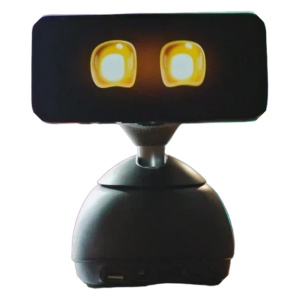
  1. Loona Petbot
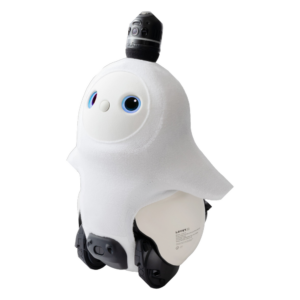
  2. LOVOT 3.0
KEYI Tech

Loona Petbot

Autonomy
II Assisted Autonomy
Score
Not scored
Readiness
Ready Now
Price
$529list
GROOVE X

LOVOT 3.0

Autonomy
II Assisted Autonomy
Score
Not scored
Readiness
Falls Short
Price
Not tracked

Up to three

01 Classification

What each one does on its own.

The Autonomy Ladder is the same five rungs for every robot on the site. A rung describes the conditions a robot handles without you, not how good it is.

V
Generalized
Any task, any setting
IV
Environmental
Handles new obstacles without help
III
Conditional
Finishes familiar jobs on its own
II
Assisted
Runs preset routines, needs rescue
Loona PetbotLOVOT 3.0
I
Manual
One action, on command
02 Assessment

Where they actually differ.

The Robovations Score is nine inputs across three pillars, each weighted as shown and each scored so that more is better. A robot can lead on one and trail on another, which is the point of showing them apart. Cost of ownership and data handling are reported on each robot's own page and are never averaged into the score.

None of these robots carries a scored assessment yet, so there is nothing to plot here. The classification and evidence below still apply.

03 Measured against the class

How far apart is a long way?

A number only means something next to the spread it sits in. Each track below is the real range across every classified robot in the class, with the median marked.

Runtime26 with a published figure
  • Loona Petbot120 min
  • LOVOT 3.030 min
30 minmedian 250 min960 min
Weight31 with a published figure
  • Loona Petbot2.4 lbs
  • LOVOT 3.010.1 lbs
0.1 lbsmedian 24.3 lbs2,646 lbs
Height30 with a published figure
  • Loona Petbot6.8 in
  • LOVOT 3.016.9 in
0.9 inmedian 20.4 in82 in

Not compared, because fewer than two of these robots carry a published figure: Price, Suction, Charge time, Noise.

04 Ownership

What the numbers leave out.

The trade-off

What each design gives up to be good at what it is good at.

Loona Petbot

Navigation, obstacle avoidance, and self-docking work without an internet connection, but voice interaction and ChatGPT-based conversation require one.

Face and gesture recognition are described as running locally, while conversational features route through the manufacturer’s cloud infrastructure.

LOVOT 3.0

LOVOT self-navigates and self-charges without direction, but its operating cycle between charges is short: approximately 30-45 minutes of activity per 15-30 minutes of charging.

The unit price is a single upfront cost, but GROOVE X’s own documentation states an additional monthly software fee is necessary for the device to operate day to day.

Who each one is wrong for

Stated by the record itself. A robot being wrong for a household is a fact about fit, not a fault.

Loona Petbot
Households wanting an offline-only device
Voice commands and ChatGPT-based conversation stop working without an internet connection and access to the manufacturer's cloud service.
Privacy-sensitive placements like bedrooms
The robot carries an active camera and microphone array with an app-based remote-viewing feature.
Anyone expecting a task-performing robot
Loona does not clean, deliver, monitor for safety events, or perform any household task; its behavior is navigation, reaction, and conversation.
LOVOT 3.0
Buyers outside Japan, mainland China, or GROOVE X's listed regions
No official US, or broader, retail channel was found; importing through a third-party proxy service adds substantial cost.
Anyone wanting a one-time purchase with no recurring cost
GROOVE X's own pricing documentation states a monthly software-usage fee is necessary for the device to function day to day, on top of the unit price.
Buyers wanting a task-performing robot
The manufacturer explicitly does not position LOVOT as automating household chores.

What stays your job

The upkeep ownership hands back to you, whatever the autonomy level says.

Loona Petbot
  • Charging: Returns to its dock automatically when battery runs low; a human must place and maintain the dock’s power connection.
  • Firmware/app updates: Owner applies updates through the companion app to keep navigation and recognition features current.
  • Cleaning: Owner wipes down the camera lens and time-of-flight sensor periodically to maintain navigation accuracy.
  • Battery: Approximately 2 hours of continuous active use per charge cycle, per the manufacturer.
LOVOT 3.0
  • Charging: Self-navigates to its Nest (model LN110) and docks on its own within a stated 30-45 minute operating cycle, per the manufacturer.
  • Software subscription: GROOVE X states a monthly software-usage fee, reported at approximately 9,900-19,800 yen per month across service tiers, is required for daily operation, separate from the unit price.
  • Clothing/covering: Owner maintains its fabric covering; the manufacturer sells interchangeable clothing as an accessory.
  • App/firmware updates: Delivered by GROOVE X via the cloud as part of the software subscription.
05 Evidence

How much each of these is standing on.

Classifications rest on different depths of evidence. A pre-release assessment and a verified one are not the same kind of claim.

Evidence behind each classification
Robot Evidence status Sources reviewed Last assessed
Loona Petbot Verified 9 Aug 2026
LOVOT 3.0 Verified 5 Aug 2026

Robovations classifies robots; it does not rank them. Nothing on this page is a recommendation, and no manufacturer influences a classification or its placement here.