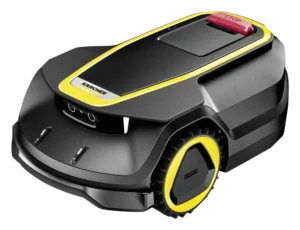
Kärcher RCX 4 · MOVA LiDAX Ultra 1000
All robot lawn mowers. Every measure below is plotted against the full class, so a difference can be read against how much the class itself varies.
- Kärcher RCX 4
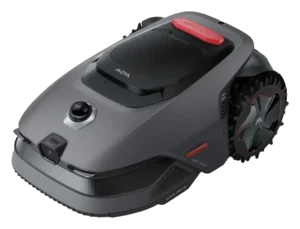
- MOVA LiDAX Ultra 1000


MOVA LiDAX Ultra 1000
- Autonomy
- IIIConditional Autonomy
- Score
- Not scored
- Readiness
- Not assessed
- Price
- $899list
Up to three
What each one does on its own.
The Autonomy Ladder is the same five rungs for every robot on the site. A rung describes the conditions a robot handles without you, not how good it is.
Where they actually differ.
The Robovations Score is nine inputs across three pillars, each weighted as shown and each scored so that more is better. A robot can lead on one and trail on another, which is the point of showing them apart. Cost of ownership and data handling are reported on each robot's own page and are never averaged into the score.
Capability
- Kärcher RCX 465
Not scored: MOVA LiDAX Ultra 1000
- Kärcher RCX 465
Not scored: MOVA LiDAX Ultra 1000
- Kärcher RCX 455
Not scored: MOVA LiDAX Ultra 1000
- Kärcher RCX 468
Not scored: MOVA LiDAX Ultra 1000
Dependability
- Kärcher RCX 452
Not scored: MOVA LiDAX Ultra 1000
- Kärcher RCX 446
Not scored: MOVA LiDAX Ultra 1000
- Kärcher RCX 455
Not scored: MOVA LiDAX Ultra 1000
Ownership burden
- Kärcher RCX 468
Not scored: MOVA LiDAX Ultra 1000
- Kärcher RCX 452
Not scored: MOVA LiDAX Ultra 1000
How far apart is a long way?
A number only means something next to the spread it sits in. Each track below is the real range across every classified robot in the class, with the median marked.
These robots share no measured specification with enough published figures to plot. That is a gap in the record, not a finding about the robots.
What the numbers leave out.
The trade-off
What each design gives up to be good at what it is good at.
PIN-gated, account-locked operation is a real anti-theft measure, but it also means the mower cannot simply be handed to a new owner without the prior account holder’s approval.
The rain sensor protects the machine by returning it to dock, at the cost of an interrupted, not merely paused, mowing cycle.
Entry-level positioning means sufficient autonomy, limited adaptive capability: Level III ensures routine cutting but cannot recover from obstacles or novel conditions without human intervention.
Wire-free convenience requires heavier reliance on sensor precision: LiDAR mapping performance degrades in rain, snow, and dense vegetation where perimeter-wire systems operate unaffected.
Who each one is wrong for
Stated by the record itself. A robot being wrong for a household is a fact about fit, not a fault.
- US buyers needing a confirmed USD price and local retail channel
- Pricing was found only in EUR at European retailers; no confirmed US MSRP or availability was located.
- Owners who mow on a fixed schedule regardless of weather
- The rain sensor automatically interrupts an in-progress cycle and returns the mower to dock rather than continuing through rain.
- Buyers wanting a documented blade-stop-on-lift timing spec
- Lift and anti-tilt sensors are documented, but no independent test of blade-stop timing was found.
- Yards larger than 0.5 acres
- The recommended 1,000 sqm (0.25 acre) coverage limits this model to single-session operation on smaller lots. Yards exceeding 0.5 acres would require multiple mowing cycles with manual repositioning, negating autonomy benefits.
- Steep or irregular terrain above 45% gradient
- This entry-level LiDAR mower is rated for slopes up to 45%, well below the flagship 3000 AWD's 80% rating. Rocky, uneven, or steeply graded yards beyond that exceed the model's traction and mapping capabilities, creating safety and performance risks.
- Dense, tall, or specialized grass types
- LiDAR line-of-sight can be compromised by tall varieties (fescue, Bermuda) and dense growth. Muddy terrain or heavy tree shade degrade sensor precision further. Standard lawn heights are the design target; unusual grass conditions require manual intervention.
What stays your job
The upkeep ownership hands back to you, whatever the autonomy level says.
- Weekly: Rinse the mowing disc, housing, wheels, and rain sensor with a low-pressure hose; Karcher’s manual prohibits solvents, immersion, and high-pressure jets.
- Monthly: Replace all three free-swinging blades and their screws as a set; Karcher specifies every 1 to 2 months with frequent use, torqued to 1.0 Nm, using blade set 2.269-705.0.
- Seasonally: Store dry with a full charge in the original packaging over winter; Karcher recommends charging between 18 and 25 C for battery longevity.
- As needed: Clean the charging contacts and keep 1.5m in front of the station clear; the station is the positioning reference and cannot move without remapping.
- As needed: Clean the rain sensor when the mower docks without rain; the manual flags false activation from dirt.
- As needed: Change the default 0000 PIN (hold START and HOME for 3 seconds); every operation is PIN-gated.
- Weekly: Inspect mower body and wheels for grass buildup or debris.
- Monthly: Clean charging dock contacts and mower charging pins; visual inspection for corrosion.
- Seasonally: Blade inspection and replacement; LiDAR sensor lens cleaning after rain or muddy conditions.
- Annually: Perimeter boundary or operating zone verification; software update via app if available; charging dock and weatherproofing assessment; battery storage preparation for off-season.
- As needed: Grass height trimming to standard levels before mowing assignment; remapping if yard layout changes significantly.
How much each of these is standing on.
Classifications rest on different depths of evidence. A pre-release assessment and a verified one are not the same kind of claim.
| Robot | Evidence status | Sources reviewed | Last assessed |
|---|---|---|---|
| Kärcher RCX 4 | Verified | 5 | Aug 2026 |
| MOVA LiDAX Ultra 1000 | Pending | — | Aug 2026 |
Add a robot
Comparing across classes is allowed — the page will switch to per-class positioning and tell you it has.