
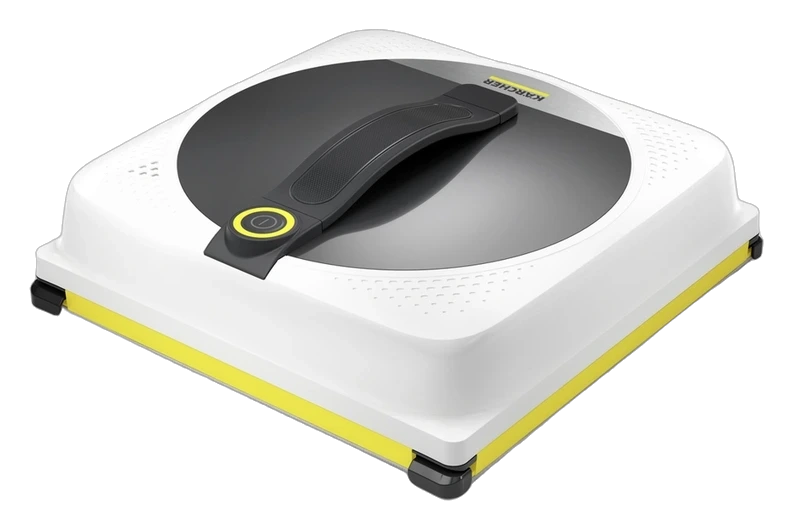
Kärcher
Kärcher RCW 4
- Autonomy
- IIAssisted
- Score
- Not scored
- Readiness
- New to Market
- Price
- Not tracked
Kärcher
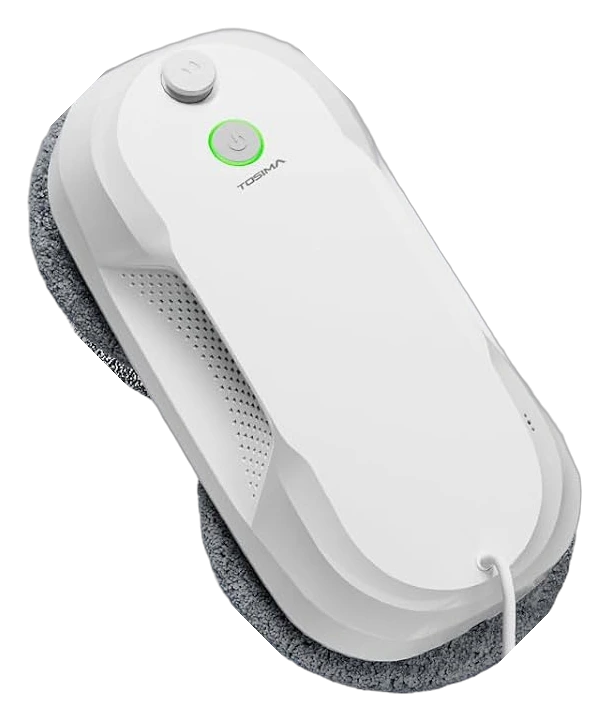
Up to three
All robot window cleaners. Every figure below is placed against the whole class, so a gap can be read against how much the class itself varies.
The conditions each robot was assessed against, side by side. Rows marked in gold are where these machines genuinely differ.
| Condition | Kärcher RCW 4 | Tosima W5 Window Clea… |
|---|---|---|
| Window style | ||
| Standard residential | GoodSix pump-driven nozzles and continuous suction are built for ordinary single-pane residential windows, Kärcher's documented core use case. | GoodSuction mount and edge detection are built for standard residential panes; this is the machine's core documented use case. |
| Large panes (8 ft+)they differ | GoodThe 150 mL tank, rated for about 100 sq m per fill with a fill-level indicator, covers large panes without a mid-job refill. | DependsNo mapping or systematic route is documented, so full edge-to-edge coverage on 8ft+ panes in one pass isn't confirmed. |
| Specialty / textured | PoorContinuous suction contact assumes smooth flat glass; leaded or heavily textured panes are not part of the documented design. | PoorSuction-mount adhesion needs smooth glass; the manufacturer markets only windows, mirrors and glass doors, not textured surfaces. |
| Frame style | ||
| Frameless / minimalthey differ | DependsSuction should hold on flat frameless glass, but no independent review confirms edge behavior without a frame lip. | GoodSuction-mount adhesion grips the glass pane itself, not the frame, so minimal or absent framing doesn't affect operation. |
| Standard mullions | GoodStandard framed residential windows match Kärcher's documented cleaning mechanism and are the product's core target surface. | GoodStandard mullions don't interfere; suction-based adhesion holds to the glass surface itself, not the frame edge. |
| Heavy bezelsthey differ | PoorGrilles or muntins dividing a pane interrupt the wiping path the cleaning pad's suction contact depends on. | DependsHeavy bezels aren't addressed in any source; how the suction seal performs against a raised lip isn't documented. |
| Building height | ||
| Single-story | GoodGround-floor windows need no tether reliance beyond the power cord; outlet access within 5 meters is the only real constraint. | GoodFall risk is minimal at ground level; the undocumented rope rating and battery backup limits matter far less here. |
| 2 – 3 stories | DependsThe 5-meter power cord must reach a secure outlet upstairs, and Kärcher documents no separate anchor point for this model. | DependsRope carries no published load rating and backup runtime is reported as 25 to 30 minutes, unconfirmed for this height. |
| 4+ stories | PoorNo documented safety-tether or anchor system extends this unit's reach to a true high-rise installation. | PoorNo manufacturer source rates the safety rope's load capacity, and unrated tether strength is too great a risk at this height. |
| Power preference | ||
| Corded OK | GoodThis is a mains-corded design by default; a nearby outlet within the 5-meter cord's reach is all it requires. | GoodOperates exclusively on mains power during normal use, so a nearby outlet is required for every deployment. |
| Cordless preferred | PoorNo cordless or battery-only operating mode exists; the 5-meter power cord runs the cleaning cycle throughout. | PoorRuns on mains power only; the onboard battery is strictly a power-failure backup, not a cordless power source. |
| No preference | GoodWorks fine for a reader with no power-source preference, since the RCW 4 runs entirely corded off mains power. | GoodNo power preference; the W5's mains operation with a power-failure battery backup works either way. |
A robot being poor for a condition is a fact about fit, not a fault. “Depends” means the record names a limit worth reading, not that the answer is unknown.
A number only means something next to the spread it sits in. Each track is the real range across every classified robot in the class, with the median marked.
These robots share no measured specification with enough published figures to plot. That is a gap in the record, not a finding about the robots.
Written on each record, and the only thing here every robot on the site carries.
What each design gives up to be good at what it is good at.
Four automatic modes and a 150 mL tank change how long a single pass takes, not whether the unit still has to be carried, plugged in, and started on every pane.
The tank now covers about 100 square meters per fill, but that headroom does not change the underlying mains dependency: every session still starts by finding an outlet within reach of the 5-meter cord.
Thin evidence base: a launch-week record with no independent reviews or owner reports to check Kärcher’s own cleaning-speed and coverage figures against.
A documented Triple Safety System combining suction, edge detection, and a rope exists, but the rope itself carries no published load rating, so the system’s real fall-protection margin cannot be verified from public sources.
The unit runs on mains power with a battery reserved for power loss, trading true cordless freedom for a longer expected runtime per pane.
Stated by the record itself. A robot being wrong for a household is a fact about fit, not a fault.
The upkeep ownership hands back to you, whatever the autonomy level says.
Classifications rest on different depths of evidence. A pre-release assessment and a verified one are not the same kind of claim.
| Robot | Evidence status | Sources reviewed | Last assessed |
|---|---|---|---|
| Kärcher RCW 4 | Pending | 1 | Sep 2026 |
| Tosima W5 Window Cleaning Robot | Provisional | 3 | Aug 2026 |
Evidence status counts the sources behind a classification, not their kind. A high count can be maker documentation and price coverage, so read it as how much was reviewed rather than as independent testing. How we weigh evidence.
 The full recordKärcher RCW 4Specifications, evidence, the Fit Check in full, and every tracked change.
 The full recordTosima W5 Window Cleaning RobotSpecifications, evidence, the Fit Check in full, and every tracked change.
Robovations classifies robots; it does not rank them. Nothing on this page is a recommendation, and no manufacturer influences a classification or its placement here.
Comparing across classes is allowed — the page will switch to per-class positioning and tell you it has.