
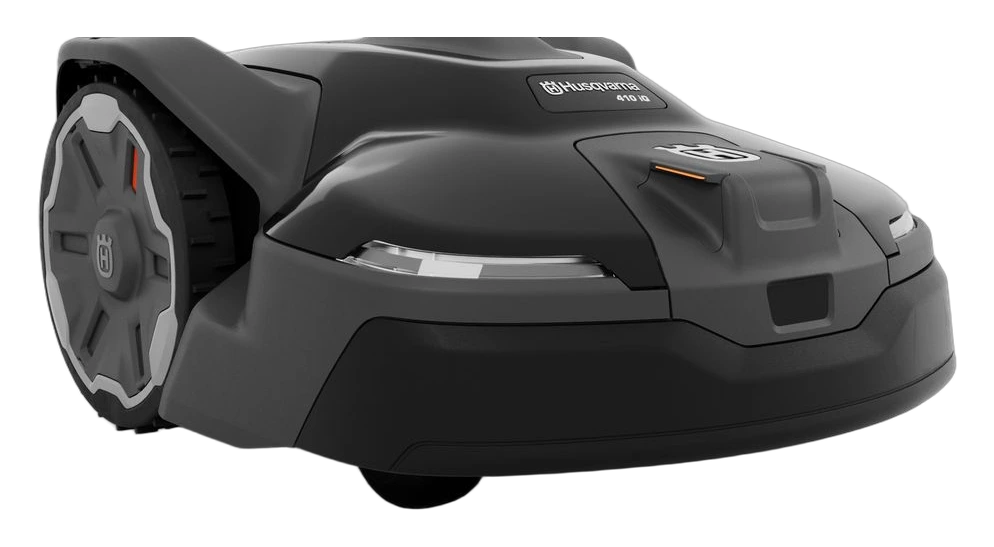
Husqvarna
Husqvarna Automower 410 iQ
- Autonomy
- IIIConditional
- Score
- 69/100Capable
- Readiness
- Ready Now
- Price
- $2,599.99list
Husqvarna
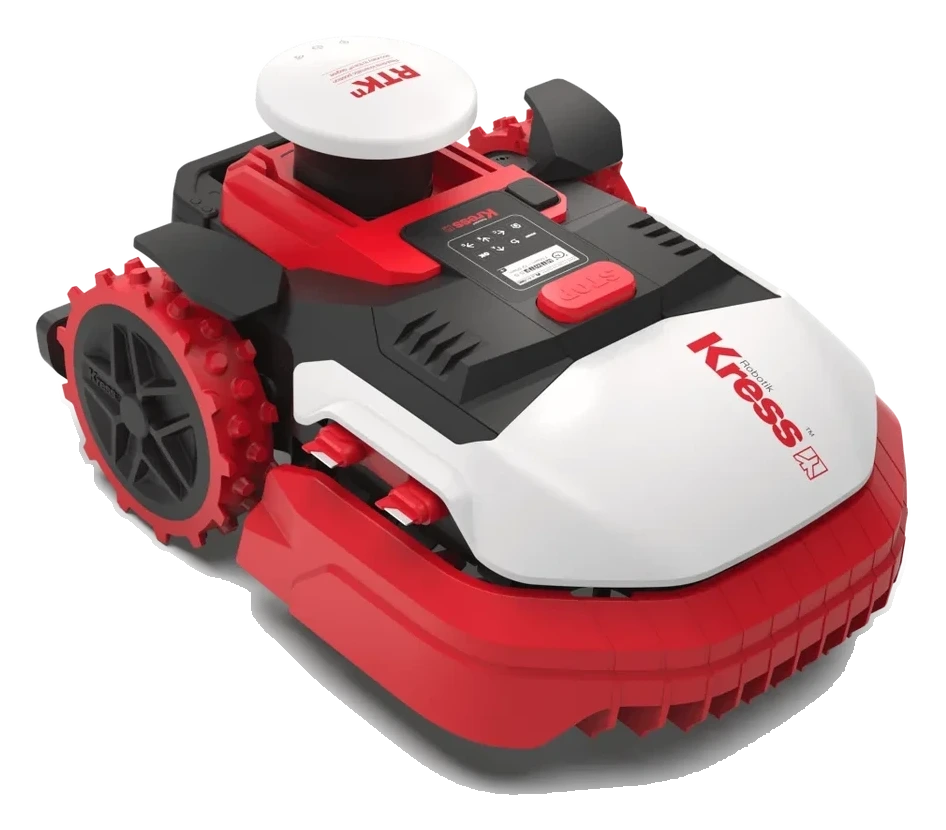
Kress
Up to three
All robot lawn mowers. Every figure below is placed against the whole class, so a gap can be read against how much the class itself varies.
The conditions each robot was assessed against, side by side. Rows marked in gold are where these machines genuinely differ.
| Condition | Automower 410 iQ | KR172 Mission RTKn |
|---|---|---|
| Yard size | ||
| Under ¼ acre | GoodHusqvarna rates it for half an acre, twice a quarter-acre lot, with systematic mowing. | GoodDesigned for ½-acre minimum; undersized lots see inefficient overlapping paths and poor RTK signal stability. |
| ¼ – ½ acre | GoodPopular Mechanics saw it finish a half-acre property with one recharge in about 4 hours. | GoodOptimal range for RTK-based systematic mowing. One-pass coverage achievable with RTK antenna lock. |
| Over ½ acrethey differ | DependsHusqvarna rates it for 0.5 acre within 20%, so larger lots push past its stated capacity. | GoodRTK accuracy scales well to multi-acre properties. Extended runtime (up to 180 min) handles 2-acre cuts in one session. |
| Terrain | ||
| Mostly flat | GoodCNET found it best suited to lawns with straight lines, and Popular Mechanics saw methodical passes. | GoodRTK and LiDAR obstacle avoidance excel on flat terrain; documented performance in residential flat yards. |
| Gentle slopes | DependsHusqvarna rates it to 45% inside the lawn, but no independent slope test was found. | DependsRated for up to 25% gradient; owner reports show traction loss above 20% on wet grass. Steep transitions between flat and slope reduce efficiency. |
| Steep / hillythey differ | DependsHusqvarna limits slopes at the boundary to 15%, far below its 45% interior rating. | PoorHardware limit at 25%+ gradient; documented traction failure on steep hillsides or unstable soil. |
| Grass type | ||
| Typical lawn grass | GoodPopular Mechanics found clippings cleanly and finely cut on a well-maintained lawn. | GoodStandard turf cuts cleanly with documented blade cadence. Replacement intervals 6-12 months depending on density. |
| Mixed / tall growth | DependsPopular Mechanics expects long grass would need one or two extra sessions to look right. | DependsSingle-pass efficiency drops on thick or tall fescue; multiple passes may be needed. Blade wear accelerates. |
| Thick (Bermuda / Zoysia) | DependsNo independent test in thick or dense turf was found for its 9.4 inch cut. | DependsBermuda and dense turf require frequent blade inspection. Blade dulling visible after 8-10 weeks; check cut quality weekly. |
| Boundary setup | ||
| Wireless required | GoodEPOS virtual boundaries need no wire, using cloud correction or the included reference station. | GoodRTKn is wire-free by design; app-defined virtual boundaries work without perimeter installation. |
| Wire requiredthey differ | GoodHusqvarna lists physical wire as a supported boundary type alongside virtual boundaries. | PoorRTKn does not accept traditional perimeter wire. Satellite RTK positioning is the only boundary method available. |
| No preference | GoodWith both virtual and physical boundary options, it covers either setup preference. | GoodWire-free RTK-based operation. No perimeter wire setup required or supported. |
A robot being poor for a condition is a fact about fit, not a fault. “Depends” means the record names a limit worth reading, not that the answer is unknown.
Nine inputs across three pillars, each weighted as shown and each scored so more is better. A robot can lead on one and trail on another, which is the point of showing them apart.
A number only means something next to the spread it sits in. Each track is the real range across every classified robot in the class, with the median marked.
Written on each record, and the only thing here every robot on the site carries.
What each design gives up to be good at what it is good at.
Satellite positioning draws straight, overlapping stripes; radar alone did little to keep it off a tester’s foot.
Boundaries are exact to the waypoint, which also means every curve is a string of waypoints to drop by hand.
Network positioning replaces wire: no perimeter to lay and no antenna, beacon or base station to mount, but the property has to be inside Kress’s RTKn coverage. Inertial navigation and odometry bridge shaded stretches, not a missing footprint.
Stated by the record itself. A robot being wrong for a household is a fact about fit, not a fault.
The upkeep ownership hands back to you, whatever the autonomy level says.
Classifications rest on different depths of evidence. A pre-release assessment and a verified one are not the same kind of claim.
| Robot | Evidence status | Sources reviewed | Last assessed |
|---|---|---|---|
| Husqvarna Automower 410 iQ | Verified | 7 | Sep 2026 |
| Kress KR172 Mission RTKn | Pending | 3 | Aug 2026 |
Evidence status counts the sources behind a classification, not their kind. A high count can be maker documentation and price coverage, so read it as how much was reviewed rather than as independent testing. How we weigh evidence.
 The full recordHusqvarna Automower 410 iQSpecifications, evidence, the Fit Check in full, and every tracked change.
 The full recordKress KR172 Mission RTKnSpecifications, evidence, the Fit Check in full, and every tracked change.
Robovations classifies robots; it does not rank them. Nothing on this page is a recommendation, and no manufacturer influences a classification or its placement here.
Comparing across classes is allowed — the page will switch to per-class positioning and tell you it has.