Skip to content
Saved
Comparison · 2 robots

Hobot R3 · HUTT C6

All robot window cleaners. Every measure below is plotted against the full class, so a difference can be read against how much the class itself varies.
  1. Hobot R3
  2. HUTT C6
HOBOT

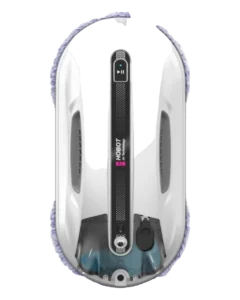
Hobot R3

Autonomy
II Assisted Autonomy
Score
55/100 Capable
Readiness
Ready Now
Price
$400list
HUTT

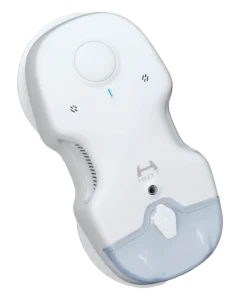
HUTT C6

Autonomy
II Assisted Autonomy
Score
38/100 Deficient
Readiness
Promising Progress
Price
$399list

Up to three

01 Classification

What each one does on its own.

The Autonomy Ladder is the same five rungs for every robot on the site. A rung describes the conditions a robot handles without you, not how good it is.

V
Generalized
Any task, any setting
IV
Environmental
Handles new obstacles without help
III
Conditional
Finishes familiar jobs on its own
II
Assisted
Runs preset routines, needs rescue
Hobot R3HUTT C6
I
Manual
One action, on command
02 Assessment

Where they actually differ.

The Robovations Score is nine inputs across three pillars, each weighted as shown and each scored so that more is better. A robot can lead on one and trail on another, which is the point of showing them apart. Cost of ownership and data handling are reported on each robot's own page and are never averaged into the score.

Capability

Task completion16% of score
Does it finish the job it is sold to do, unattended
  • Hobot R368
  • HUTT C644
Coverage and navigation10% of score
Does it work the whole area, and hold that between runs
  • Hobot R370
  • HUTT C642
Edge-case recovery10% of score
Does it recover from the failures its category presents
  • Hobot R345
  • HUTT C634
Operating envelope4% of score
How far conditions can vary before performance drops
  • Hobot R360
  • HUTT C665

Dependability

Field failure rate16% of score
Documented hardware failures per owner-year
  • Hobot R356
  • HUTT C629
Software stability14% of score
Whether updates fix more than they break
  • Hobot R365
  • HUTT C633
Support longevity10% of score
Committed parts, service and updates, with dates
  • Hobot R352
  • HUTT C635

Ownership burden

Routine maintenance12% of score
Hands-on time it asks for in normal operation
  • Hobot R324
  • HUTT C630
Consumables8% of score
Parts that must be bought to keep it working
  • Hobot R357
  • HUTT C669
03 Measured against the class

How far apart is a long way?

A number only means something next to the spread it sits in. Each track below is the real range across every classified robot in the class, with the median marked.

Price19 with a published figure
  • Hobot R3$400
  • HUTT C6$399
$150median $365.80$850
Adhesion (mode not stated)15 with a published figure
  • Hobot R33,000 Pa
  • HUTT C63,800 Pa
2,800 Pamedian 3,800 Pa8,000 Pa
Noise16 with a published figure
  • Hobot R366 dB
  • HUTT C670 dB
63 dBmedian 68 dB75 dB
Weight16 with a published figure
  • Hobot R32.1 lbs
  • HUTT C61.3 lbs
1.3 lbsmedian 2.9 lbs4.8 lbs
Height15 with a published figure
  • Hobot R33.7 in
  • HUTT C62.8 in
2.2 inmedian 3.5 in9.4 in

Not compared, because fewer than two of these robots carry a published figure: Runtime, Charge time.

04 Ownership

What the numbers leave out.

The trade-off

What each design gives up to be good at what it is good at.

Hobot R3

Dual rotating pads improve corner coverage but complicate maintenance: two separate pad holders, motor couplings, and rotation mechanisms add weekly inspection points compared to single-pad competitors.

HUTT C6

Spray-based operation introduces water-damage risk that suction-only designs avoid; moisture residue requires active frame drainage management.

Who each one is wrong for

Stated by the record itself. A robot being wrong for a household is a fact about fit, not a fault.

Hobot R3
Windows with no mains socket within about 4 meters
The cord is 4 meters and the robot draws mains power for the whole run, so the reachable set is the windows around one socket. HOBOT's own 2S and S6 Pro ship 5 meter cords.
Owners who want cordless operation
The wired design is not optional. The cell the R3 carries is an embedded UPS that keeps it in position on the glass with an alarm for 20 minutes after a power cut; it is a fall-protection measure, not a duty-cycle battery, and the robot does not clean without the cord.
Frameless or curved tempered glass surfaces
Vacuum edge detection struggles with reflections and lack of visual boundaries. Optical sensors cause frequent incorrect repositioning; manual path planning becomes tedious.
HUTT C6
Frameless or storm-window installations
Spray operation creates water pooling on frameless edges and challenges drainage. Storm windows with narrow gaps obstruct spray nozzles.
Renters or tenants avoiding liquid application on surfaces
Spray residue and moisture ingress carry property-damage liability. Suction-only alternatives are safer for rental agreements.
High-frequency multi-story window cleaning scenarios
Repositioning between stories combined with solution refill cycles creates high owner-effort workflows. Multi-floor homes demand repeated tank checks.

What stays your job

The upkeep ownership hands back to you, whatever the autonomy level says.

Hobot R3
  • Weekly: Rinse both pads under tap water; test pad rotation manually to ensure smooth motion; inspect nozzle spray pattern.
  • Monthly: Clean vacuum intake and motor filter; check pad-rotation bearings for smooth spin; soak nozzle in distilled vinegar if spray weakens.
  • Every 3-4 months: Replace cleaning pads (~$25-30 per pair); inspect power cable for insulation damage or fraying.
  • Every 6 months: Lubricate pad-rotation bearings with light machine oil (~$0, 5 min maintenance); test rotation force to detect bearing wear.
  • Annually: Replace motor intake filter (~$15); deep-clean nozzle assembly and pad-holder fasteners.
HUTT C6
  • After every use: Empty solution tank and rinse interior; wipe wiper pads with soft cloth.
  • Weekly: Check solution-line inlet for mineral deposits; rinse with distilled water if cloudy.
  • Monthly: Inspect suction cups for wear and adhesion; flush solution lines with dilute vinegar if hard-water minerals accumulate.
  • Every 3-6 months: Replace microfiber wiper pads (~$12-18 per pair); replace solution-filter cartridge (~$10-15).
05 Evidence

How much each of these is standing on.

Classifications rest on different depths of evidence. A pre-release assessment and a verified one are not the same kind of claim.

Evidence behind each classification
Robot Evidence status Sources reviewed Last assessed
Hobot R3 Pending 1 Aug 2026
HUTT C6 Provisional 3 Aug 2026

Robovations classifies robots; it does not rank them. Nothing on this page is a recommendation, and no manufacturer influences a classification or its placement here.