
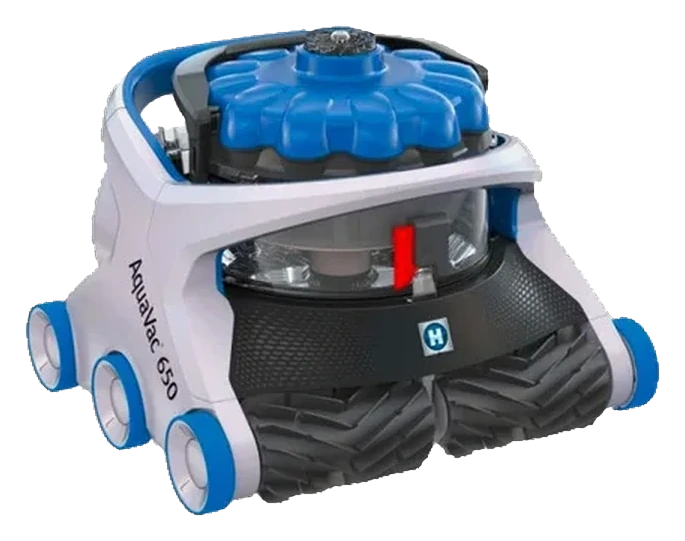
Hayward
Hayward AquaVac 650
- Autonomy
- IIIConditional
- Score
- 64/100Capable
- Readiness
- Not assessed
- Price
- $1,999list
Hayward
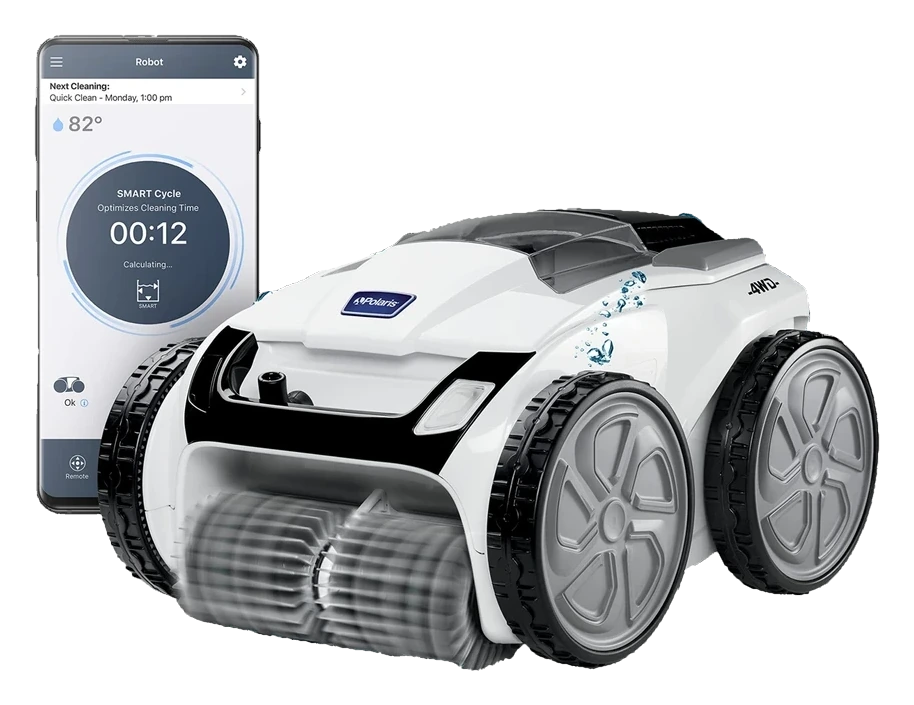
Polaris
Up to three
All robot pool cleaners. Every figure below is placed against the whole class, so a gap can be read against how much the class itself varies.
The conditions each robot was assessed against, side by side. Rows marked in gold are where these machines genuinely differ.
| Condition | Hayward AquaVac 650 | Polaris VRX iQ+ |
|---|---|---|
| Pool type | ||
| In-ground | GoodDesigned for in-ground gunite/plaster pools; dock placement requires dedicated 110V outlet and 10-foot clearance. | GoodDesigned for in-ground pools. Cable deployment and poolside power access assumed. Corded architecture suits permanent installations. |
| Above-groundthey differ | PoorBrush geometry and dock coupling target in-ground installations; vinyl walls not compatible with HexDrive pads. | DependsFunctional but cable management becomes more complex. Requires electrical access within 60-foot reach of above-ground structure. |
| Mixed setup | GoodStandard for this category, see specs for confirmation. | GoodStandard for this category; confirm poolside power access before purchase. |
| Pool size | ||
| Small (< 400 sqft) | GoodCapable but overkill for pools under 8,000 gallons; smaller battery-powered units offer better cost alignment. | GoodRuntime advantage irrelevant in under-8,000 gallon pools. Cable management adds friction; cordless units more practical for compact installations. |
| Medium (400 – 800) | GoodIdeal target: 12k–18k gallons. Two-hour runtime covers a single session without battery strain. | GoodOptimized for 8,000–15,000 gallon pools. Smart-mapping coverage balances runtime advantage with cable setup overhead. |
| Large (> 800)they differ | DependsConsecutive sessions required for 20k+ gallon pools; multiple cycles per week increase dock-seal wear patterns. | GoodCorded design ideal for 15,000+ gallon pools where battery-limited robots require multiple cycles or external recharging. |
| Debris load | ||
| Fine (sand / silt) | GoodPleated intake filter handles silt and algae detritus effectively; weekly rinse prevents clogging. | GoodPre-filter handles sand and silt. Weekly washing maintains suction; established owner reports confirm reliable performance. |
| Leaves / large debris | Good18L debris bin covers heavy autumn load; daily empties typical in peak seasons. | GoodLeaf debris accelerates pre-filter clogging and cable entanglement risk. Monthly deep-clean and more frequent emptying required in high-leaf environments. |
| Algae / heavy foulingthey differ | DependsWaterline brush targets surface-film algae well; free-floating algae requires pre-filtration. | GoodSmart-mapping and drive tracks designed for algae-laden water. Filter maintenance more frequent in bloom conditions but no known design limitations. |
| Coverage you want | ||
| Floor onlythey differ | DependsCapable but this robot targets floor + waterline; wall coverage requires manual intervention. | GoodPrimary design focus. Systematic coverage on vinyl and plaster floors confirmed by owner reports and manufacturer specifications. |
| Floor + wallsthey differ | PoorHexDrive geometry does not reach vertical walls; only floor and waterline are documented. | GoodWall-climbing verified on standard vinyl and plaster surfaces. Established 2-year track record confirms consistent vertical navigation without manual repositioning. |
| Floor + walls + waterlinethey differ | PoorWaterline reach is documented; wall coverage and suction line pathing are not autonomous. | DependsWaterline brushing not integrated into autonomy model. Manual brush attachment or auxiliary device required for waterline algae. |
A robot being poor for a condition is a fact about fit, not a fault. “Depends” means the record names a limit worth reading, not that the answer is unknown.
Nine inputs across three pillars, each weighted as shown and each scored so more is better. A robot can lead on one and trail on another, which is the point of showing them apart.
A number only means something next to the spread it sits in. Each track is the real range across every classified robot in the class, with the median marked.
Not compared, because fewer than two of these robots carry a published figure: Runtime, Charge time, Noise.
Written on each record, and the only thing here every robot on the site carries.
What each design gives up to be good at what it is good at.
Mains power removes any runtime ceiling, so a full floor, wall and waterline cycle runs to completion in one pass, but the 55 ft cord has to be paid out and retrieved at every session.
SpinTech separation takes the filter cartridge out of the ownership cost entirely, but debris still has to be emptied from the canister by hand after each cycle.
Unlimited runtime from corded architecture replaces battery anxiety with cable management friction and pre-session setup burden.
Onboard Sensor Nav coverage runs without a network and without anything described to it beforehand, and gives up any documented way for the owner to steer, mask or inspect the route it takes.
Stated by the record itself. A robot being wrong for a household is a fact about fit, not a fault.
The upkeep ownership hands back to you, whatever the autonomy level says.
Classifications rest on different depths of evidence. A pre-release assessment and a verified one are not the same kind of claim.
| Robot | Evidence status | Sources reviewed | Last assessed |
|---|---|---|---|
| Hayward AquaVac 650 | Discontinued | 5 | Aug 2026 |
| Polaris VRX iQ+ | Provisional | 4 | Aug 2026 |
Evidence status counts the sources behind a classification, not their kind. A high count can be maker documentation and price coverage, so read it as how much was reviewed rather than as independent testing. How we weigh evidence.
 The full recordHayward AquaVac 650Specifications, evidence, the Fit Check in full, and every tracked change.
 The full recordPolaris VRX iQ+Specifications, evidence, the Fit Check in full, and every tracked change.
Robovations classifies robots; it does not rank them. Nothing on this page is a recommendation, and no manufacturer influences a classification or its placement here.
Comparing across classes is allowed — the page will switch to per-class positioning and tell you it has.